Japan Trip Cost for a Family of 4 in 2026: $7,800 Total
Where every dollar goes on a 10-day Japan trip with kids — flights, hotels, food, trains, and activities across three budget tiers
Quick Answer
- A Japan family vacation costs about $7,800 for a family of 4 over 10 days in 2026, from $4,700 on a tight budget to $12,900 premium, with flights ($2,400-$7,200), accommodation ($1,600-$4,500), and the JR Pass ($660-$990 for two adults) making up roughly 70% of the total budget.
- 💰 Daily budget: $150-$350 for a family of 4 (excluding flights)
- 📅 Best value months: June, January, and early February — hotel prices drop 20-30%
- 🍙 Biggest savings hack: Konbini (convenience store) meals cut daily food costs by 40% compared to sit-down restaurants
- 🚄 Transport reality check: The JR Pass isn't always worth it after the 2023 price hike — calculate your specific routes first
- 💡 The weak yen makes 2026 one of the cheapest years for American families to visit Japan in over a decade (see the season breakdown below)
- 🧮 Use our budget calculator to get your family's exact Japan trip cost
What a Japan Family Trip Actually Costs
Every Japan travel article throws around the "$8,000-$12,000" range and moves on. That's not very helpful when you're trying to figure out whether your family can actually afford this trip. So here's the full picture — every category broken down with 2026 prices, three different budget tiers, and the seasonal swings that can shift your total by $3,000 or more.
The continued weakness of the Japanese yen against the US dollar means that families visiting from the US get roughly 30-40% more purchasing power than they would have in 2019. A ¥1,000 bowl of ramen that cost you about $9 five years ago now costs closer to $6.50. That adds up fast over 10 days.
Two things to know upfront. First, Japan is extremely family-friendly — clean, safe, easy to get around with kids, and full of free or cheap attractions. Second, the biggest variable in your budget isn't food or activities. It's flights and accommodation, which together eat up roughly 70% of most family budgets.
Flights to Japan
Flights are the single largest expense for most families, and they vary wildly based on where you live, when you fly, and how far ahead you book.
| Departure Region | Low Season (per person) | High Season (per person) |
|---|---|---|
| US West Coast | $600-$800 | $1,200-$1,800 |
| US East Coast / Midwest | $800-$1,100 | $1,400-$2,000 |
| Europe | $800-$1,100 | $1,200-$1,400 |
| Australia | $500-$700 | $800-$1,000 |
For a family of 4 flying from the US West Coast in low season, that's roughly $2,400-$3,200. Fly during cherry blossom season in late March? Expect $4,800-$7,200. That single decision can swing your total trip cost by thousands.
The booking sweet spot sits around 6-9 months before departure. Fare tracking tools like Google Flights help catch price drops, but don't wait for a deal that might not come — prices for spring flights tend to only go up after January.
Hotels and Accommodation
Accommodation is where budget tiers diverge the most. Japan offers a surprisingly wide range of options, from $80/night business hotels to $500+ ryokan experiences — and the quality floor is much higher than most countries.
| Accommodation Type | Price Per Night (family room) | Best For |
|---|---|---|
| Business Hotels (Toyoko Inn, APA) | $80-$130 | Budget families, short stays |
| Mid-Range Hotels (3-star) | $150-$250 | Most families, good locations |
| Vacation Apartments (Airbnb) | $120-$200 | Longer stays, kitchen access |
| Ryokan (traditional inn) | $200-$500+ | Cultural experience, 1-2 nights |
| 4-Star Hotels | $300-$500 | Premium comfort, central locations |
Here's a reality that surprises most first-time visitors: Japanese hotel rooms are small. A "family room" at a business hotel might be 20 square meters. That's fine for sleeping, but it's tight with kids and luggage. Many families book two connecting rooms at business hotels (still cheaper than one 4-star room) or opt for vacation apartments where kids get a separate sleeping area.
Tokyo family rooms on Expedia — filter for properties listing a 20-plus square-metre family room or connecting twins so four of you aren't stacked into one business-hotel double.
Tokyo is the most expensive city for hotels. Kyoto runs 10-20% cheaper on average, and Osaka is the best deal of the three — sometimes 30% less than equivalent Tokyo rooms. Should you stay in all three? Our Japan 10-day family itinerary maps out exactly how to split your nights.
See Osaka family hotels on Expedia — the Namba and Umeda areas keep you on the loop line and routinely price under the equivalent Tokyo room for the same star rating.
For 9 nights, budget families spend $720-$1,170 on accommodation. Mid-range families land around $1,350-$2,250. And premium travelers with a ryokan night or two can easily hit $3,500-$4,500.
Compare Kyoto family hotels on Expedia — rooms here run 10-20% cheaper than the equivalent Tokyo room, the gap this guide's city-by-city breakdown already accounts for.
Food and Dining
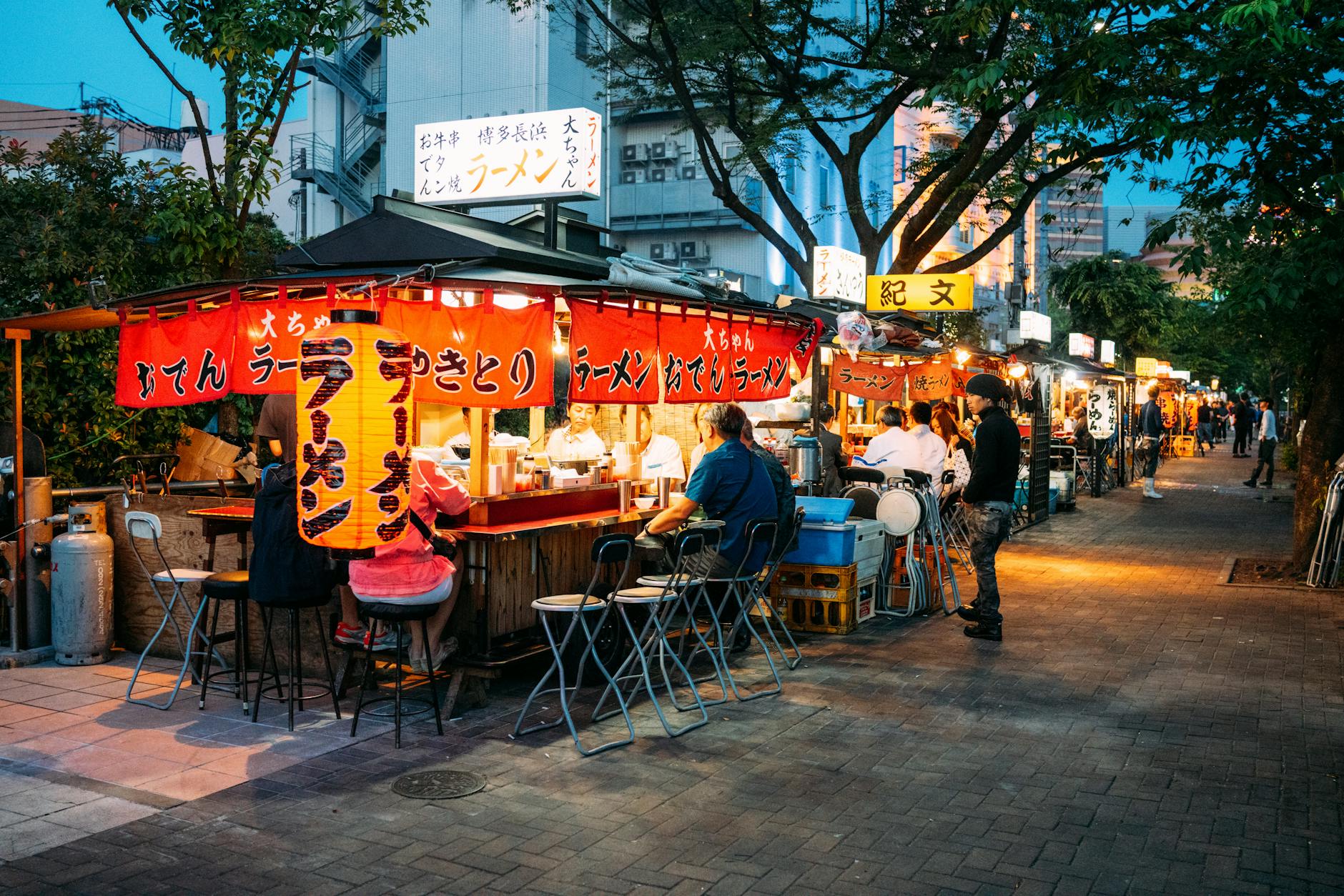
Food in Japan is where the budget math gets exciting. This might be one of the only countries where eating cheaply doesn't mean eating badly. Family restaurant chains, convenience stores, and food courts serve food that's actually good — often better than mid-range restaurants in other countries.
The secret weapon? Konbini. Japanese convenience stores (7-Eleven, Lawson, FamilyMart) sell fresh onigiri for ¥150 ($1), bento boxes for ¥400-600 ($2.65-$4), and surprisingly decent sandwiches and salads. A konbini breakfast for a family of 4 runs about $8-12 total. Compare that to a hotel breakfast buffet at $15-25 per person and the savings pile up fast.
Here's what a typical food day looks like across budget tiers:
- Budget ($40-$50/day): Konbini breakfast, ramen or udon for lunch ($5-8/person at chains), family restaurant dinner ($6-10/person at Gusto, Saizeriya, or Coco Ichibanya)
- Mid-range ($55-$80/day): Mix of konbini and cafe breakfasts, conveyor-belt sushi or set meals for lunch ($8-12/person), one nice restaurant dinner ($12-20/person)
- Premium ($80-$120/day): Hotel or cafe breakfasts, varied lunch spots, upscale sushi or teppanyaki dinners ($25-40/person)
Over 10 days, food costs range from $400-$500 (budget) to $800-$1,200 (premium). Most families land around $550-$800 by mixing konbini meals with a few memorable dining experiences — which is honestly the best way to eat in Japan anyway.
Getting Around Japan
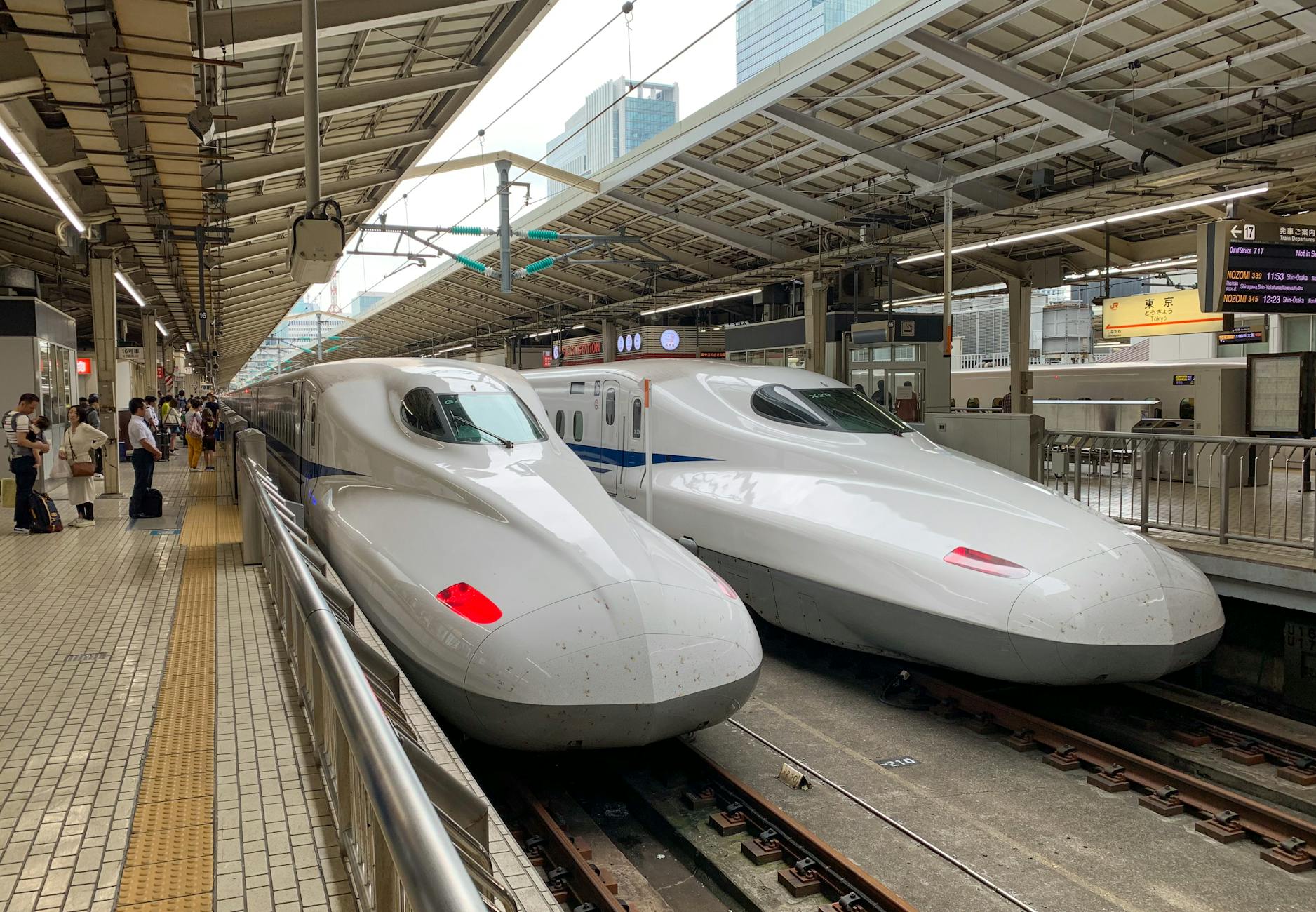
Transport is where Japan truly earns its reputation. The train system is fast, clean, on-time, and kid-friendly in ways that'll spoil you for every other country. But it's not cheap — and the JR Pass math has changed.
The Japan Rail Pass costs ¥50,000 ($330) per adult and ¥25,000 ($165) per child (ages 6-11) for 7 days. Kids under 6 ride free as long as they don't occupy their own seat. For a family of 4 with two adults and two kids aged 6+, that's $990 for a 7-day pass.
Is it worth it? Honestly, it depends on your route. Since the significant price increase in late 2023, the JR Pass no longer saves money on the standard Tokyo-Kyoto-Osaka loop that most families do. A round-trip Shinkansen ticket between Tokyo and Kyoto costs about ¥27,000 ($178) per adult — so you'd need several more long-distance trips to break even on the ¥50,000 pass. Our JR Pass family guide walks through the exact breakeven calculations.
For getting around within cities, IC cards (Suica or Pasmo) work like tap-to-pay transit cards. Load them with cash and use them on subways, buses, and local trains. Daily transit within Tokyo costs roughly ¥600-1,000 ($4-7) per adult.
Total transport costs for 10 days (excluding flights):
- Budget: $400-$600 — Individual Shinkansen tickets + IC cards, strategic route planning
- Mid-range: $600-$900 — JR Pass for multi-city travel + IC cards + occasional taxi
- Premium: $900-$1,200 — JR Pass Green Car (first class) + taxis + possible domestic flight
Activities and Attractions
Japan's biggest surprise for families? Many of the best experiences are free or nearly free. Feeding deer in Nara costs nothing. Walking through Fushimi Inari's thousands of torii gates is free. Most parks, gardens, and neighborhood walks are free. The paid attractions tend to be theme parks — and those are where the activity budget goes.
Tokyo Disney is the big-ticket item for most families. One-day tickets run ¥7,900-¥10,900 ($52-$71) per adult and ¥4,700-¥5,600 ($31-$37) per child aged 4-11, depending on the date. Children 3 and under enter free. A family of 4 with two adults and two kids under 12 pays roughly $170-$215 for a single park day. Add food and souvenirs inside the park and one day at Tokyo Disney easily hits $300-$400.
Browse Tokyo family tours and tickets on Viator — handy for a guided half-day between park days when the kids need a slower pace, and for pre-booked entry that skips the longest ticket queues.
Other paid attractions to budget for:
Osaka and Kyoto family experiences on Viator — worth pricing skip-the-line entry for Universal Studios Japan and the TeamLab venues before you go, since same-day lines eat a chunk of a paid park day.
- TeamLab Borderless/Planets: ~$25-30/adult, $10-15/child
- Universal Studios Japan (Osaka): ~$65-75/adult, $45-50/child
- Temples and shrines: Most are free; some charge ¥300-600 ($2-4) entry
- Museums: ¥500-1,500 ($3.30-$10) per person; many offer free entry for kids
- Ghibli Museum (Mitaka): ¥1,000/adult ($6.60), ¥400/child ($2.65) — must book months ahead
Over 10 days, activity costs range from $200-$400 (budget: mostly free attractions with one theme park day) to $800-$1,200 (premium: multiple theme parks, paid experiences, and cultural workshops). A mid-range family doing one Disney day plus temples, Nara, and a couple of museums typically spends $400-$700.
Hidden Costs Families Miss
These smaller expenses don't appear in most budget guides, but they add up to $200-$500 over a 10-day trip.
- Pocket WiFi / eSIM: $30-$60 for 10 days. Don't skip this — Google Maps and translation apps are essential with kids.
- Coin lockers: ¥400-800 ($2.65-$5.30) per use. You'll use these at train stations when moving between cities with luggage and strollers.
- Luggage forwarding (takkyubin): ¥2,000-3,000 ($13-$20) per suitcase between cities. Worth every yen — shipping bags ahead means you ride the Shinkansen hands-free with kids.
- Temple and shrine fees: Most are free, but popular ones like Kinkaku-ji charge ¥400-600 ($2.65-$4). Budget ¥2,000-3,000 ($13-$20) total for a 10-day trip.
- Drinks and vending machines: Kids will want to try every vending machine. At ¥120-160 ($0.80-$1.05) per drink, this sneaks up. Budget ¥500/day ($3.30).
- Souvenirs and omiyage: Japan has incredible gift culture. Budget $50-$150 depending on self-control.
Good news: there's no tipping in Japan. None. Zero. That alone saves families $200-$400 compared to a US vacation of the same length. And most restaurants don't charge for water or bread/rice refills.
Cost by Season
When you go affects your total cost more than almost any other decision. The same 10-day trip can cost $7,500 in January or $14,000 during cherry blossom season. Here's why.
| Season | Flight Premium | Hotel Premium | 10-Day Family Total |
|---|---|---|---|
| 🌸 Cherry Blossom (late Mar-mid Apr) | +50-80% | +40-60% | $11,000-$14,000+ |
| 🍁 Fall Colors (Oct-Nov) | +20-40% | +15-30% | $9,500-$12,500 |
| ☀️ Summer (Jul-Aug) | +30-50% | +10-20% | $9,000-$12,000 |
| ❄️ Winter (Jan-Feb) | Baseline | Baseline | $7,500-$9,500 |
| 🌧️ Shoulder (Jun, Sep) | Baseline to +10% | -10-23% | $7,500-$10,000 |
June gets a bad reputation because of rainy season (tsuyu), but it's actually a solid pick for families. Hotels are at their cheapest, crowds thin out significantly, and the rain is usually intermittent — not all-day downpours. Pack light rain jackets for the kids and you'll save thousands while still enjoying every major attraction.
Cherry blossom season is magical. No question. But is it $4,000-$6,000 worth of "more magical" than fall foliage season in November? For most family budgets, the answer is no. Fall delivers stunning scenery at 30-40% lower costs, with cooler temperatures that are easier on young kids.
Sample Budget: 10 Days for a Family of 4
Here's the full breakdown across three budget tiers. This assumes two adults and two children ages 6-11, flying from the US West Coast, visiting Tokyo, Kyoto, and Osaka.
| Category | Budget | Mid-Range | Premium |
|---|---|---|---|
| Flights (family of 4) | $2,400 | $3,600 | $5,600 |
| Accommodation (9 nights) | $900 | $1,800 | $3,600 |
| Food (10 days) | $450 | $700 | $1,100 |
| Transport (in-Japan) | $450 | $750 | $1,100 |
| Activities | $300 | $600 | $1,000 |
| Hidden costs (WiFi, lockers, etc.) | $200 | $350 | $500 |
| Total | $4,700 | $7,800 | $12,900 |
Budget travelers can get this below $5,000 by flying in low season, sticking to business hotels, eating mostly at konbini and family restaurants, and focusing on free attractions. It's tight, but it's doable.
Mid-range is where most families land — and $7,800 buys an excellent 10-day trip. One Disney day, comfortable hotels in good locations, a mix of cheap and nice meals, and the JR Pass for easy intercity travel.
Premium travelers get ryokan nights, Green Car on the Shinkansen, upscale dining, and multiple theme parks. At $12,900, it's not cheap — but it's roughly half what an equivalent 10-day trip to Hawaii or Europe would cost at the same quality level.
Flying from the East Coast? Add $800-$1,600 to these numbers. Traveling during cherry blossom season? Add $2,000-$4,000 for flights and hotels. Got kids under 6? Subtract $300-$500 since they ride trains free and skip many admission fees.
Want to see how these numbers look with your specific family size, departure city, and dates? Our first-timer guide to Japan with kids covers the planning details, and the budget calculator below will crunch your personalized numbers.
Final Verdict
Japan costs $7,500-$14,000 for a family of 4 over 10 days in 2026, making it pricier than Southeast Asia but significantly cheaper than equivalent trips to Hawaii, Western Europe, or Australia at the same quality level. The combination of the weak yen, zero tipping culture, affordable food options, free public attractions, and one of the safest, cleanest, most family-friendly transportation systems on earth makes Japan one of the highest-value international trips a family can take right now.
The biggest cost lever is timing. Families flexible on dates can save $3,000-$5,000 by choosing shoulder season over cherry blossoms. The second-biggest lever is food — embracing konbini culture instead of eating every meal at sit-down restaurants cuts the food budget nearly in half without sacrificing quality.
Is it worth the money? For families with kids who are old enough to walk reasonable distances (generally ages 4+), Japan delivers experiences that simply don't exist anywhere else — bullet trains, deer parks, temple forests, vending machine culture, and a level of daily "wow" that keeps even jaded teens engaged. If the budget works, go. For a deeper look at the logistics, our Japan vs South Korea comparison breaks down how these two destinations stack up side by side.
Frequently Asked Questions
Data Sources and Methodology
This guide uses verified data from official and authoritative sources:
- Japan Rail Pass Official Website — JR Pass pricing (¥50,000/7-day adult, ¥25,000 child)
- Tokyo Disney Resort Official Site — Park ticket pricing (variable pricing model)
- Japan National Tourism Organization (JNTO) — Travel guidelines and visitor information
- Booking.com, Expedia, and Kayak — Accommodation price ranges verified March 2026
- Google Flights — Flight pricing data from US departure cities, verified March 2026
All prices verified as of March 2026. Currency conversions use approximate rate of ¥152 = $1 USD. Prices may vary based on exchange rate fluctuations.