Japan 10-Day Itinerary with Kids: The Day-by-Day Family Plan
A realistic day-by-day plan for families with kids ages 4 to 12, with per-day costs, train times, and tweaks for toddlers through teens.
Quick Answer
Ten days is enough for a first Japan family trip, and a family of four should budget about $8,500 to $11,500 all-in for 2026, split as roughly six days in Tokyo and four across Kyoto, Nara, and Osaka.
- 🗾 Route: Tokyo (6 days), then Kyoto with day trips to Nara and Osaka (4 days), flying out of Kansai.
- 💰 Total budget: $8,500 to $11,500 for a family of 4 mid-range; $7,500 budget tier; $12,000-plus luxury.
- 🚄 JR Pass: a 7-day pass (about $1,000 to $1,200 for four) covers the Tokyo-Kyoto bullet train and Kansai day trips; weigh it with our JR Pass family guide.
- 🏰 Big wins: Tokyo Disneyland and DisneySea, Nara deer feeding, Fushimi Inari gates, and teamLab.
- 👨👩👧👦 Best ages: 4 to 12, with 6 to 10 the sweet spot.
- 📅 Best seasons: late March to May, or October and November.
- ⚠️ Pacing rule: cap each day at two to three major stops or the meltdowns start.
Put your home airport, your ten dates and each kid's age into the Budget Calculator to see where your own family lands inside that $8,500 to $11,500 band, and add the rail pass yourself, because the calculator covers flights, lodging, food and local transport but does not price a Japan Rail Pass.
How many days do you need in Japan with kids?
Ten days is the sweet spot for a first family trip, long enough for two theme-park days, Kyoto's temples, and a Nara deer stop without dragging tired kids through a new city every morning. Shorter trips work if you stay in one region. Longer trips open up Hiroshima and Hakone. Here is how the common lengths compare for a family of four.
| Trip length | Best for | What you cover | Rough family-of-4 all-in |
|---|---|---|---|
| 7 days | Toddlers, short leave, one region | Tokyo plus one day trip (Disney, teamLab, one culture day) | $6,000-8,000 |
| 9 days | Tighter budget or fewer days off | Tokyo and Kyoto, dropping one Disney day or the Osaka add-on | $8,000-10,500 |
| 10 days | First-time families (recommended) | Tokyo, Kyoto, Nara, and an Osaka finish | $8,500-11,500 |
| 14 days | Older kids, deeper trips | Adds Hiroshima and Miyajima, Hakone, and extra Kyoto | $12,000-16,000 |
To compress the plan below into a 9-day itinerary Japan with kids, drop the flexible Day 5 or the second Disney day. For a 7-day Japan family trip itinerary, keep everything in Tokyo and add one Kyoto overnight. To grow it into a 14-day family route, insert Hiroshima and Miyajima after Osaka and give Kyoto an extra day.
Why this Tokyo to Kansai route works
Japan family planning gets overwhelming fast: too many cities, conflicting JR Pass advice, and the nagging question of whether ten days is enough. This Tokyo-to-Kansai split keeps the geography tight and the pace kid-sized. You base in two hotels total, not five.
- Focused geography: Tokyo plus the Kansai region (Kyoto, Osaka, Nara). No zig-zagging across the country.
- Built-in rest: the Disney days double as fun-but-restful days where kids recharge while still having a blast.
- Two to three stops a day, with buffer time for snack breaks and the inevitable meltdown.
- One well-timed 7-day JR Pass covers the expensive bullet-train and regional-train days.
- A real mix: theme parks and deer feeding balanced with temples and tradition.
Japan versus South Korea for families: this 10-day Japan route costs $8,500 to $11,500 for a family of four, against roughly $6,800 to $9,200 for a comparable South Korea trip. Japan wins for ages 4 to 12 thanks to Tokyo Disney and DisneySea and stronger young-kid appeal; South Korea wins on budget and for K-pop-obsessed teens. Our Japan vs South Korea family comparison runs the numbers side by side.
Book it in this order
A few Japan bookings have hard deadlines that catch first-timers off guard. Get these done in sequence and the rest of the trip falls into place.
- Book flights 3 to 6 months ahead, ideally open-jaw into Tokyo and out of Osaka so you never backtrack.
- Reserve hotels: about 6 nights near a Tokyo transit hub like Shinjuku, then 3 nights near Kyoto Station.
- Buy dated Tokyo Disneyland and DisneySea tickets 2 to 3 months out, before your dates sell out.
- Decide on a 7-day JR Pass versus point-to-point tickets, and plan to activate the pass on Day 4.
- Pre-book teamLab timed entry and any kimono rental one to two weeks ahead.
- Set up an eSIM or pocket Wi-Fi and download Google Maps, Google Translate, and the Tokyo Disney app.
Day-by-day Japan family itinerary
Day 1: Tokyo arrival, Shibuya and Harajuku
Morning: land at Narita or Haneda, take the Narita Express or Airport Limousine Bus to your hotel, check in, and rest.
Afternoon: Shibuya Crossing and the Shibuya Sky deck (about 2,000 yen per adult, 1,000 yen per child ages 6 to 12), then the Hachiko statue.
Evening: Harajuku's Takeshita Street for crepes and color, then an early dinner and early night for jet lag.
Day 1 cost, family of 4: $115 to $160 (airport transfer, Shibuya Sky, and meals).
Shinjuku family hotels on Expedia. A transit-hub base near the major train lines keeps Days 1 to 5 simple, and family rooms run roughly $200 to $280 a night.
Day 2: teamLab and Asakusa
Morning: teamLab Borderless at Azabudai Hills for interactive digital-art rooms (2 to 3 hours). Kids get lost in the light and waterfall spaces.
Afternoon: Odaiba for the Gundam statue, the beach park, or the Legoland Discovery Center.
Evening: Asakusa's Senso-ji Temple and Nakamise shopping street for traditional snacks and souvenirs.
Day 2 cost, family of 4: about $170 (teamLab tickets, transport, and meals).
See teamLab Borderless tickets on Viator. Timed entry sells out a week or two ahead, so lock a morning slot before you build the rest of Day 2.
Day 3: Tokyo Disneyland (full day)
Full day: Tokyo Disneyland from opening (8 to 9 AM) to closing. Classic Disney with Japanese hospitality and a level of cleanliness other Disney parks cannot touch.
Younger kids (4 to 8): Fantasyland, Pooh's Hunny Hunt (a trackless global exclusive), Toontown, character meets, and parades.
Older kids (8-plus): Space Mountain, Splash Mountain, and Big Thunder Mountain.
Day 3 cost, family of 4: $335 to $410 (tickets about $220 to $260, plus food and souvenirs).
Tokyo Disney ticket options on Viator. Dated tickets matter here, since the parks sell out 30 to 60 days ahead in peak seasons.
Day 4: Tokyo DisneySea plus JR Pass activation
Morning: activate your 7-day JR Pass at a JR ticket office before heading to the park.
Full day: Tokyo DisneySea, the most distinctive Disney park anywhere, with ocean and adventure theming adults love as much as kids.
Must-ride for ages 8-plus: Journey to the Center of the Earth, 20,000 Leagues Under the Sea, Tower of Terror, and Indiana Jones Adventure.
Day 4 cost, family of 4: about $300 for the park day, plus the JR Pass at $1,000 to $1,200 (a one-time cost that covers Days 4 to 10).
Day 5: Akihabara and Ueno, or a Mt. Fuji day trip
Option A (city day): Akihabara for anime and arcades, then Ueno Park and Zoo (600 yen per adult, 200 yen per child), then Ameyoko street food.
Option B (nature day): a Hakone and Mt. Fuji loop with the Lake Ashi pirate ship, Hakone Shrine, and volcanic valley views.
Reality check: Mt. Fuji hides behind cloud on most days, so treat a clear view as a bonus, not the plan.
Day 5 cost, family of 4: about $116 to $186, whichever option you choose (Hakone uses the JR Pass to Odawara).
Day 6: Shinkansen from Tokyo to Kyoto
Morning: a final Tokyo stop, like a Tsukiji Outer Market sushi breakfast, or just sleep in.
Midday: check out, head to Tokyo Station, and ride the Hikari shinkansen to Kyoto (about 2 hours 40 minutes, covered by the JR Pass).
Evening: arrive in Kyoto, check in, and take a light neighborhood stroll for dinner.
Day 6 cost, family of 4: $83 to $123 (train covered by the JR Pass, plus ekiben, breakfast, and optional luggage forwarding).
Browse Kyoto family hotels on Expedia. A base near Kyoto Station makes the Nara and Osaka day trips painless and runs about $150 to $200 a night.
Day 7: Fushimi Inari and Arashiyama
Morning: Fushimi Inari Shrine and its red torii gates. Arrive by 8 AM to beat the crowds; lower trails (20 to 30 minutes) suit young kids.
Afternoon: Arashiyama Bamboo Grove, then Iwatayama Monkey Park (550 yen per person) for wild monkeys and hilltop views.
Evening: a Gion district stroll and dinner along Pontocho Alley.
Day 7 cost, family of 4: about $100 (Fushimi Inari and the bamboo grove are free; the monkey park and meals make up the rest).
Day 8: Nara day trip
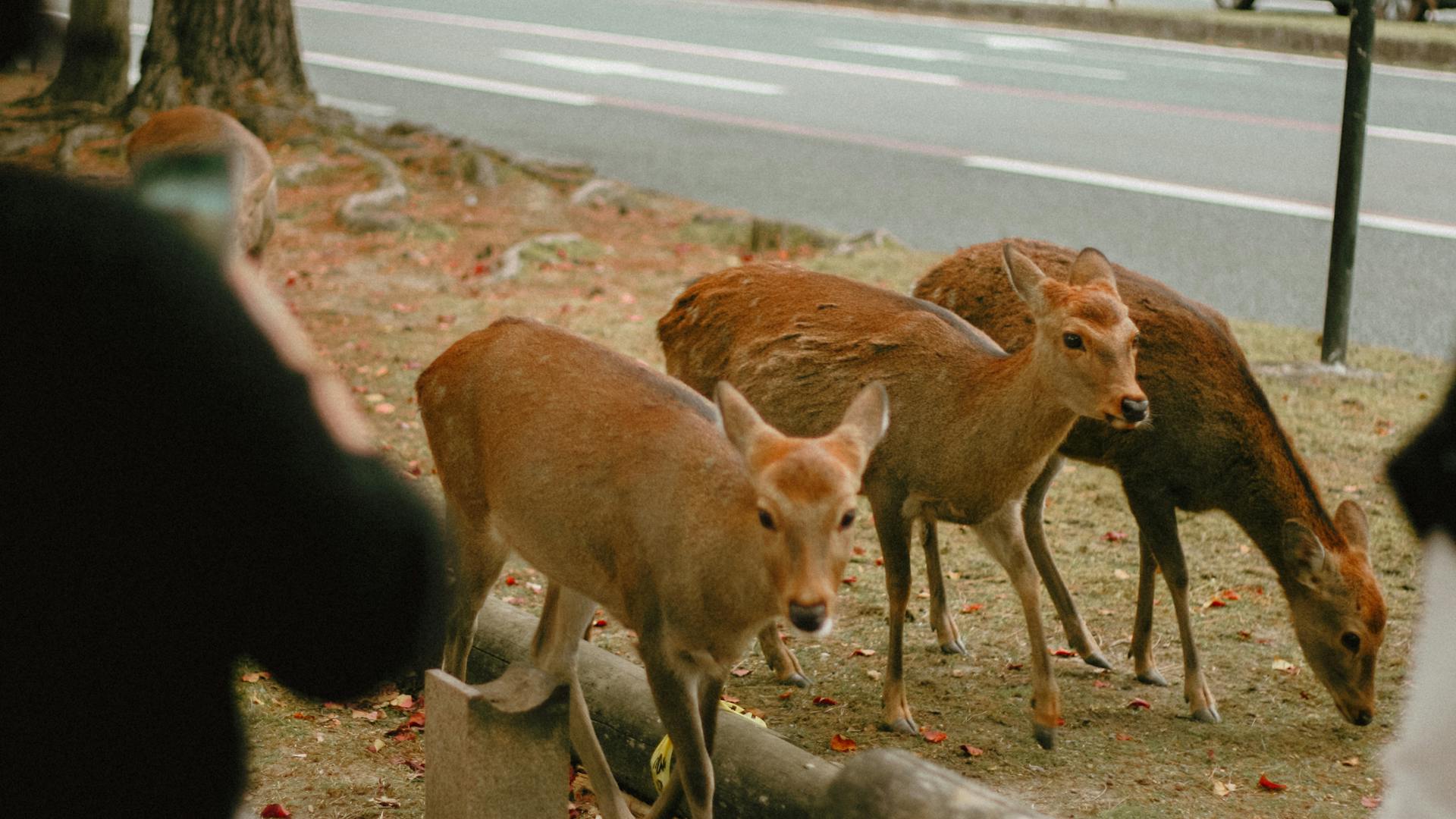
Morning: the JR train to Nara (about 45 minutes from Kyoto), then Nara Park to feed the deer.
Midday: Todai-ji Temple (600 yen per adult, 300 yen per child), home to a 15-meter bronze Buddha and a pillar with a hole kids can crawl through.
Afternoon: Kasuga Taisha's lantern-lined paths and the Naramachi merchant streets, then back to Kyoto.
Day 8 cost, family of 4: about $88 (train covered by the JR Pass, plus deer crackers, Todai-ji, and meals).
Day 9: Kyoto temples and Nishiki Market
Morning: Kinkaku-ji, the Golden Pavilion (400 yen per adult, 300 yen per child), then Nishiki Market for a tasting walk.
Afternoon: an optional kimono rental (about $85 to $140 for four), then Higashiyama's lanes and Kiyomizu-dera.
Evening: a tea-ceremony experience or a relaxed kaiseki dinner.
Day 9 cost, family of 4: $123 to $228 (temples and market plus the optional kimono rental and meals).
Day 10: Osaka and departure (or Universal Studios)
Option A (relaxed): a morning train to Osaka, Dotonbori street food (takoyaki, okonomiyaki), Osaka Castle grounds, then the Haruka Express to Kansai Airport.
Option B (extended): a full day at Universal Studios Japan for Super Nintendo World and Harry Potter, with a late departure.
Dotonbori is where the 80 percent rule earns its keep: order small, share plates, and save room for one more skewer.
Day 10 cost, family of 4: about $63 for Option A, or $350 to $630 if you add Universal Studios.
Compare Universal Studios Japan tickets on Viator. Worth pricing the studio pass plus an Express Pass only if your kids are real Nintendo or Harry Potter fans.
Per-day cost and train times at a glance
Two tables do most of the planning work here: what each day costs a family of four (food and activities, with lodging, flights, and the JR Pass tracked separately) and how long each travel leg takes.
| Day | Focus | Family-of-4 cost | Notes |
|---|---|---|---|
| Day 1 | Tokyo arrival, Shibuya and Harajuku | $115-160 | Keep the first day light for jet lag |
| Day 2 | teamLab and Asakusa | ~$170 | Book teamLab a week or two ahead |
| Day 3 | Tokyo Disneyland | $335-410 | Dated tickets 2 to 3 months out |
| Day 4 | Tokyo DisneySea, activate JR Pass | ~$300 + pass | JR Pass $1,000-1,200 (covers Days 4-10) |
| Day 5 | Akihabara and Ueno, or Mt. Fuji | $116-186 | Weather picks the option |
| Day 6 | Shinkansen to Kyoto | $83-123 | Ride Hikari, not Nozomi, on the pass |
| Day 7 | Fushimi Inari and Arashiyama | ~$100 | Reach Fushimi Inari by 8 AM |
| Day 8 | Nara day trip | ~$88 | Deer crackers are 200 yen |
| Day 9 | Kyoto temples and Nishiki Market | $123-228 | Kimono rental is optional |
| Day 10 | Osaka and departure (or Universal) | $63 (or $350-630) | Haruka Express to Kansai Airport |
| Travel leg | Distance | Train time | Tip |
|---|---|---|---|
| Narita Airport to central Tokyo | ~60 km | 60-90 min (Narita Express) | Haneda is closer, 30 to 45 minutes |
| Tokyo to Kyoto (shinkansen) | ~450 km | 2h 40m (Hikari) | JR Pass covers Hikari, not Nozomi |
| Kyoto to Nara | ~40 km | 45 min (JR Nara Line) | Day trip, no hotel change |
| Kyoto to Osaka | ~55 km | 30-40 min (JR Special Rapid) | Easy half-day out and back |
| Osaka to Kansai Airport | ~50 km | 75 min (Haruka Express) | Covered by the JR Pass |
Planning from the USA: flights, jet lag, and budget answers
Most US families searching for a 10 day itinerary Japan with kids get stuck on two things: the flight cost and whether their number is realistic. Here is the straight version.
- Flights: West Coast families often find round trips near $2,800 to $3,500 for four; East Coast runs $4,000 to $5,000. Book 3 to 6 months out.
- Flight length: about 11 hours from the West Coast, 13 to 14 from the East. Kids usually reset in 2 to 3 days, so Day 1 stays light.
- Open-jaw tickets: flying into Tokyo and out of Osaka adds $200 to $400 but removes a backtracking day.
Parent trip reports on r/JapanTravel, including a widely shared thread titled "10 Days in Japan With a Family of 5," land on the same lesson this plan is built around: two to three stops a day is the ceiling before young kids run out of gas.
So is your budget enough?
The budget questions people ask are really per-person questions in disguise. On a mid-range trip, plan on roughly $250 to $350 per person per day on the ground, before international flights. That math answers the common ones:
- Is $3,000 enough for 10 days in Japan? Yes for one adult; no for a family of four, who need about $8,500 to $11,500 all-in.
- Is $5,000 enough for 2 weeks in Japan? Comfortable for one person; a family of four needs closer to $11,000 to $14,000.
- Is $10,000 enough for a week in Japan? Yes for a family of four, with a cushion left over.
Complete 10-day Japan budget breakdown
This is a realistic mid-range trip for four people (two adults, two kids ages 6 to 12) over 10 days and 9 nights. Prices were checked against official sources and booking platforms in July 2026.
| Expense category | Cost range (USD) | Notes |
|---|---|---|
| Flights (round trip, family of 4) | $3,500-5,000 | West Coast $2,800-3,500; East Coast $4,000-5,000. Open-jaw (Tokyo in, Osaka out) adds $200-400 but saves a backtrack. |
| Accommodation (9 nights) | $1,800-2,500 | Tokyo $200-280 a night (6 nights); Kyoto $150-200 a night (3 nights). Family rooms or 2-bedroom rentals. |
| Food (10 days) | $1,550-2,150 | $120-180 a day for four. Conbini breakfasts keep it low; theme-park days add $30-50. |
| JR Pass (7-day) | $1,000-1,200 | 50,000 yen per adult, 25,000 yen per child. Covers the shinkansen, Kansai trains Days 4-10, and airport transfer. |
| Tokyo Disney tickets (2 days) | $440-520 | Dated pricing runs 8,900 to 12,400 yen per adult per day, with the busiest autumn weekends at the top, and juniors 12 to 17 from 7,400 yen and children 4 to 11 from 5,300 yen (as of August 2026, source: Tokyo Disney Resort). Family of four is about $220-260 a day. |
| Other activities | $680-1,280 | teamLab, Shibuya Sky, temples, Nara, optional Hakone, optional Universal, optional kimono. |
| Local transport (non-JR days) | $200-300 | Tokyo Metro Days 1-3, IC card top-ups, and taxis for luggage. |
| Souvenirs and shopping | $300-700 | Disney merchandise, anime and Pokemon goods, snacks, and traditional crafts. Highly variable. |
| Travel insurance | $150-250 | $40-60 per person for 10 days. Covers medical, cancellation, and lost luggage. |
| Miscellaneous | $100-200 | Pocket Wi-Fi or eSIM, coin lockers, vending machines. No tipping in Japan. |
| Total trip cost | $8,500-11,500 | Mid-range realistic $9,500-10,500. Budget tier $7,500-8,500. Luxury $12,000-15,000. |
What the 7-day JR Pass costs a family of four, and what changes on October 1, 2026
The pass price in the table above is fixed in yen, and from October 1, 2026 the yen price depends on where you buy it. JR Group announced the change on April 9, 2026: Exchange Orders sold by overseas agencies go up, while the official online purchasing service holds the old price for a limited time (as of August 2026, source: Japan Rail Pass Official).
| Traveller | Online, or Exchange Order issued through September 30, 2026 | Exchange Order from an overseas agency, October 1, 2026 onward |
|---|---|---|
| Adult (age 12 and over) | 50,000 yen | 53,000 yen |
| Child (ages 6 to 11) | 25,000 yen | 27,000 yen |
| Family of four (2 adults, 2 children) | 150,000 yen | 160,000 yen |
Those are Ordinary pass prices, the Standard Car option (as of August 2026, source: JR East). Two things follow for a family of four. The dollar number floats even though the yen number does not: at 157.54 yen to the dollar, the Federal Reserve rate for August 7, 2026, 150,000 yen is about $952 and 160,000 yen is about $1,016. And age is checked on the day you pay, not the day you ride: a child who is already 12 when you buy pays the adult price (an 11-year-old at purchase keeps the child pass even if they turn 12 before the trip), so a family with one 12-year-old pays 175,000 yen rather than 150,000 yen for the same four passes.
Adjusting the itinerary by age: toddlers to teens
Traveling with a toddler (ages 2 to 5)
A 10 day Japan itinerary with a toddler works, but slow the pace and lean into open space. Best bets: Tokyo Disneyland (not DisneySea), Nara deer feeding under close watch, Yoyogi and Ueno parks for running room, and teamLab's floors and balls. Swap out DisneySea, tea ceremonies, and most temples, since cultural fatigue hits fast. Extend Tokyo to 7 or 8 nights, trim Kyoto to 2, and budget $7,500 to $10,000.
The sweet spot (ages 6 to 10)
This plan is built for 6 to 10 year-olds, no changes needed. They have the stamina for full days yet still find magic in deer, bullet trains, and neon streets. Theme parks, temples, animals, and modern tech all land.
Tweens (ages 11 to 12)
- Give Akihabara real time: anime stores, retro arcades, the Pokemon Center, and manga hunting.
- Prioritize DisneySea over Disneyland; some tween-heavy families do two DisneySea days.
- Hand them a camera for Shibuya, Harajuku, and Fushimi Inari. Photography keeps them engaged.
- Let them lead with Google Maps and order food in a little Japanese. The country's safety makes that easy.
Teens (ages 13 to 17)
For a Japan itinerary 10 days with teens, Japan still delivers for anime and gaming fans, but K-pop-focused teens may prefer South Korea for street fashion, filming locations, and lower costs. If you are weighing the two, our Japan vs South Korea family comparison breaks it down.
If Japan wins, lean into Akihabara, Harajuku, and DisneySea, add Universal Studios for Nintendo or Harry Potter fans, and cut temples to one or two (Fushimi Inari and Kinkaku-ji). Add a sushi-making class and Dotonbori street food, and allow independent time in safe areas like Shibuya.
What to pack for 10 days in Japan with kids
The non-negotiables
- Two pairs of broken-in walking shoes per person. Expect 15,000 to 25,000 steps a day.
- Slip-on shoes for temples and traditional restaurants that require you to remove them.
- A daypack for water, snacks, and jackets, plus portable chargers for maps and the Disney app.
- A small hand towel; many restrooms skip paper towels, and locals carry their own.
With babies and toddlers
- 3 to 4 days of diapers and wipes, then restock at drugstores like Matsumoto Kiyoshi.
- A lightweight umbrella stroller; stations have elevators, but crowds reward going small.
- Familiar snacks for picky eaters, topped up at any conbini.
Money and connectivity
- Withdraw 50,000 to 80,000 yen at an airport ATM; many small shops are cash only, and 7-Eleven ATMs take foreign cards.
- An eSIM or pocket Wi-Fi (about $7 to $10 a day) for maps and translation.
- US plugs fit Japan's Type A and B outlets, so US travelers skip the adapter.
Frequently Asked Questions
Yes, ten days is enough for a first Japan trip with kids, covering Tokyo for about six days and Kyoto, Nara, and Osaka for four. That pacing fits two Disney days, temples, and deer feeding with rest built in. Families who also want Hiroshima or Hakone should stretch to 12 to 14 days.
For one adult, $5,000 comfortably covers two weeks in Japan on a mid-range budget once international flights are excluded, at roughly $250 to $350 a day for lodging, food, trains, and sights. A family of four would need closer to $11,000 to $14,000 all-in for the same 14 days.
For a single traveler, $3,000 is enough for ten days in Japan at about $300 a day for a mid-range trip, not counting international airfare. For a family of four it is not close; this ten-day family itinerary runs $8,500 to $11,500 all-in, so $3,000 covers roughly one person's share.
Yes, $10,000 is enough for a one-week Japan trip for a family of four, including international flights, mid-range hotels, food, and theme-park tickets. A seven-day family trip typically lands between $6,500 and $9,000 all-in, so $10,000 leaves a cushion for souvenirs, a JR Pass, or a splurge dinner.
There is no established travel "25-5 rule" in Japan; the concept most sources point to is the country's punctuality norm, sometimes called the 5-minute rule, where arriving about five minutes early counts as on time. For pacing this family itinerary, a useful version is capping each day at two to three major stops.
The 80% rule in Japan is hara hachi bu, an Okinawan practice of eating until you are about 80 percent full rather than stuffed. It is linked to Okinawa's high number of centenarians. With kids, it is a handy reminder to order smaller portions and share dishes at Dotonbori and Nishiki Market.
Written as "25 5," this is the same query as the 25-5 rule, and there is no formal Japanese travel rule by that name. Travelers usually mean the 5-minute punctuality habit, which matters most when catching a reserved shinkansen. Aim to reach the platform five minutes before departure, since trains leave exactly on time.
Data Sources and Methodology
This guide uses verified data from official sources and parent discussions across travel forums. All pricing was checked against official websites in July 2026.
- Japan Rail Pass Official for JR Pass pricing (50,000 yen per adult, 7-day Ordinary).
- Tokyo Disney Resort Official for park ticket pricing and booking.
- teamLab Borderless Official for the Azabudai Hills location and ticket pricing.
- Japan Guide for the JR Pass route calculator and travel logistics.
- Reddit r/JapanTravel and TripAdvisor Japan Forum for parent trip reports and experiences.
Last verified: July 2026. Pricing may change. Check official sources before booking.