Flying with Kids: Complete Family Air Travel Guide
Booking strategies, security shortcuts, and in-flight tactics that actually work — for every age
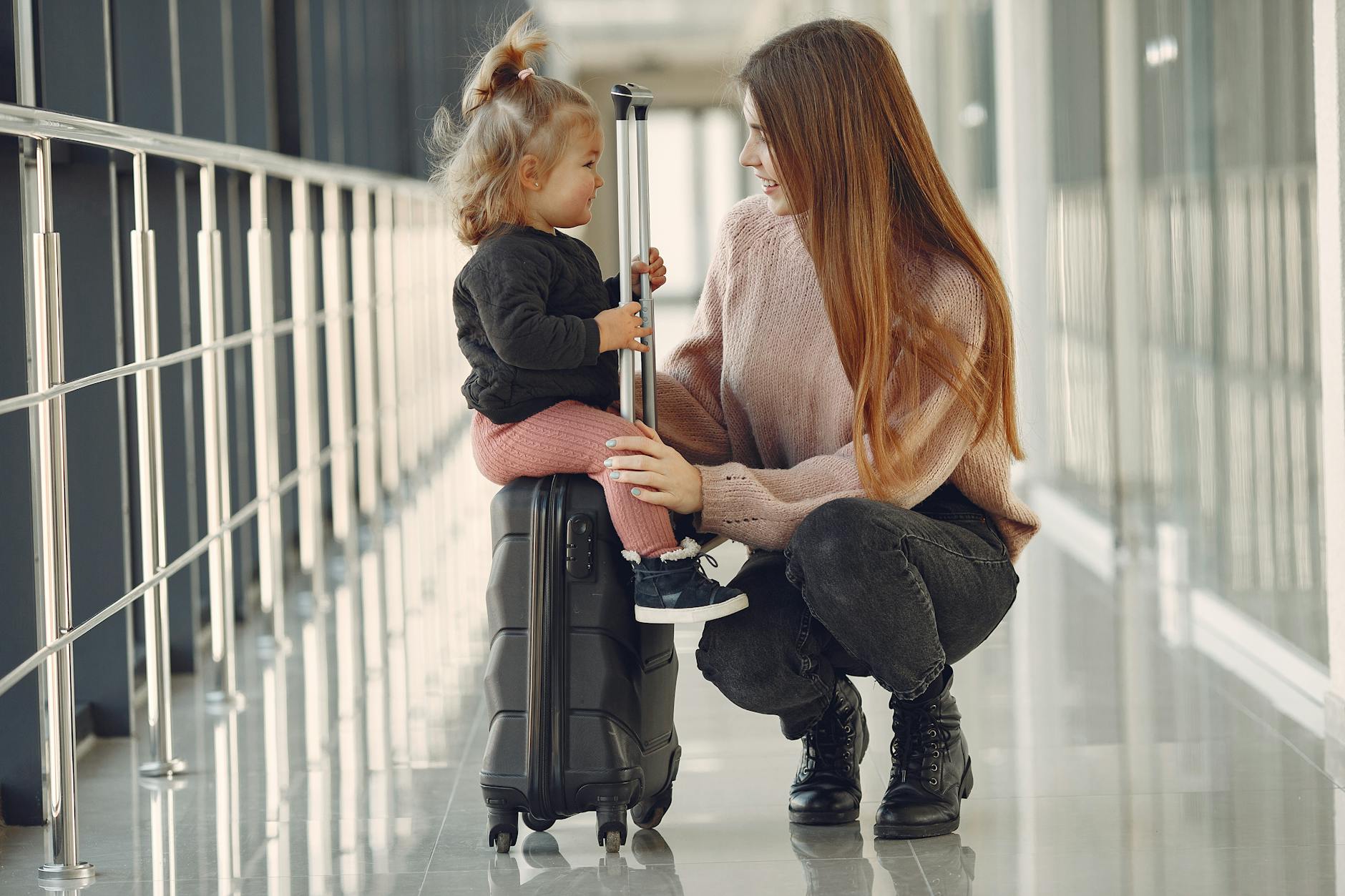
Quick Answer
Flying with kids doesn't have to be a white-knuckle experience. Here's what matters most:
- 🪪 ID rules: TSA doesn't require ID for children under 18 on domestic flights
- 🍼 Liquid exceptions: Formula, breast milk, and baby food are exempt from the 3.4 oz rule
- 💺 FAA recommendation: Buy a separate seat for children under 2 and use an approved car seat or CARES harness
- 🎧 Ear pressure fix: Nursing, pacifiers, or chewing gum during takeoff and landing — keep young kids awake for those parts
- ⏰ Arrival time: 2.5 hours before domestic flights, 3.5 hours for international
- 👨👩👧 Family lanes: TSA's "Families on the Fly" lanes give parents with kids 12 and under a dedicated screening line
- 🛂 Passports: Both parents must appear in person for children under 16 — apply 6-8 weeks ahead
Booking Strategy: Getting the Flights Right
The single biggest factor in a smooth family flight? Timing. Not the cheapest fare — the flight time that actually works with your kid's schedule. A red-eye might save $80, but it won't save your sanity when a toddler melts down at 1 AM somewhere over Kansas.
Flight timing by age
For infants and toddlers under 3, early morning flights tend to work best. Kids are rested, airports are less crowded, and if something goes wrong you've still got the whole day to rebook. Preschoolers (ages 3-5) do well with late morning departures — enough time for breakfast and a decent chunk of playground time before heading to the airport. School-age kids and teens? They're flexible enough that you can book whatever fits the budget.
Seat selection tips
- Bulkhead rows give extra legroom and floor space for toddlers to play, but armrests don't lift — so if you're hoping a child will sleep across your lap, skip bulkhead
- Window + middle is the sweet spot for one parent with one kid. You get the wall to lean against, plus the view as entertainment
- Rear of the plane is louder (engine noise masks crying) and closer to lavatories, but boards last on most airlines
- Over-wing seats feel the least turbulence — worth knowing if your kid gets motion sick
The lap infant decision
Here's the honest truth: the FAA strongly discourages holding children under 2 in your lap. Their exact wording is that "your arms aren't capable of holding your in-lap child securely, especially during unexpected turbulence." That said, buying a separate seat for a baby adds real cost. For short domestic flights under 3 hours, many families make the lap infant call and accept the trade-off. For longer flights or anything with turbulence risk, an FAA-approved car seat in its own seat is the safer choice.
Important
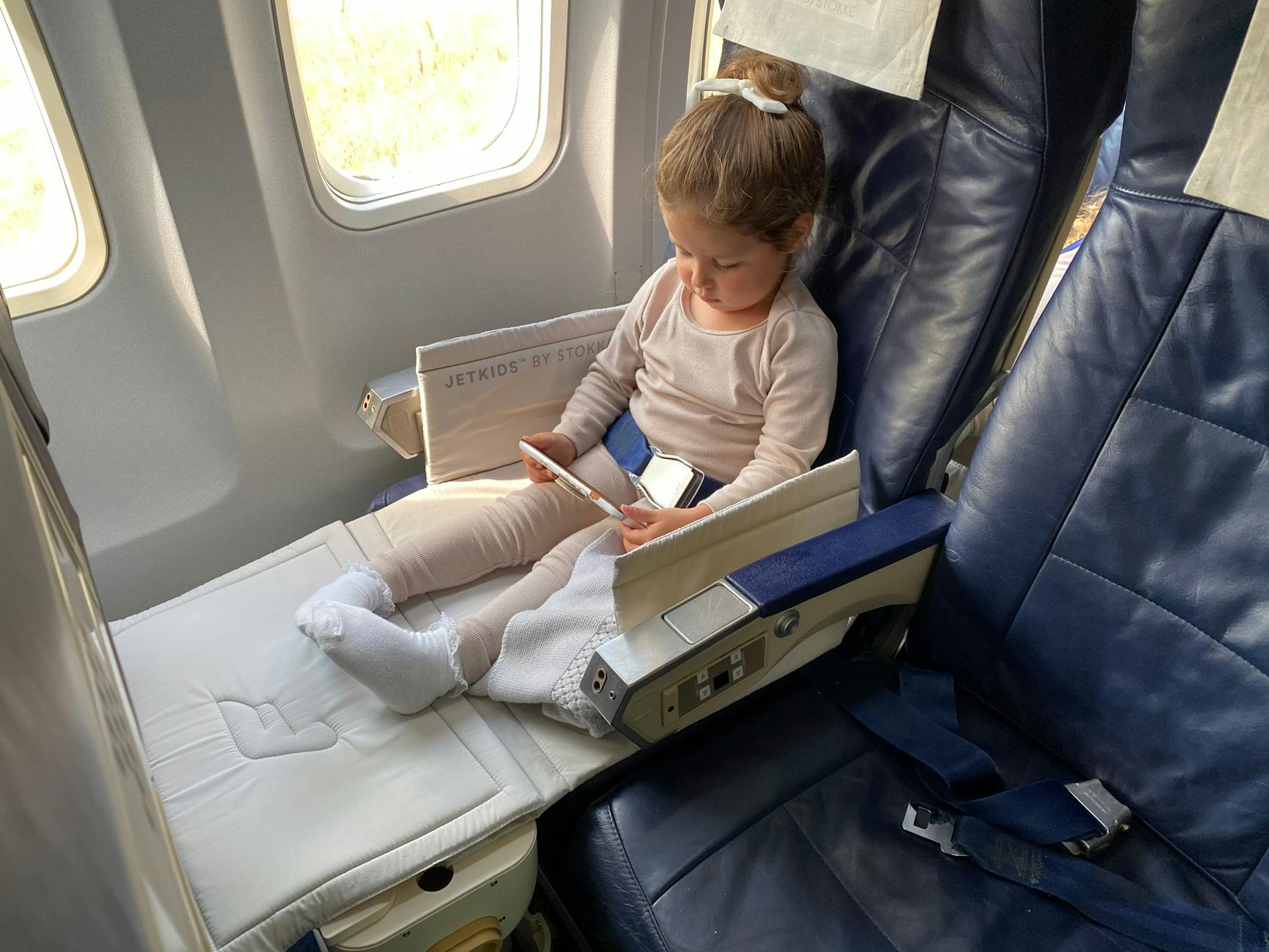
The CARES harness (for kids 22-44 lbs, up to 40 inches tall) is FAA-approved and weighs just 1 pound — a much easier carry than a full car seat. It works with the airplane's existing seatbelt. Booster seats and backless car seats are not permitted during takeoff, landing, or ground movement.
Documents and ID: What Every Family Member Needs
Domestic flights
Good news: TSA doesn't require any identification for children under 18 flying within the United States. The adults in the group need valid government-issued photo ID (REAL ID-compliant starting May 2025), but kids are covered. Just make sure the child's name on the boarding pass matches their legal name — airlines can flag mismatches.
International flights
Every person crossing a border needs a passport. Yes, that includes your 3-month-old. For children under 16, the U.S. State Department requires both parents (or legal guardians) to appear in person at a passport acceptance facility. If one parent can't make it, they'll need to complete a DS-3053 Statement of Consent form.
A few critical details that catch families off guard:
- Child passports are only valid for 5 years (not the 10 years adults get)
- Routine processing takes 6-8 weeks, but can stretch to 11 weeks during spring and summer surges
- If you're traveling within 3 weeks, you'll need an appointment at one of the 26 passport agencies — not a regular acceptance facility
- Some countries require passports to be valid for 6 months beyond your travel dates, so check destination requirements
Getting Through Airport Security
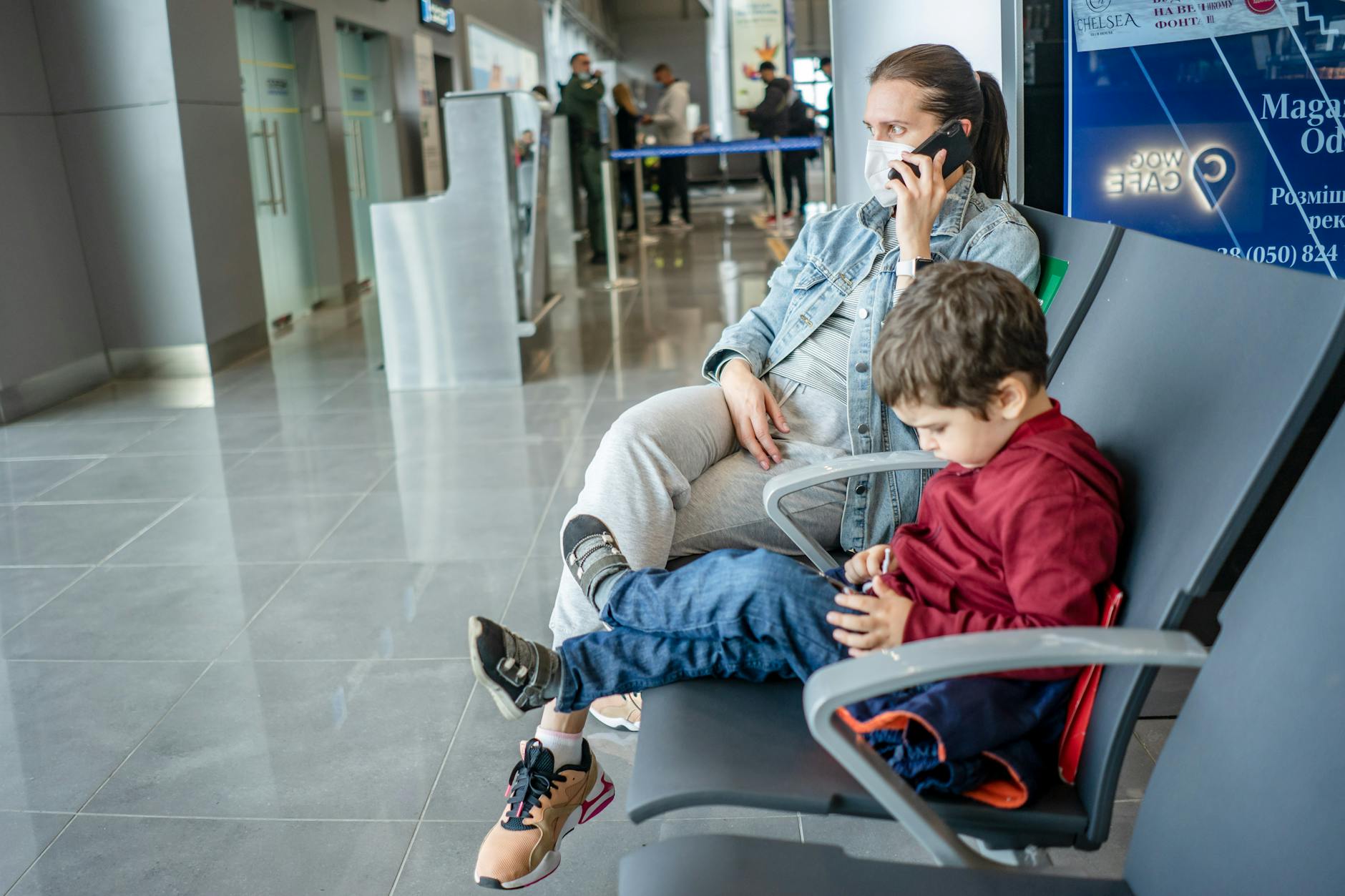
Airport security with kids is slower than without them. That's just reality. But it doesn't have to be a disaster if you know the rules going in.
TSA family lanes and modified screening
TSA's "Families on the Fly" program offers dedicated family lanes at many airports for parents traveling with children 12 and under. These lanes are staffed by officers trained to work with families, and the pace is more forgiving. Look for signage near the security entrance — not every checkpoint has them, but major airports typically do.
Children 12 and under get modified screening. They can keep shoes, light jackets, and headwear on when going through the metal detector. If they trigger an alarm, TSA will try multiple re-screens before resorting to a pat-down. And kids won't be separated from their parents at any point during screening.
What you can bring
Security Screening Checklist
If you've got TSA PreCheck, here's something worth knowing: children 17 and under can use the PreCheck lane with an enrolled parent or guardian. They don't need their own Known Traveler Number. That alone can shave 20+ minutes off your security wait.
Packing the Carry-On: What Actually Matters
Every family travel article tells you to pack snacks and entertainment. True enough. But the difference between a smooth flight and a rough one comes down to how you organize that bag — not just what's in it.
The layered bag strategy
Pack your carry-on in layers that match the flight timeline. Top layer (first things you'll need): boarding documents, a snack, headphones, and one quiet toy for the boarding wait. Middle layer: meal-time supplies, the main entertainment rotation, and a change of clothes. Bottom layer: backup items you hopefully won't need — extra diapers, a second outfit, emergency plastic bags.
Age-specific entertainment kits
Infants (0-12 months): A few small rattles, crinkle toys, and teethers. One familiar comfort item from home. Keep it simple — babies are easily overstimulated and often sleep better than you'd expect on planes (the white noise helps).
Toddlers (1-3 years): This is the hardest age. Seriously. Rotate through activities every 15-20 minutes: sticker books, small figurines, a tablet loaded with downloaded shows, reusable water coloring books, and pipe cleaners (surprisingly effective). Wrap a few items in foil — the unwrapping itself buys you five minutes.
Preschool and school-age (4-10): Loaded tablets, activity books, card games like Uno, and a small sketch pad. Kids this age can handle longer stretches with one activity, so you don't need the frantic rotation schedule.
Tweens and teens (11+): Headphones, fully charged devices, and a long leash. They're basically self-sufficient flyers. Just make sure their devices are charged and content is downloaded — don't count on in-flight Wi-Fi.
Snack strategy
Pack twice what you think you'll need. Flights get delayed. Layovers stretch. And hungry kids don't care about your carefully planned timeline. Good airplane snacks are low-mess, slow to eat, and slightly more exciting than what they'd get at home. Think dried mango strips, cheese-and-cracker packs, mini muffins, and those squeeze fruit pouches. Skip anything chocolate-coated (it melts) or super crunchy (crumb explosion in seat 22B).
In-Flight Strategies That Work
Managing ear pressure
Ear pain during ascent and descent is the number one cause of in-flight crying for young children. The fix is swallowing — it equalizes pressure across the eardrum. How you trigger swallowing depends on age:
- Infants: Nurse, bottle-feed, or offer a pacifier during takeoff and landing. Plan the timing so you're ready before the plane starts moving.
- Toddlers: A sippy cup of water, a lollipop, or a chewy snack. Anything that gets them swallowing repeatedly.
- Older kids: Chewing gum, drinking through a straw, or doing exaggerated yawns (make it a game).
One detail most parents miss: try to keep young children awake during takeoff and landing. Kids swallow less when they're asleep, which means they're more likely to wake up screaming from ear pain. It's counterintuitive (you want them sleeping!), but keeping them alert for those 10-15 minutes prevents a bigger problem.
The activity rotation
For toddlers and preschoolers, think in 15-20 minute blocks. No single toy or show will hold their attention for a 3-hour flight. Rotate through your entertainment kit, introduce items one at a time, and save the "big guns" (new toy, favorite show) for the last hour when patience runs thinnest. Walking the aisle is a perfectly valid activity too — most flight attendants are understanding when they see a parent with a restless toddler.
Age-by-Age: What Changes as Kids Grow
Infants (under 1)
Babies are actually pretty solid flyers once you solve the ear pressure issue. They sleep a lot, they're portable, and they don't kick the seat in front of them. The main challenges: diaper changes in tiny airplane bathrooms (look for lavatories with fold-down changing tables — usually in the rear), keeping them comfortable in an unfamiliar environment, and timing feeds around takeoff and landing. Most parents find infants easier to fly with than toddlers. Way easier.
Toddlers (1-3)
The hardest age to fly with. Full stop. They want to move, they can't be reasoned with, and "sit still for three hours" isn't in their vocabulary. Pack your patience alongside that entertainment kit. Gate-time play is critical — burn off as much energy as possible before boarding. Some airports have dedicated play areas near gates (search "[airport code] + kids play area" before your trip). Board last, not first, to minimize time strapped in.
Preschoolers (3-5)
Things start getting easier here. They can follow basic instructions, wear headphones, and engage with a tablet or activity book for real stretches of time. Talk them through the flight experience beforehand — what sounds to expect, why ears feel funny, how long it'll take. A kid who knows what's coming handles it better than one who doesn't.
School-age (6-12)
These kids can entertain themselves for most of a flight. Load up their device, bring a few snacks, and you might actually read a book for the first time in years. The main consideration at this age is making sure they stay hydrated (cabin air is incredibly dry) and that they get up and move occasionally on longer flights.
Teens (13+)
Teens are basically independent travelers who happen to be sitting next to you. Give them their headphones, make sure their phone is charged, and let them be. The biggest teen-specific concern is actually making sure they don't lose their boarding pass or forget items in the seatback pocket. Some families let teens sit separately on the same flight — it's a good way to build travel independence before they're flying alone.
Pre-Flight Prep Checklist
2-4 Weeks Before Your Flight
The Day Before
At the Airport
Frequently Asked Questions
Data Sources and Methodology
This guide uses verified data from official sources:
- Transportation Security Administration (TSA) — family screening rules and modified procedures for children
- Federal Aviation Administration (FAA) — child restraint system requirements and lap infant guidance
- U.S. Department of State — passport requirements for children under 16
- TSA PreCheck — family eligibility for expedited screening
- TSA Families on the Fly — dedicated family screening lanes
- MedlinePlus (NIH) — medical guidance on traveling with children
Last verified: February 2026