Traveling With Toddlers: A Decision Guide (Ages 1-3)
The big calls for traveling with toddlers, made simple: the right age to go, fly or drive, lap or seat, and how to survive the journey. It's a trip, not a vacation.

Quick Answer
- Traveling with toddlers is easiest around 2.5 to 3 years and hardest at 12 to 18 months, when kids are mobile but can't be reasoned with. Drive when the trip runs under about six hours and fly when it runs longer, book travel around naps or bedtime, and plan one activity per day. Success is everyone arriving fed and rested, not seeing every sight.
- Hardest age: 12 to 18 months. Easiest: 2.5 to 3 years. The age chart below tells you what to expect at each stage.
- Fly or drive: drive under roughly six hours; fly beyond that so you lose less toddler sleep.
- Under-2 toddlers fly free on a lap; at age 2 they need a paid seat, best used with an FAA-approved car seat or a CARES harness.
- Pack the carry-on like a survival kit: one diaper per travel hour plus extras, 2 to 3 times the snacks, and every comfort item from home. Start with our smart packing list tool.
- For the room-by-room gear list by age, see our family packing checklist by age.
How to Use This Decision Guide
Most toddler travel advice hands you a pile of tips and gear links. Useful, until you're standing at a booking screen trying to make an actual call. This guide flips that. It walks the four decisions that shape every toddler trip: the age you go, flying versus driving, buying a seat or not, and how you pack and pace the days.
Here's the thing experienced parents figure out fast. The trip rarely goes sideways because of the gear you forgot. It goes sideways at the departure time that collided with a nap, the six-hour drive that should have been a flight, or the day crammed with three activities. Get the big decisions right and the small stuff mostly sorts itself out.
The one mindset shift that changes everything
You're not on vacation with a toddler in tow. You're parenting in a new place, with the same naps, meals, and meltdowns you have at home, plus jet lag. Lower the bar, then lower it again. A trip where everyone stays fed and rested beats a packed itinerary nobody enjoyed.
Decision 1: Is Your Toddler at a Good Age to Travel?
No age is impossible, but the difficulty curve is real. The hardest age to travel with a toddler is usually 12 to 18 months, when they're newly mobile, determined to walk everywhere, and unable to follow a single instruction. Traveling with a 2 year old sits in the tricky middle. By 2.5 to 3 years, most families find it gets easier, because the child can be bribed, distracted, and reasoned with.
Use the chart to set expectations for your child's stage, then match the pace to it.
| Age stage | What makes it hard | Difficulty | Best move |
|---|---|---|---|
| 12 to 18 months | Newly walking, wants to roam, cannot follow directions, still on two naps | Hardest | Short trips, protect both naps, wear or stroller them through airports |
| 18 to 24 months | "No" is the favorite word, tantrums peak, nap dropping to one | Hard | Time travel around the single nap, overpack snacks and surprises |
| 2 to 2.5 years | Strong opinions, short attention span, needs constant engagement | Moderate | Bring new toys and a tablet, keep one activity per day |
| 2.5 to 3 years | Mostly reasonable, understands "when we get there," may skip naps | Easiest | Green light for bigger trips, bribe with a destination reward |
The pattern holds for a beach two states over and for a long-haul to see family. The younger, newly mobile stage just asks for a slower pace and more patience. If this is your first trip together, our first family trip checklist covers the pre-trip prep in order.
Decision 2: Fly or Drive With a 2 Year Old?
This is the decision parents agonize over most, and it comes down to one number. Drive when the route runs under about six hours; fly when it runs longer. Under six hours you control naps, snacks, temperature, and stops, and you can toss the car seat and stroller in the trunk without a second thought. Past six hours, a long drive starts eating into the 11 to 14 hours of daily sleep a young toddler still needs, and a timed flight loses less of it.
Call it the six-hour rule. Here's how the two stack up factor by factor.
| Factor | Driving | Flying | Better pick |
|---|---|---|---|
| Trip under 6 hours | Time it around a nap, one door-to-door leg | Airport overhead often exceeds the drive time | Drive |
| Trip over 6 hours or overseas | Two exhausting days, multiple overnights | A few hours, red-eye option to sleep through | Fly |
| Nap and stop control | Total control, pull over anytime | Locked in your seat, belt-sign dependent | Drive |
| Cost for a toddler | Gas and one hotel stop | Free lap child under 2, full fare at age 2 | Drive |
| Bringing the gear | Car seat, stroller, pack-n-play all fit | Gate-check or rent at the destination | Drive |
| Sleeping through the trip | Night drive in pajamas | Overnight red-eye | Depends on your child |
Driving a 2 year old wins on cost, gear, and control for anything regional. Flying wins the moment distance would burn a full day behind the wheel. For the car-specific playbook, snacks, rest-stop timing, and the night-drive trick, see our road trip survival guide.
Decision 3: Lap Child or Buy a Seat?
Children under 2 fly free as lap children on domestic flights, and pay only taxes and fees on most international lap fares. At age 2, that ends: a 2 year old needs their own paid seat at full fare. So the real choice applies to the under-2 stretch, and it's a genuine trade-off between money and everything else.
Lap child vs bought seat
- Lap child, pros: free under 2, one less thing to carry, fine on short hops.
- Lap child, cons: tiring to hold a squirmer, no guaranteed space, less safe in turbulence.
- Bought seat, pros: a familiar car seat rides along, toddler sleeps better, you get your arms back.
- Bought seat, cons: full ticket price, and you lug a car seat through the airport.
Short flight, lap child is fine. Long flight, most parents who've done both decide the extra seat pays for itself in sleep and sanity. If you buy the seat, use an FAA-approved car seat (check the sticker on the seat) or the lightweight CARES harness, which is FAA-approved and skips the car-seat haul entirely. That answers the common what-do-I-need question for flying with a 2 year old: a seat, a restraint, and the carry-on below.
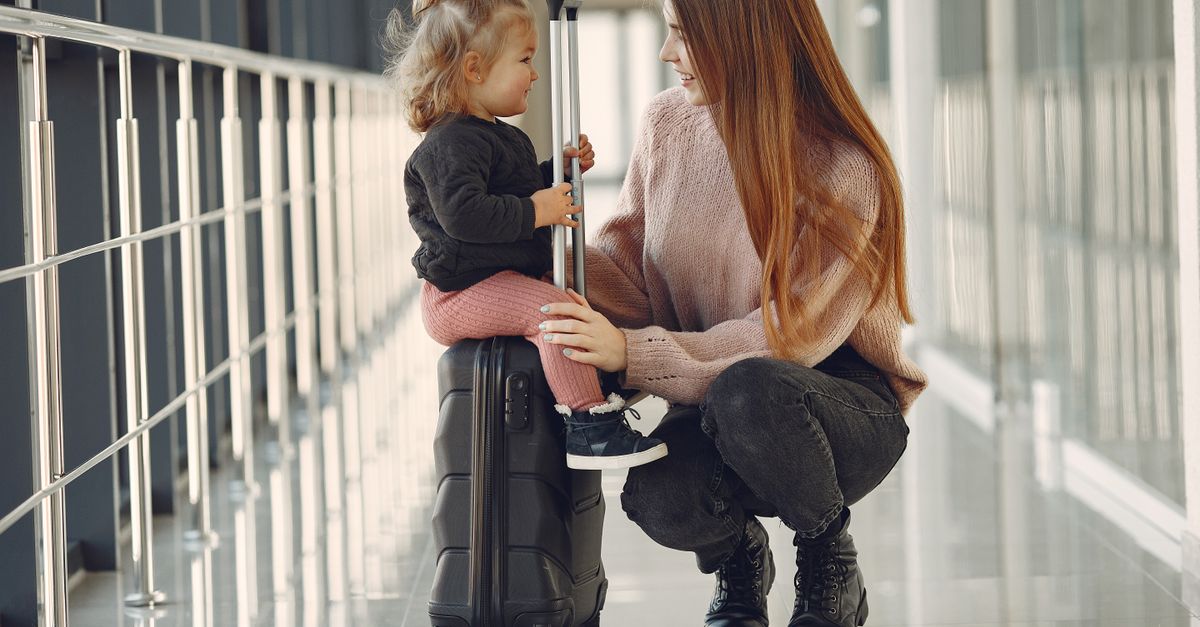
The Toddler Airplane Checklist (Essentials for a 2 or 3 Year Old)
Your carry-on is the survival kit. Pack it as a checklist, not an afterthought, and keep the snacks and comfort items at the top where you can reach them one-handed. These are the airplane travel essentials that matter for a 2 or 3 year old.
Carry-on checklist
- Snacks at 2 to 3 times what you think: pouches, crackers, dry cereal, cheese sticks. A fed toddler is a happy toddler.
- Drinks: a sippy cup or water bottle filled after security.
- Diapers or pull-ups: one per hour of travel plus extras.
- Wipes: a full pack, not a travel size.
- A change of clothes for the toddler and one for you, because blowouts happen.
- Comfort items: lovey, blanket, pacifier if used.
- Entertainment: a tablet with downloaded shows, sticker books, small toys.
- Volume-limited kids headphones that stay under 85 decibels.
- A few plastic bags for dirty clothes, trash, and motion sickness.
Pro tip: wrap the small toys
Wrap five or six tiny dollar-store toys in tissue paper. The unwrapping alone buys you 10 or more minutes per item, and the novelty resets a bored toddler faster than anything already in the bag.
At security, TSA exempts baby food, formula, breast milk, and water for mixing formula from the 3.4 ounce liquid limit; just tell the officer you're carrying them. For the full room-by-room version sorted by child age, our packing checklist by age guide goes deeper than a carry-on list can.
How to Survive a 12-Hour Flight With a Toddler
Long-haul with a toddler sounds like a nightmare and often isn't, if you let sleep do the heavy lifting. The single most reliable move on a 12-hour flight is to book a red-eye, put the toddler in pajamas at the airport, and board at their normal bedtime. Many sleep through most of the flight, which skips the in-flight entertainment battle entirely.
The entertainment rotation
For the waking hours, don't hand over everything at once. Rotate it:
- First hour: books, stickers, coloring.
- Second hour: small toys like finger puppets or a busy board.
- Third hour: tablet time, saved for when you actually need it.
- Fourth hour on: the wrapped surprises they've never seen.
Ears, diapers, and meltdowns
Ear pressure at takeoff and landing is the number one cause of toddler crying on planes, and swallowing fixes it: a bottle, a sippy cup of water, a pacifier, or lollipops for older toddlers. Double the diaper before boarding, since turbulence can trap you in your seat, and pack one diaper per hour plus a cushion. When a meltdown lands anyway, stay calm; a stressed adult makes it worse. Your toddler sounds far louder to you than to the passengers around you, most of whom have headphones on.
This same playbook covers traveling with toddlers on any airplane, long-haul or not. The rotation just runs shorter on a two-hour hop.
Do X If Y: Toddler Travel by Situation
The big decisions above cover most trips. These scenarios handle the ones that need a different play.
If you're traveling alone with a toddler
Solo-parent travel works, but you lose the tag-team. Wear the baby or use a compact stroller through the airport so your hands stay free, gate-check the stroller, and ask the crew for help at boarding; most will hold the baby while you fold gear. Choose a flight during a nap and pre-download everything so you're never digging for a signal.
If you're traveling with two or three toddlers at once
With three under-5s, ratios rule everything. Aim for one adult per walking child at airports and pools, give each child their own labeled backpack of snacks and toys to cut sharing fights, and pick lodging with a separate sleeping space so bedtimes can be staggered. All-inclusive resorts and cruises earn their price here by taking meals and entertainment off your plate.
If you're traveling internationally, to Hawaii, or across time zones
For long-haul destinations like Germany, Colombia, Hawaii, or any trip crossing three or more time zones, book the overnight leg, apply for the toddler's passport months early (infants and toddlers need their own), and check entry and vaccination requirements for the country. Expect the first two to three days to run rough on sleep, and get outside in morning light to reset the body clock.
If it's a short domestic trip (say, Los Angeles for the weekend)
Short-haul domestic runs like Los Angeles or a neighboring state are the easiest wins. Keep it to three or four nights, skip the packed itinerary, rent bulky gear at the destination instead of hauling it, and stay on home time so naps and bedtime don't shift. This is the ideal shape for a first trip or a nervous toddler.
If budget is the constraint, not convenience
Drive rather than fly, keep the under-2 as a lap child, book a rental with a kitchen to skip restaurant costs, and rent gear locally rather than paying airline bag fees. A vacation rental with a washer means packing half the clothes. The trade is more hands-on logistics for a much lower bill.
Toddler Sleep and Time Changes on the Road
Sleep is the hinge the whole trip swings on. A toddler who naps travels like a dream; one who doesn't turns every afternoon into damage control. The fix is to carry the bedtime, not just the child.
- Bring the sleep cues: white noise machine or an offline phone app, the lovey, and a familiar sleep sack or blanket.
- Pack blackout backup: a few garbage bags and painter's tape darken any hotel window in five minutes.
- Keep the bedtime routine identical to home, same books, same order, so the room changes but the ritual doesn't.
For time changes, shift bedtime by 30 minutes a day for a few days before you leave, then chase morning light at the destination to reset the rhythm. Crossing three or more zones, plan for the first two to three days to be rough. For short trips under five days, don't bother adjusting; keep the toddler on home time and it's over before jet lag sets in.

The Toddler "Rules" Parents Keep Asking About
Search toddler travel and you'll hit three shorthand rules parents trade online. None are official pediatric standards, but two are genuinely handy on a trip, so here's what each means and how it applies.
- The 3-3-3 rule is a grounding trick that calms a melting-down toddler in under two minutes: name three things you see, three sounds you hear, and move three body parts. It's the single best tool for an airport or car-seat meltdown.
- The 7-7-7 rule is a connection habit, seven focused minutes morning, midday, and bedtime, that keeps a toddler feeling secure when the routine and the room keep changing.
- The 10-10-10 rule has two versions: three daily 10-minute bursts of undivided attention, or, when a child won't stop crying, a 10-minute talk, a 10-foot step back once they're safe, and a 10-minute break to reset yourself.
The Bottom Line
Traveling with toddlers works best when you get four decisions right: go when the child is 2.5 to 3 if you can choose, drive under six hours and fly beyond, keep an under-2 as a lap child but buy the seat for long flights, and pack the carry-on like a survival kit while guarding naps. Nail those and the rest is detail. Miss the departure time or overschedule the days and no amount of gear will save it. It's a trip, not a vacation, so lower the bar and enjoy the version of it your toddler can actually handle.
Frequently Asked Questions
The hardest age to travel with a toddler is roughly 12 to 18 months, when children are mobile enough to want to walk everywhere but too young to follow directions or sit still. The 18 to 24 month stage runs a close second as tantrums peak and nap transitions hit. By 2.5 to 3 years travel gets noticeably easier, because toddlers can be bribed, distracted, and reasoned with using when-we-get-there logic.
The 3-3-3 rule for toddlers is a grounding technique that calms an upset or overwhelmed child in under two minutes: name three things you can see, three sounds you can hear, and move three parts of the body. It works well for travel meltdowns in airport lines, on planes, and in car seats, because naming senses gives a toddler back a sense of control.
The most reliable way to survive a 12-hour flight with a toddler is to book a red-eye so sleep covers most of the trip: put them in pajamas and board at their normal bedtime. For waking hours, rotate entertainment hour by hour, offer a bottle or sippy cup at takeoff and landing to ease ear pressure, pack one diaper per hour plus extras, and wrap small dollar-store toys to stretch attention.
To travel with a 2 year old on a plane you need their own paid seat, since children switch from free lap child to full fare at age 2, ideally used with an FAA-approved car seat or a lightweight CARES harness. Pack a carry-on holding snacks, a water or sippy cup filled after security, diapers, wipes, a change of clothes for child and adult, comfort items, and a loaded tablet with kids headphones.
Driving beats flying with a 2 year old when the route runs under about six hours and you can time it around a nap, because you control stops, snacks, and temperature. Fly when the distance would otherwise eat into the 11 to 14 hours of daily sleep a young toddler still needs. Under six hours the drive usually wins on cost and gear; beyond that, a timed flight loses less sleep.
The 7-7-7 rule is a parenting connection habit rather than a travel rule: spend seven focused, phone-free minutes with your child in the morning, seven in the middle of the day, and seven before bed. On a trip it protects the sense of security a toddler loses in unfamiliar rooms and routines, which heads off attention-seeking meltdowns before they start.
The 10-10-10 rule for toddlers has two common versions. The connection version gives a child three daily 10-minute bursts of undivided attention; the calm-down version, used when a child will not stop crying, is a 10-minute talk with someone, a 10-foot step back once the child is safe, and a 10-minute break. Both keep the caregiver calm, which matters most during travel-day overwhelm.
Data Sources and Methodology
This guide uses the Endless Travel Plans Planning Framework: parent travel experiences checked against official safety and screening guidance, with corroboration required and extreme claims excluded. The fly-versus-drive and lap-versus-seat calls reflect FAA and TSA rules plus repeated patterns across parent travel forums.
Decision framework
- Age stages: young toddler (12 to 18 months), older toddler (18 to 24 months), pre-preschool (2 to 3 years).
- Four decisions modeled: age readiness, fly vs drive, lap vs seat, packing and pacing.
- Factors weighed: sleep impact, schedule control, gear load, and cost.
Sources
- Screening and gear rules from TSA Traveling with Children and FAA Flying with Children.
- Parent experiences from Reddit r/toddlers, r/Parenting, and r/FamilyTravel.
- Fly-vs-drive timing guidance corroborated with parenting-education write-ups on toddler sleep needs.