Family Vacation Packing Checklist: Age-by-Age Guide
Practical checklists for every age group, from babies to teenagers, with carry-on priorities and health essentials

Quick Answer
The golden rule of family packing: over-pack entertainment, under-pack clothes. Here's what matters most.
- 🎯 Start packing: 3-5 days before departure — not the night before
- 👶 Babies (0-12 months): Diapers, formula/breast milk, and a change of clothes in carry-on are non-negotiable
- 🧸 Toddlers (1-3): Pack 1.5 outfits per day and bring a comfort item from home
- 📋 School-age (8-12): Let them pack their own bag with a checklist — they'll actually remember what they brought
- 💊 Health kit: Always in carry-on, never in checked bags
- 🔍 What parents always forget: Three items experienced families swear by that rarely appear on standard packing lists — plus the TSA rules most parents get wrong. Full age-by-age checklists below
- 🎒 Skip the guesswork: Our Smart Packing List builds a custom checklist based on destination, weather, and ages
Those ratios hold for one week in one climate. Feed your kids' ages, your number of nights and where you're going into the Smart Packing List and it rebuilds this checklist around your trip, including the swim, layer and altitude items the age tiers above do not carry.
The Master Packing Principle
Here's something that every family travel packing list discussion on travel forums agrees on: most families overpack clothes and underpack entertainment. Think about it — you can buy a T-shirt almost anywhere on earth, but good luck finding your toddler's specific comfort blanket at an airport gift shop at 11 PM.
So before sorting through any age-specific checklist, internalize this rule. Clothes are replaceable. Snacks, meds, chargers, and your kid's favorite stuffed animal aren't. Pack accordingly.
The other thing worth mentioning? Packing cubes. They're not glamorous, but they'll save your sanity when you're living out of a suitcase for a week. Assign each kid a color. Done.
Babies: 0 to 12 Months
Traveling with a baby means accepting that you'll pack more stuff per pound of human than any other age group. That's just the deal. But you can be strategic about what goes where.
Baby Carry-On Essentials (Don't Check These)
diaper-bag backpacks designed for travel on Amazon — multi-compartment models (typically $40-$70) hold roughly twice what a standard baby bag fits and free up your hands at security with stroller-attachment clips.
Baby Checked Bag Items
Toddlers: Ages 1 to 3
Toddlers are the wildcard age group. They're mobile enough to get into everything but not old enough to reason with. What does that mean for packing? Extra clothes, a lot of snacks, and entertainment that doesn't require WiFi.
Toddler Carry-On Essentials
Browse toddler travel backpacks with safety leash on Amazon — the leash-attached small backpack (around $20-$30) lets a toddler feel independent in airport terminals while you still have a hand on the strap; reviewers consistently call it a sanity-saver for connecting flights.
Toddler Checked Bag Items
Preschool and Early Elementary: Ages 4 to 7
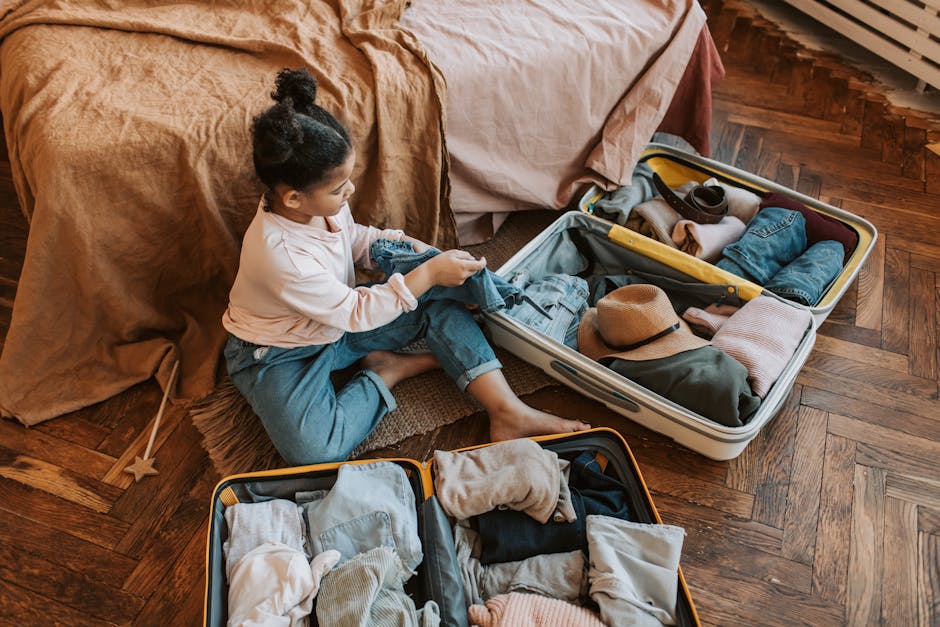
This is the sweet spot where packing starts getting easier. Kids in this range can usually handle one outfit per day (unless you're at a beach or water park). They're also old enough to carry a small backpack, which makes a big difference at the airport.
What changes at this age? Entertainment needs shift from sensory toys to activity-based items. And they'll have opinions about what they want to bring — which is fine, as long as it fits in their backpack.
Ages 4-7 Carry-On Backpack
volume-limited kid travel headphones on Amazon — the 85dB-capped wired models ($15-$25) are the airport-tested standby; Bluetooth versions add $20-$40 but cut the cable-yanking-out problem on tray tables.
Ages 4-7 Checked Bag Items
School-Age Kids: Ages 8 to 12
Here's where things get noticeably easier. Kids this age can pack their own suitcase with a checklist, carry their own backpack, and (mostly) keep track of their belongings. Give them ownership of the process — they'll be more invested in remembering everything.
Ages 8-12 Self-Pack Checklist
Compare kid-sized rolling carry-ons on Amazon — the 18-inch hardside cases ($45-$75) fit overhead bins on every domestic carrier; having their own roller dramatically increases the chance an 8-12 year old actually packs their own bag.
Ages 8-12 Carry-On and Entertainment
Teenagers: Ages 13 to 17
Packing for teens is mostly about getting out of the way. They know what they want to wear. They know what entertainment they need (spoiler: it's their phone). Your job is making sure the essentials get packed — documents, medications, chargers — and letting them handle the rest.
That said, don't skip the conversation about what's appropriate for the destination. A teen heading to a nice dinner doesn't want to be stuck in athletic shorts. And they probably haven't thought about it.
Teen Packing List
Carry-On Priority System
If your checked bag gets lost (and it happens more than anyone likes to admit), what do you absolutely need on day one? That's your carry-on priority list. Everything else can wait.
Must Be in Your Carry-On
Can Go in Checked Bags
What Your Airline Lets You Bring Free
The age tiers above tell you what to pack. Your airline decides what actually reaches the plane without a fee, and that varies less on the gear parents worry about (strollers, car seats) than on the checked bag behind them.
| Airline | Stroller and car seat at the gate | First checked bag, domestic economy |
|---|---|---|
| American | Free, one of each, checked at the counter or gate | $45 online, $50 at the airport (Basic Economy: $50 online, $55 at the airport, as of May 18, 2026) |
| Delta | Free; doesn't count toward your checked bag allowance | $45, Main Cabin, bag under 50 lbs |
| Southwest | Free, one of each, at the counter, curb, or gate | $45 as of April 9, 2026 (was $35 before that date) |
| JetBlue | Free; doesn't count toward your baggage allowance | $45 off-peak, $49 peak, domestic economy fares |
All four let you check a stroller and a car seat at no charge, so that part of the packing decision is settled before you leave home. The first checked bag is where the carriers really differ, and it is worth checking against your own airline before you decide what goes in a bag versus a carry-on (as of August 2026, source: American, Delta, Southwest and JetBlue's published baggage policies).
Important TSA Note
TSA ended the general shoes-off requirement in July 2025; every passenger, regardless of age, can now keep shoes on during standard screening (source: DHS, as of July 2025). Children 12 and under can also keep light jackets and headwear on during screening. Formula, breast milk, and juice are allowed over 3.4 oz; just inform the officer at the start of screening. For questions about specific items, call TSA Cares at (855) 787-2227 at least 72 hours before travel.
Climate-Based Packing Additions
Your base packing list gets you started, but where you're headed determines what else goes in the bag. Don't pack a beach trip like a mountain trip — seems obvious, but it's easy to forget destination-specific items when you're focused on the basics.
Beach Destinations
See reef-safe SPF 50+ sunscreen for kids on Amazon — Hawaii, Mexico, and several Caribbean destinations now require reef-safe formulations by law; the mineral-based zinc-oxide options ($12-$18) cost a few dollars more than traditional chemical sunscreens but pass all current bans.
Mountain and Outdoor Destinations
packable lightweight rain jackets on Amazon — the under-$40 family-tier models pack down to a water-bottle size; having one per family member fits the layering rule and skips the $80-$120 outdoor-store jackets that mostly perform the same.
City Trips
Health and Safety Essentials
The Children's Hospital of Philadelphia recommends building a travel-specific first aid kit rather than relying on finding pharmacies at your destination. This is especially true for international trips where familiar brands might not be available. What should go in it?
Family First Aid Kit
Browse compact family travel first-aid kits on Amazon — pre-assembled kits ($25-$45) include 95% of the items above plus the case; add a separate Tylenol/Motrin/Pedialyte trio in a labeled pouch and you've covered the gaps the kit always misses.
Travel Documents Checklist
Master Packing Checklist: Final Verification
You've packed age-specific items, climate gear, and health supplies. Now run through this final checklist before you head out the door. Is anything missing?
For any last-minute gaps, browse family travel-essentials on Amazon — most missing items on the final checklist (packing cubes, luggage tags, kid neck pillows, RFID-blocking passport holders) ship in 1-2 days and price under $20 each.
Last-Minute Check
Frequently Asked Questions
Data Sources and Methodology
This guide uses verified data from official sources and expert recommendations:
- TSA — Traveling with Children — security screening rules, liquid exemptions, and carry-on policies for families
- Children's Hospital of Philadelphia (CHOP) — pediatrician-recommended travel health kit and medication guidance
- TSA — Medications and Liquids — carry-on rules for liquid and solid medications
- Parent discussions across r/FamilyTravel, r/TravelWithKids, and family travel forums — real-world packing strategies and tips
Last verified: August 2026 (TSA and airline baggage figures re-confirmed against DHS and each airline's own published pages)