DC 3-Day Family Itinerary: Real Schedule (2026)
A day-by-day plan that works with kids : free museums, walkable routes, honest timing, and real 2026 costs
Quick Answer
- A 3-day Washington DC itinerary gives a family enough time to see the National Mall, three or four Smithsonian museums, the Capitol, and the main monuments, and it costs about $700 to $1,400 for a family of four in 2026 excluding flights, since every Smithsonian museum is free.
- 📅 Best layout: Day 1 = National Mall and Smithsonians, Day 2 = Capitol Hill and more museums, Day 3 = monuments plus the Zoo, Arlington, or Georgetown
- 💰 Daily budget for a family of 4: $150 to $300 (Metro, meals, a few paid extras). Hotels near the Mall add $150 to $300 a night.
- 🚇 Getting around: the Metro beats driving : $2 to $6 per ride, and up to two kids under 5 ride free per adult
- 🌤️ Best months: late March through May, or September through October, to skip the summer heat
- 🚶 Where most DC itineraries go sideways: the walking. The Mall runs nearly two miles end to end, and trying to finish a whole museum in one visit wears kids out by lunch. The plan below caps each stop at two hours.
- 🧮 Use our family budget calculator to estimate your exact DC trip cost
How many days do you need in Washington DC?
Three days is the sweet spot for a first family trip to Washington DC. That gives you one day on the National Mall for the Smithsonian museums, one day around Capitol Hill, and one day for the monuments with a flexible afternoon. Most families who try to squeeze it into two days end up skipping the National Zoo and Georgetown and feeling rushed the whole time.
Here's the quick math on trip length. A 2-day DC itinerary covers the Mall and the monuments if you move fast, but little else. Three days hits the highlights at a pace kids can handle. A 4-day DC itinerary with kids adds real breathing room for the Zoo, Arlington National Cemetery, or a day trip to Mount Vernon. Beyond four days, you're into repeat museum visits or venturing outside the city.
This plan is built around the way real families move through DC, drawing on parent forum threads and family travel blogs about Washington DC rather than a checklist of every landmark. The goal is a 3-day DC itinerary with kids that leaves everyone still speaking to each other on the flight home.
The 3-day DC family itinerary at a glance
Before the hour-by-hour version, here's the whole trip on one screen. Costs are for a family of four and cover food, Metro, and a few paid extras. Museum admission stays at zero because every Smithsonian is free.
| Day | Focus | Family-of-4 cost | Notes |
|---|---|---|---|
| Day 1 | National Mall and two Smithsonians | $75 to $150 | All museums free; cost is food, Metro, and optional flight simulators |
| Day 2 | Capitol Hill, Library of Congress, one more museum | $80 to $170 | Book the free Capitol tour ahead; more lunch choices than the Mall |
| Day 3 | Monuments plus Zoo, Arlington, or Georgetown | $70 to $160 | Zoo and Arlington are free; Georgetown adds food and shopping |
| Hotel | 3 nights near a Metro line | $450 to $900 | Arlington and Crystal City rooms beat downtown rates |
| 3-day total | Full family trip | $700 to $1,400 | Excludes flights; every Smithsonian is free |
Day 1: National Mall and Smithsonians
Morning (9:00 AM to 12:00 PM)
Start at the Smithsonian Metro station on the Blue, Orange, and Silver lines. You'll come up directly on the Mall between the museums, which is hard to beat for convenience with tired legs.
Head straight to the National Museum of Natural History when doors open at 10 AM. The dinosaur hall on the first floor grabs kids right away, and the African bush elephant in the rotunda is the kind of thing that makes them gasp out loud. Don't miss the Hope Diamond upstairs and the live butterfly pavilion, though the butterfly room sometimes charges a small timed-entry fee. Budget two hours here. Families who try to see everything are cranky by lunch.
Midday (12:00 to 1:30 PM)
Lunch on the Mall is limited and overpriced. The Natural History cafeteria works but gets packed. Better move: walk a block to the food trucks along Constitution Avenue, where a family of four can eat for $40 to $60. Plenty of parents pack lunches and eat on the Mall grass instead, which is smart if your kids are under 6 and you'd rather not lose 45 minutes hunting for seats.
Afternoon (1:30 to 5:00 PM)
Cross the Mall to the National Air and Space Museum. The renovated galleries reopened after a multi-year overhaul, and kids 6 and up love the Wright Flyer and the Apollo 11 command module. Younger ones gravitate to the flight simulators, though those run $8 to $10 each. Note the museum uses free timed-entry passes, so grab yours online before you go.
If the family still has fuel by 3:30, walk west toward the Washington Monument. You can't go inside without a free timed ticket from recreation.gov, but the views from the base and the reflecting pool beyond it are worth the stroll.
Day 2: Capitol Hill and more museums
Morning (9:00 AM to 12:00 PM)
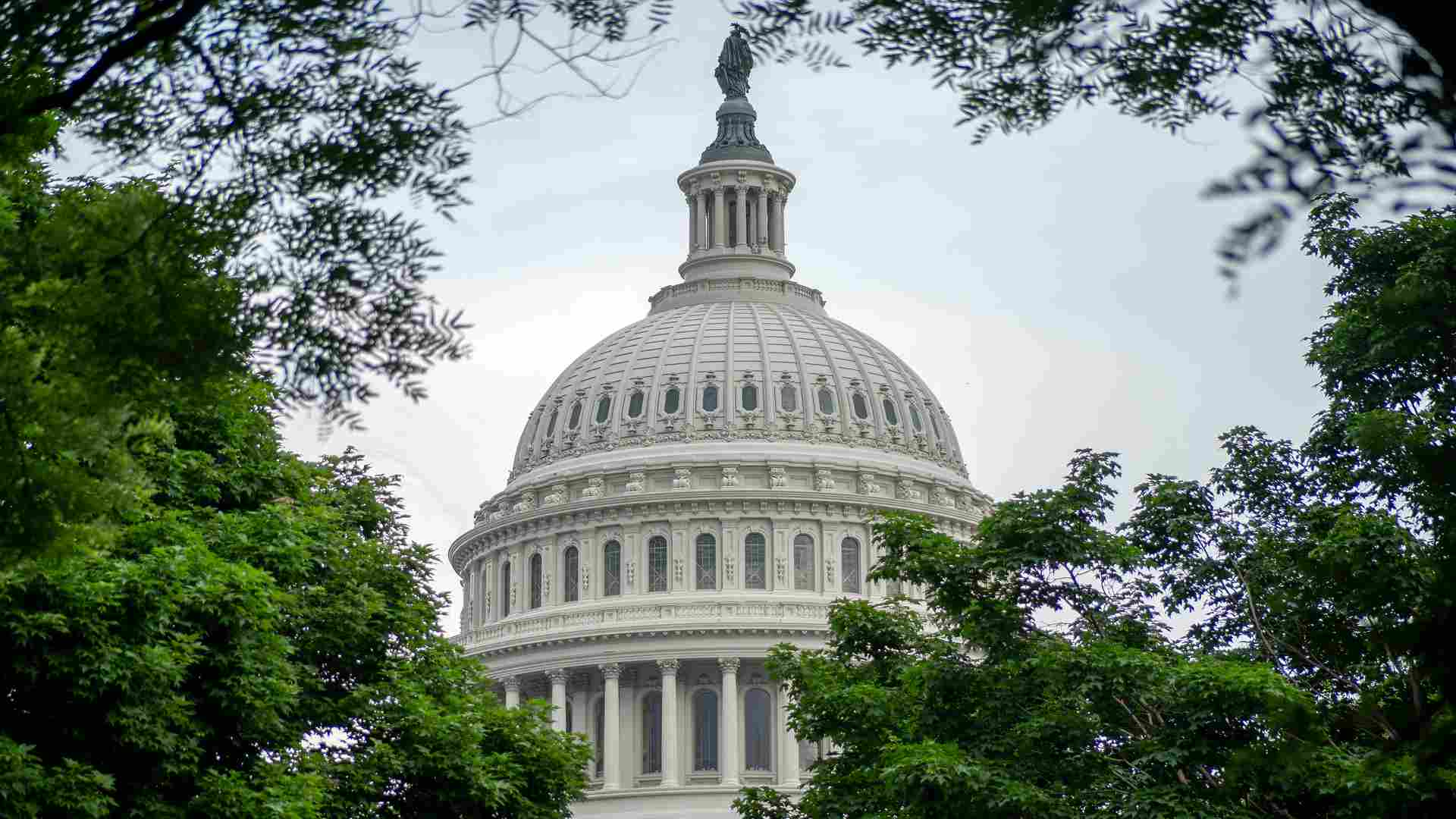
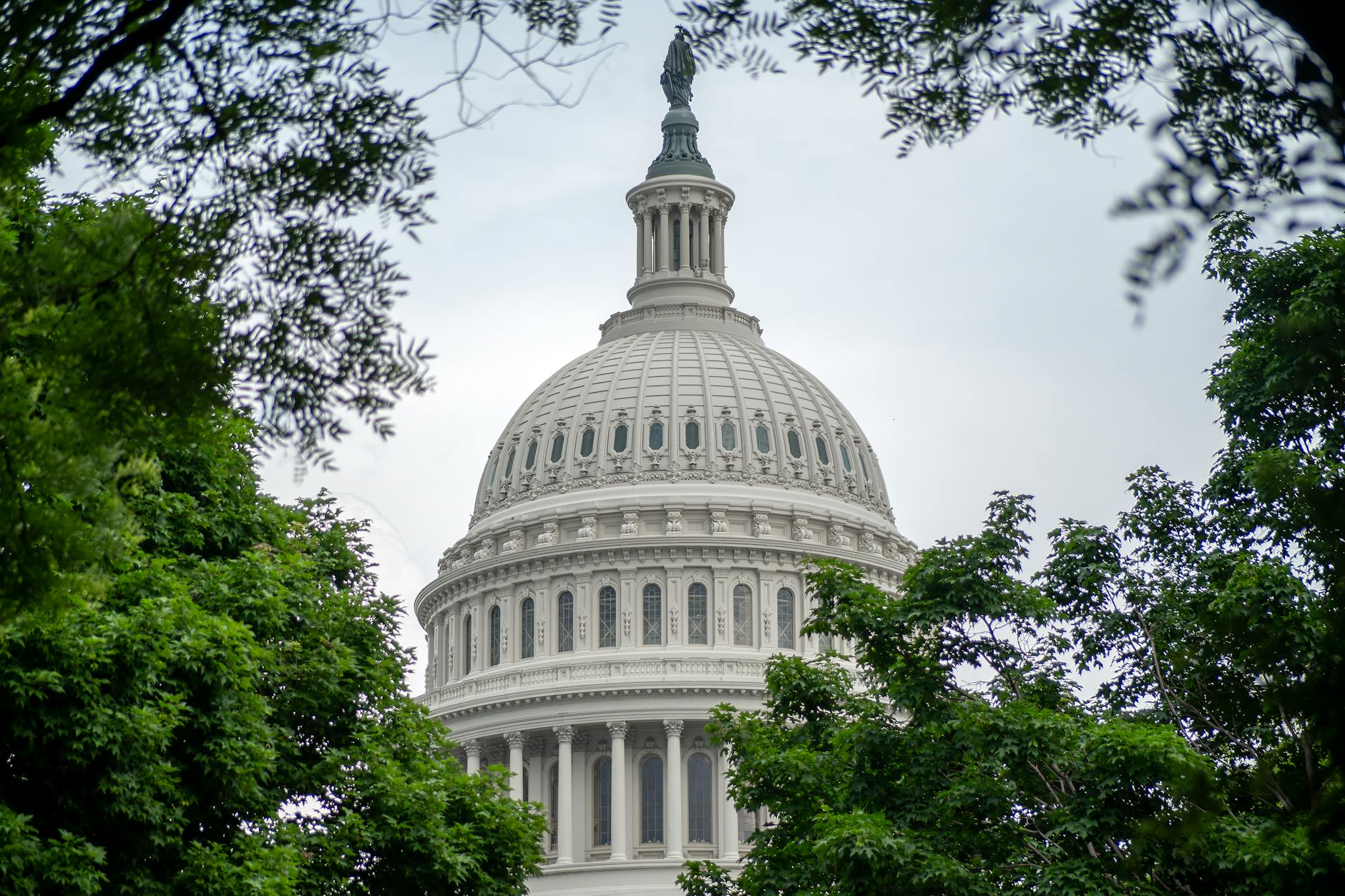
Take the Metro to Capitol South station. The U.S. Capitol runs free guided tours, but you'll need to book through your representative's office or the Capitol Visitor Center in advance. Tours last about 45 minutes and land best with kids 8 and older, since younger ones struggle with the look-but-don't-touch format.
After the Capitol, walk across the street to the Library of Congress. The main reading room, viewed from the gallery above, stops kids in their tracks even if they aren't big readers. Free entry, no reservation needed.
Afternoon (12:30 to 5:00 PM)
Grab lunch on Capitol Hill, where there are far more restaurant options than on the Mall. Figure $50 to $80 for a sit-down meal or $30 to $50 for quick service. Then pick your afternoon museum by what your kids care about.
The National Museum of American History holds the original Star-Spangled Banner, the ruby slippers from The Wizard of Oz, and a hands-on invention lab. The National Museum of African American History and Culture is powerful but heavy for kids under 10, and it needs free timed passes booked at nmaahc.si.edu. Is American History better than Air and Space? Depends on the kid. History and pop-culture fans love it; STEM kids prefer Air and Space. You can't lose, because both are completely free.
With time to spare, wander the Sculpture Garden beside the National Gallery of Art. It has a big fountain in summer that becomes an ice rink in winter, plus benches among the modern pieces. Kids run, parents sit with coffee. One of the calmer spots near the Mall.
Day 3: Monuments and a flexible finish
Morning (8:30 AM to 12:00 PM)
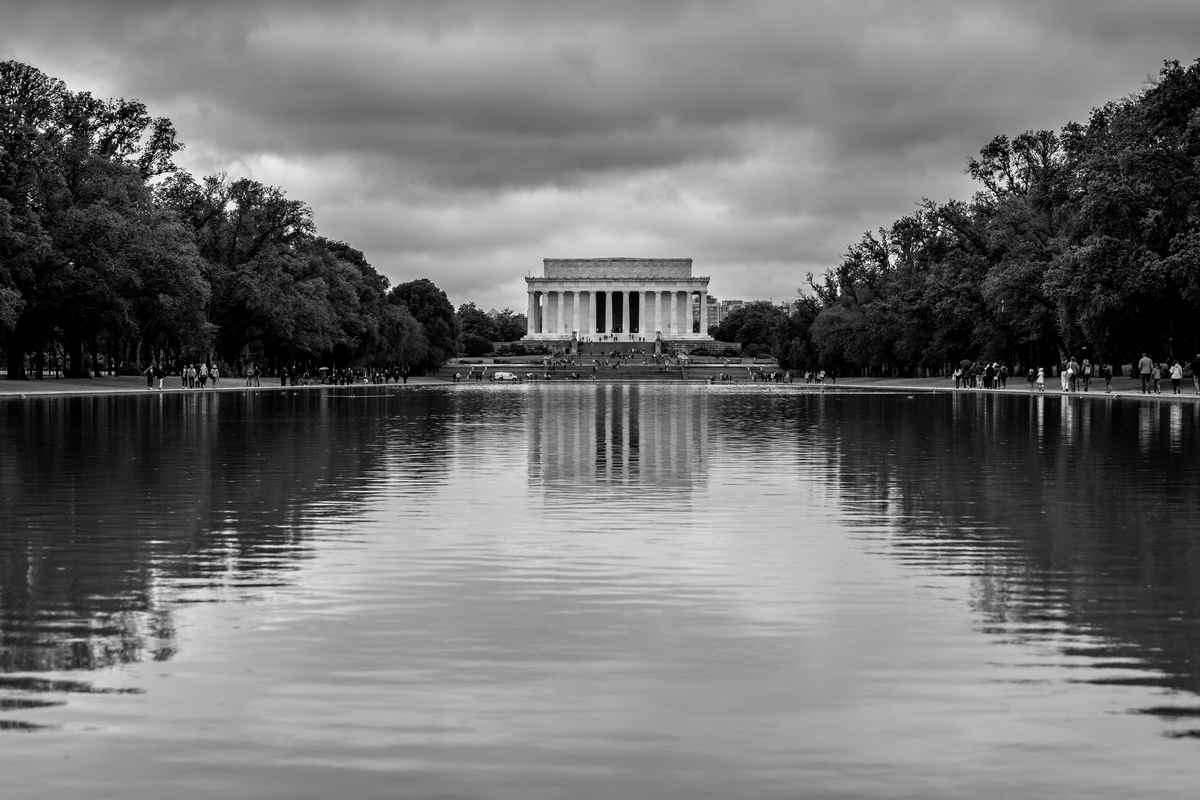
Start early. The monuments look best in morning light and before the crowds arrive. Take the Metro to Foggy Bottom and walk south to the Lincoln Memorial. Standing at Lincoln's feet while reading the Gettysburg Address carved into the wall hits differently in person, and even kids who only know it from school get quiet here.
From Lincoln, walk along the Vietnam Veterans Memorial, a wall of more than 58,000 names, and continue to the Korean War Veterans Memorial and the WWII Memorial. These are outdoor stops, so the timing rides on the weather. The full loop takes about 90 minutes at a family pace.
Afternoon: choose your adventure
This is where families split based on energy and interests:
- Option A : National Zoo: free admission, Metro to Woodley Park. The giant pandas Bao Li and Qing Bao are the headliners, and the Great Cats and Kids' Farm hold up too. Plan 2 to 3 hours, and grab a free timed pass on busy days.
- Option B : Arlington National Cemetery: free. The Changing of the Guard at the Tomb of the Unknown Soldier lands hardest with kids 8 and up. Timed entry may be required.
- Option C : Georgetown: walk or ride from the monuments for ice cream, shopping, and waterfront views along the C&O Canal. The relaxed pick for families hitting museum fatigue.
Getting around DC: Metro and walking logistics
The Metro is your best friend here. Buy SmarTrip cards at any station kiosk for $2 each plus loaded fare. Fares run $2 to $6 depending on distance and time of day, and up to two children under 5 ride free with a paying adult. Below is the distance and travel time for the legs families actually cover.
| Leg | Distance | Metro or walk time | Tip |
|---|---|---|---|
| Reagan National Airport to National Mall | 4.5 miles | 20 min on Metro (Blue/Yellow) | Skip a rental car; the Metro runs from inside the airport |
| Smithsonian station to Natural History Museum | 0.3 miles | 6-minute walk | Take the Mall exit, not the Independence Avenue exit |
| Capitol to Lincoln Memorial (Mall length) | 1.9 miles | 40-min walk, or 15 min via Metro plus a walk | Bring a stroller for kids under 6 |
| National Mall to National Zoo | 3 miles | 20 min via Metro to Woodley Park | Reserve a free timed pass on busy days |
| Downtown DC to Mount Vernon (day trip) | 16 miles | 35 to 45 min drive | Or take a seasonal boat from The Wharf |
Rideshare works well for tired legs at day's end, usually $10 to $20 per trip within central DC. Some families run a hybrid: Metro out in the morning, rideshare back to the hotel in the afternoon. The DC Circulator bus is another cheap option at $1 a ride, and kids like riding above ground where they can see the sights.
Walking distances add up
The Mall looks compact on a map, but it's 1.9 miles from the Capitol to the Lincoln Memorial. Families with kids under 6 should bring a stroller even if your child has outgrown one at home. Tired legs at monument number three will derail the whole afternoon.
What a 3-day DC trip costs for a family (on a budget)
DC is one of the best value big-city trips in the country, and a family trip to Washington DC on a budget is genuinely doable. Here's the realistic breakdown for a family of four over three days:
- Museum admission: $0, since every Smithsonian is free
- Metro fares: $50 to $80 total (SmarTrip, $2 to $6 per ride)
- Meals: $180 to $360 total, or $60 to $120 a day
- Hotel: $450 to $900 total, $150 to $300 a night depending on season and location
- Optional extras: $20 to $60 (flight simulators, butterfly pavilion, souvenirs)
That lands the whole trip at $700 to $1,400 for three days, excluding flights. Compare that to a 3-day New York trip where museum admission alone tops $200 for a family, and DC wins on value by a wide margin. Want to shave more off? Pack breakfasts, refill water bottles at museum fountains, and book a hotel across the river in Arlington, where a family room often runs $60 to $100 less a night than downtown.
Adjusting the pace: toddlers, big kids, and teens
The same three days flex up and down by age. Here's how to tune the plan so it fits your crew instead of fighting it.
Families with toddlers (under 4): cut each day in half. Skip the Capitol tour, lean on the Natural History dinosaurs and the carousel on the Mall, and build in a midday nap back at the hotel. Two stops before lunch and one after is plenty. The stroller is non-negotiable.
Families with elementary kids (5 to 10): this is the itinerary as written. The dinosaur hall, the Air and Space simulators, and the panda exhibit at the Zoo all land squarely in this age range, and most kids can manage the Mall walking with a snack break or two.
Families doing 3 days in DC with teens: add depth. Teens handle the nearly two miles of daily Mall walking that wears out little ones, so you can fit a fourth stop each day. Swap in the International Spy Museum (paid, around $30 per adult), a Capitol tour that connects to a civics class they actually took, and the U.S. Holocaust Memorial Museum, which resonates with older kids in a way it can't for younger ones.
Adding a fourth day or day trips from DC with kids
If you have a fourth day, spend it outside the museum core. The best day trips from DC with kids start with Mount Vernon, George Washington's estate 16 miles south, reachable in a 35-minute drive or a seasonal boat from The Wharf. Great Falls Park puts real waterfalls and easy family trails a 30-minute drive up the Potomac. And National Harbor, just across the river in Maryland, has the 180-foot Capital Wheel, a carousel, and an outlet mall for a low-key afternoon.
Prefer to stay in the city on day four? Add the National Zoo if you saved it, tour the Bureau of Engraving and Printing to watch money get made, or let the kids loose at Planet Word, an interactive language museum that surprises parents as much as kids. For the full menu of options, our Washington DC family guide maps out neighborhoods, hotels, and seasonal events.
Final Verdict
A 3-day Washington DC itinerary is one of the best-value family trips in the United States, pairing free Smithsonian museums, monuments, and history for about $700 to $1,400 for a family of four in 2026. Three days is enough to hit the highlights without burning out, and the Metro keeps logistics manageable even with young kids in tow.
The thing that separates a great DC trip from an exhausting one is pacing. Resist the urge to cram in one more museum. Two hours per stop, breaks between monuments, and a flexible Day 3 make the difference between kids begging to come back and kids begging to go home.
Frequently Asked Questions
Most families need 3 days in Washington DC to see the National Mall, three or four Smithsonian museums, the Capitol, and the main monuments at a kid-friendly pace. Two days works for a first taste of the Mall and monuments, while a fourth day adds the National Zoo, Arlington, or Georgetown without rushing.
You can see Washington DC in 2 days with a family by focusing on the National Mall: spend Day 1 on the Smithsonian museums and Day 2 on the monuments and the Capitol area. A 2-day DC itinerary skips the National Zoo and Georgetown, so families with younger kids who love animals should stretch the trip to three days.
A 4-day Washington DC itinerary with kids is better than 3 days if you want to add the National Zoo, Arlington National Cemetery, and Georgetown without cutting museum time. Three days covers the headline sights, but the fourth day removes the rush and leaves room for a day trip to Mount Vernon or a slow morning at the hotel pool.
A 3-day Washington DC trip costs about $700 to $1,400 for a family of four in 2026, excluding flights, or roughly $150 to $300 per day. Every Smithsonian museum is free, so the real costs are a hotel ($450 to $900), meals ($180 to $360), and Metro fares ($50 to $80). Use our budget calculator to estimate your family's exact total.
The best 3-day DC itinerary for younger kids leans on the Natural History dinosaur hall, the National Zoo pandas, and short monument stops, while a plan for teens can add the International Spy Museum, the Capitol tour, and the Holocaust Museum. Teens handle the nearly two miles of daily Mall walking that tires out toddlers.
The Metro is the better choice for most families in Washington DC, with fares of $2 to $6 per ride and up to two kids under 5 riding free per adult. A SmarTrip card costs $2 at any station, and the Smithsonian stop opens right onto the National Mall. Driving means paying for scarce, pricey parking near the Mall.
The best family day trips from Washington DC include Mount Vernon (16 miles south, about a 35-minute drive or a seasonal boat from The Wharf), Great Falls Park on the Potomac River, and National Harbor with its 180-foot Capital Wheel. Each makes a strong fourth or fifth day for families who want a break from museums.
Late March through May and September through October are the best months for a family trip to Washington DC. Spring lines up with the cherry blossoms around the Tidal Basin, and both windows skip the summer heat and humidity that drains kids by mid-afternoon. July and August are the hardest months for walking the Mall.
Data Sources and Methodology
This guide uses verified data from official sources, cross-checked against parent forum threads and family travel blogs about Washington DC:
- Smithsonian Institution : museum hours, admission info, and visitor guidelines
- National Park Service : National Mall : monument hours and timed-entry requirements
- WMATA (Washington Metropolitan Area Transit Authority) : Metro fares and child-fare policy
Last verified: July 2026