Free Education in Washington DC: Museums, Grants and Classes
17 free Smithsonian museums for families, plus DCTAG grants and free job training for DC residents in 2026
Quick Answer
- Washington DC offers two kinds of free education in 2026: all 17 Smithsonian museums, the National Zoo, and every National Mall monument cost nothing to visit, while DC residents can also claim up to $15,000 a year in DCTAG college tuition grants and free job training through UDC, Academy of Hope, and Per Scholas.
- Where a DC family budget actually slips: not tickets (museums and monuments are free), but the hotel at $150 to $350 a night and $12 to $18 museum-cafeteria plates. A "free" DC trip still runs $1,200 to $2,000 for a family of four.
- Free to visit: the National Air and Space Museum, Natural History, American History, the National Zoo, and 13 more Smithsonian museums, all at no admission cost.
- Free timed passes needed: Air & Space, the National Museum of African American History and Culture, and the National Zoo on weekends and holidays. Book online about 30 days ahead.
- For DC residents: DCTAG pays up to $15,000 a year toward out-of-state tuition, and UDC plus Academy of Hope run free classes and GED programs for adults.
- The "$7,000 grant" people ask about is the federal Pell Grant, worth up to $7,395 for the 2025-26 school year and stackable with DCTAG.
- Best time to visit with kids: September through November for mild weather, smaller crowds, and hotel rates that dip after Labor Day.
- Run your own numbers with our budget calculator before you book.
Search "DC free education" and you'll get two completely different answers, depending on who's asking. Parents want the free museums, and there are 17 of them, still free in 2026. DC residents want the money side: tuition grants, free college classes, and job training that costs nothing. Most guides pick one lane and ignore the other. This one covers both, with real 2026 dollar figures, and points you to the budget calculator when you're ready to price out a family trip.
The Best Free Museums for Kids
No other city in America packs this much free education into a walkable few square miles. The Smithsonian Institution runs 17 museums plus the National Zoo, all funded by taxpayers, all free to enter. A family could spend a week here and never pay a museum admission fee. That's not a sales line. It's the math.
But 17 museums is too many for one trip. Here are the ones kids actually love, roughly in order of how long they'll hold a child's attention.
National Air and Space Museum
The clear favorite. Real spacecraft hang from the ceiling, there's a touchable Moon rock brought back on Apollo 17, the Wright Brothers' original 1903 Flyer, and flight simulators that let kids feel like pilots. The renovated galleries, including a "We All Fly" exhibit built for families, are better than ever. Plan 3 to 4 hours. Free timed-entry passes are required, so book about 30 days ahead online.
National Museum of Natural History
Dinosaur skeletons, an ocean hall with a life-size whale model, a live insect zoo where kids can hold real bugs, and the Hope Diamond all live under one roof. This museum works for every age: toddlers chase the animals, grade-schoolers geek out on dinosaurs, teens line up for the gems. Allow 2 to 3 hours, more if you've got a budding scientist.
National Museum of American History
Home to the original Star-Spangled Banner, Abraham Lincoln's top hat, the First Ladies' gowns, and rotating pop-culture exhibits. It lands harder with school-age kids than with under-7s, but children studying U.S. history will get more from a morning here than from a semester of textbook pages. Fair warning: the gift shop is rough on a parent's wallet.
National Zoo
One of only a handful of free zoos in the country, and home to giant pandas again after their 2024 return. Great apes, big cats, and a Kids' Farm round it out across 163 acres, so walking the whole thing is a full-day outing. Free timed-entry passes are required on weekends and holidays. A "Little Critters" nature-play program runs for kids 0 to 5.
Free Monuments and Memorials
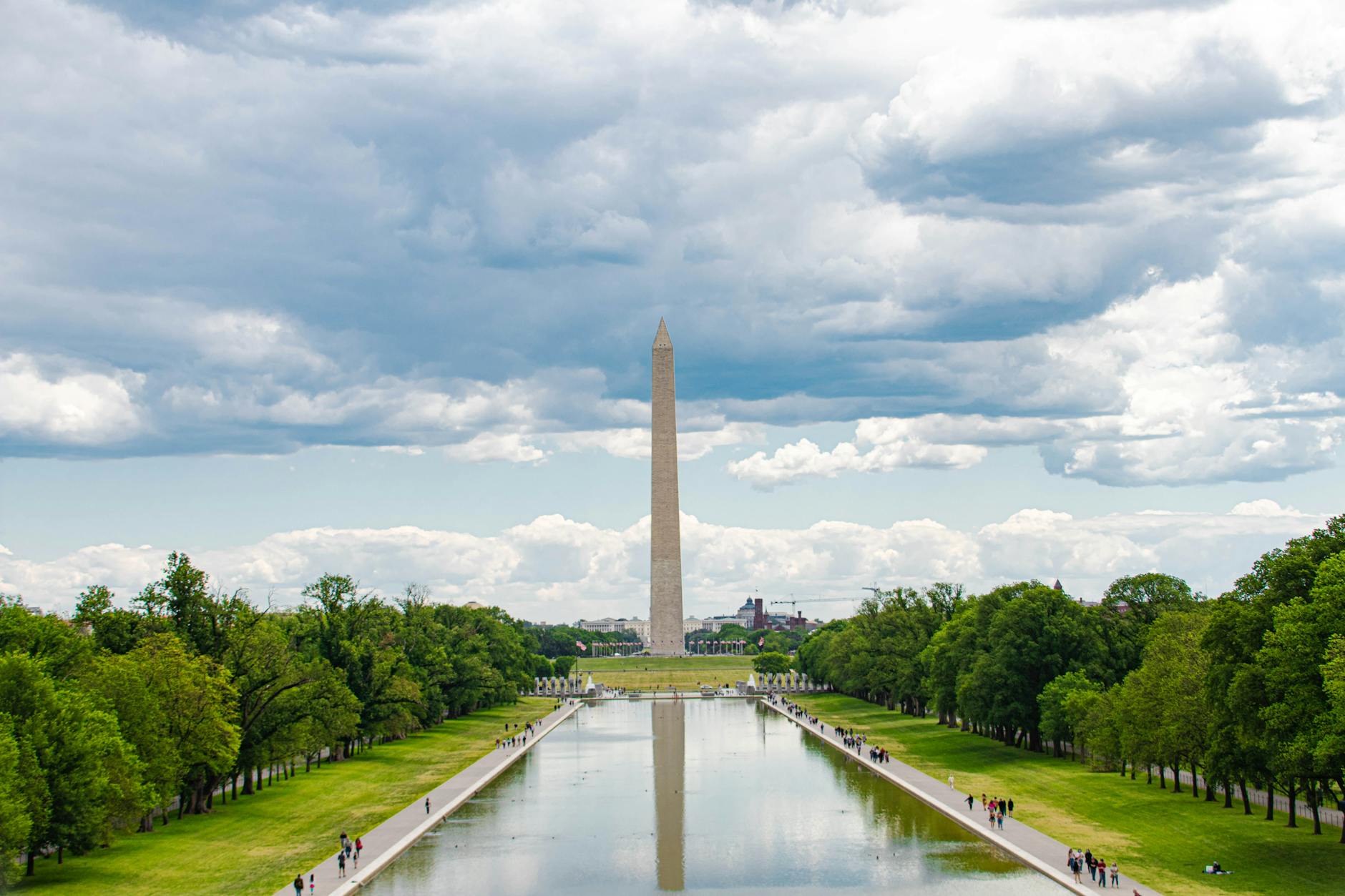
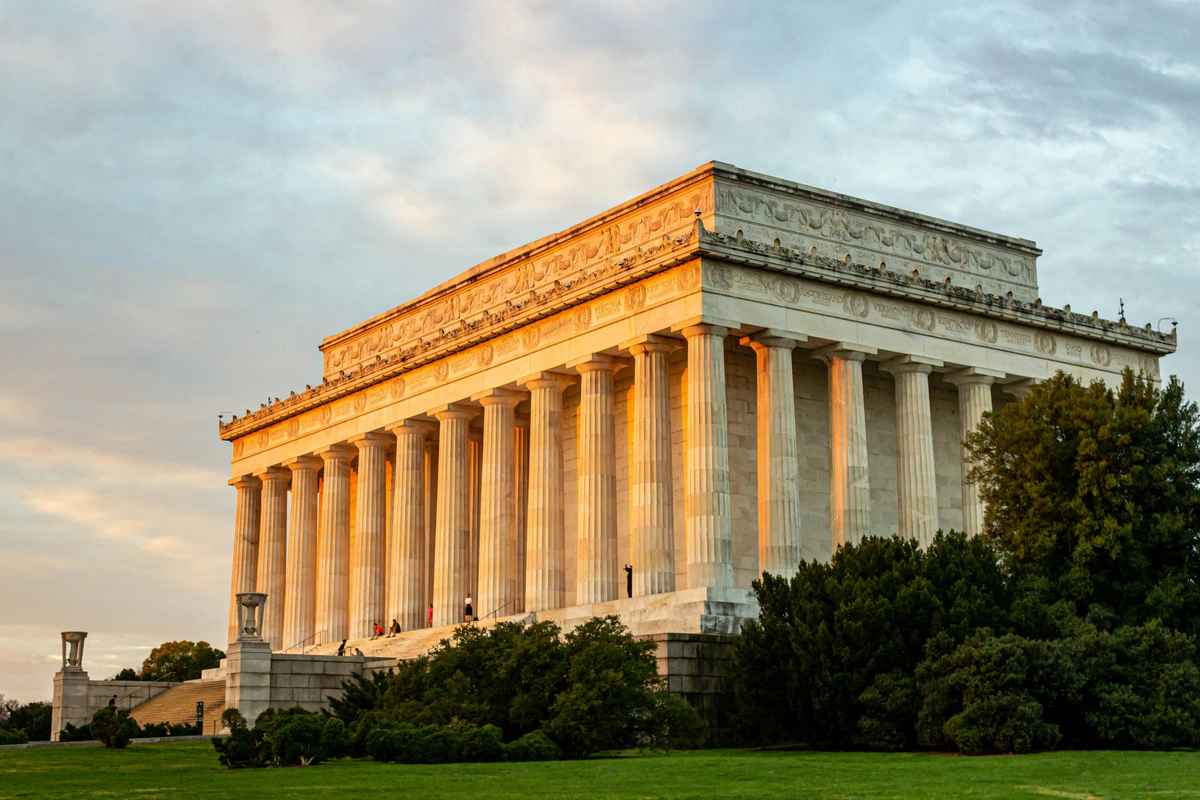
The National Mall is a 2-mile open-air classroom, and every monument on it is free. Most stay open 24 hours a day (ranger-staffed hours vary), so the Lincoln Memorial at dusk beats the Lincoln Memorial at noon in July. Walking from the Capitol to the Lincoln Memorial takes about 45 minutes at an adult pace, closer to 90 with kids who stop at every squirrel.
- Lincoln Memorial : the giant seated Lincoln still stops kids cold, and you can stand where Dr. King gave the "I Have a Dream" speech (there's an inscription on the step). Free, open 24 hours.
- Washington Monument : the elevator to the 555-foot observation deck is free but needs a timed ticket that books up weeks ahead. Reserve early or you won't get up.
- World War II Memorial : interactive enough for kids, who can count the 4,048 gold stars (each stands for 100 who died) and find their home state's pillar.
- Martin Luther King Jr. Memorial : the 30-foot stone carving is a natural conversation starter for kids learning civil-rights history.
Skip the Vietnam and Korean War memorials with very young children. The weight of them won't register before about age 10, and there's nothing hands-on. Families with kids under 6 should bring a stroller; between the Mall and museum floors, you'll cover 5 to 8 miles in a day.
Free Stops Most Visitors Skip
Beyond the headline museums and monuments, DC hides dozens of free educational stops that rarely make the tourist lists. These are the ones local parents actually use.
National Archives
See the real Constitution, Declaration of Independence, and Bill of Rights, not reproductions. Kids who've studied these documents in school find the originals a jolt. Admission is free, but summer lines get long, so arrive before 10 AM.
U.S. Botanic Garden
Right beside the Capitol, this free conservatory has a Children's Garden with hands-on plant activities and a passport-book scavenger trail (free at the desk). The jungle and orchid rooms feel like stepping into another climate. Give it 1 to 2 hours.
Library of Congress
The most beautiful building in DC that almost nobody tours. The Great Hall ceiling alone earns the visit, and free guided tours explain the library's role in American history. Best for kids 8 and up who can take in the architecture; younger ones fade fast.
National Postal Museum and Ford's Theatre
The Postal Museum sounds dull and isn't: kids design their own stamps, sort mail on a mock route, and climb into a railway mail car, all free and next to Union Station. Ford's Theatre, where Lincoln was shot, plus the museum below and the Petersen House across the street, are also free and best for ages 8 and up. Timed tickets may be required.
What a Free DC Family Trip Actually Costs
The sightseeing is free. The trip is not. Here's where the money really goes for a family of four, and why "free museums" and "cheap vacation" aren't the same sentence.
| Expense | Typical 2026 range | Notes |
|---|---|---|
| Museums, Zoo, monuments | $0 | All 17 Smithsonians, the National Zoo, and every Mall monument are free |
| Hotel (per night) | $150 to $350 | Arlington, VA runs $150 to $250; downtown DC $200 to $350 |
| Food (family of 4, per day) | $50 to $80 | Cafeteria plates run $12 to $18; packing lunches saves $40 to $60 a day |
| Metro | From $2.25 per ride | Up to two kids age 4 and younger ride free with each paying adult |
| 3-day trip (2 adults, 2 kids) | $1,200 to $2,000 | Less than a single day at Disney World for a family of four |
Sources: Booking.com and WMATA fare schedule, July 2026. Rates vary by dates and neighborhood.
The single biggest saver is packing lunches on museum days. One bag of sandwiches and refillable water bottles keeps a family of four out of the $12-to-$18 cafeteria line and heads off the mid-afternoon hangry meltdown. Staying in Arlington, one Metro stop across the river, shaves another $50 to $100 a night off a downtown rate.
Free Education for DC Residents: Grants, Classes and Job Training
Here's the other half of "DC free education," the part visitors never see. If you actually live in the District, the city and federal government will pay for a large chunk of college, adult classes, and career training. The programs below are free to the resident; the dollar figures show what each one is worth.
| Program (provider) | What it covers | Cost to you | Who qualifies |
|---|---|---|---|
| DCTAG (OSSE) | Up to $15,000/year toward the in-state vs out-of-state tuition gap at public colleges; up to $3,750/year at private or HBCU schools | Free to apply | DC residents 12+ months, HS or GED, income cap |
| Mayor's Scholars and ACC (OSSE) | Need-based funding for tuition and fees toward a first undergraduate degree | Free | Eligible DC residents |
| UDC Workforce Development and Lifelong Learning | Short courses and certificates in trades, IT, and healthcare | No cost to any DC resident | Any DC resident |
| Academy of Hope Adult PCS | GED, high school diploma, digital literacy, and career readiness | Free | DC residents age 18+ |
| Per Scholas (National Capital Region) | 12 to 15-week tech training in IT support, cybersecurity, and software | No tuition | Income-qualified DC-area adults |
| DC Health Careers Partnership | Certified nursing assistant, pharmacy tech, and medical assistant training | Free | DC residents entering healthcare |
| DCHA Workforce Development Initiative | Job training, apprenticeships, certifications, and resume help | Free | DC public-housing and voucher residents |
| SOME Center for Employment Training | Hands-on healthcare and building-trades training; grads average $21.40/hour | Free | Low-income DC residents |
| Federal Pell Grant | Up to $7,395 (2025-26) toward undergraduate costs | Free money, no repayment | Undergrads with financial need (FAFSA) |
| WIOA via DOES | Funded training, certifications, and career coaching | Free | Eligible DC job seekers |
Sources: OSSE (osse.dc.gov/dctag), University of the District of Columbia, DC Department of Employment Services, and the U.S. Department of Education, July 2026.
DCTAG: up to $15,000 a year
The DC Tuition Assistance Grant is the big one. Because DC isn't a state, residents can't get in-state tuition at public universities elsewhere, so DCTAG covers the difference: up to $15,000 per year (a $75,000 lifetime cap) at public colleges nationwide, and up to $3,750 a year at private schools in the DC area and private HBCUs. To qualify, you need 12 straight months of DC residency before your freshman year, a high school diploma or GED earned within the past 15 years, and household income under the OSSE cap. The DC OneApp for the 2026 cycle opens February 2, 2026 and closes August 21, so set a reminder.
Do DC residents get in-state tuition?
Sort of. The University of the District of Columbia charges DC residents a lower in-district rate, and its Workforce Development and Lifelong Learning arm runs short courses at no cost to any resident. Everywhere else, DCTAG is what stands in for in-state tuition, closing the gap at public colleges across the country.
The "$7,000 grant" and free adult classes
The grant people mean when they ask about "$7,000 for college students" is the federal Pell Grant, capped at $7,395 for 2025-26 and never repaid. File the FAFSA to claim it, and DC residents can stack it on top of DCTAG. For adults who aren't headed to a four-year degree, Academy of Hope offers free GED and diploma programs, Per Scholas runs no-cost tech bootcamps, and WIOA funding through the Department of Employment Services pays for certifications in IT, healthcare, and the trades.
Best Time to Visit DC with Kids
DC's seasons make for very different trips. Pick based on what your family can tolerate.
Fall (September through November) is the sweet spot: comfortable 60 to 75°F days, thinner crowds than summer, and hotel rates that ease off after Labor Day. If you only get one window, take this one. Spring (late March into May) brings the cherry blossoms around the Tidal Basin, which are stunning and draw huge crowds and peak hotel prices to match.
Summer (June through August) runs hot and humid at 85 to 95°F, which turns air-conditioned museums into refuges and rewards early-morning or after-dark monument walks. It's also the richest season for free programming, from Folklife Festival on the Mall to evening concerts. Winter (December through February) is cold at 30 to 45°F but nearly empty, with the cheapest rooms of the year and holiday decorations at the White House.
What Does It Cost to Live in DC?
Visiting DC is one budget; living here is another. The cost of living in Washington DC runs roughly 40% above the U.S. average in 2026, with average apartment rent near $2,400 a month (RentCafe, 2026). Housing drives most of that gap, and groceries, transit, and childcare all sit above the national norm. The upside for residents: DC salaries tend to run higher to match, and the free-education programs above take a real bite out of the education line most families elsewhere pay in full.
The Bottom Line
Washington DC is the best free-education city in America in 2026: 17 free Smithsonian museums, a free National Zoo, and every National Mall monument cost visitors nothing, while residents can layer DCTAG's $15,000-a-year tuition grant on top of free classes and job training.
For a visiting family, the move is simple: pick 3 or 4 museums, spend mornings inside them, and save afternoons for the Mall and neighborhoods. The sightseeing is free; budget for the hotel and the food and you'll come home having done DC right for a fraction of a theme-park week.
For a DC resident, the move is to apply for everything. File the FAFSA, submit the DC OneApp when it opens, and check UDC and Academy of Hope for free classes. For the trip side, our DC 3-day itinerary and free museums guide go deeper on each stop.
Frequently Asked Questions
DCTAG is open to DC residents who have lived in the District for at least 12 consecutive months before starting college, earned a high school diploma or GED within the past 15 years, are generally under age 24 at first application, and meet the OSSE household income cap. You apply each year through the DC OneApp, which opens February 2, 2026.
In Washington DC you can visit all 17 Smithsonian museums, the National Zoo, and every National Mall monument for free in 2026. Add the National Archives, the U.S. Botanic Garden, the Library of Congress, and Ford's Theatre, all at no charge. The Lincoln Memorial and most monuments stay open 24 hours a day.
The Workforce Innovation and Opportunity Act (WIOA) is a federal program that DC runs through the Department of Employment Services (DOES). It pays for job training, industry certifications, career coaching, and placement help for eligible DC residents at no cost. Funding covers approved courses in fields like IT, healthcare, and the building trades.
DC has no state university system beyond the University of the District of Columbia, where residents pay lower in-district tuition. Because DC residents cannot get in-state rates in other states, DCTAG bridges the gap, paying up to $15,000 a year toward the difference between in-state and out-of-state tuition at public colleges nationwide.
DCTAG gives up to $15,000 per year toward the gap between in-state and out-of-state tuition at public colleges nationwide, with a $75,000 lifetime cap. At private universities in the DC area and private HBCUs, it pays up to $3,750 a year, up to $18,750 in total. Awards renew each year you stay eligible.
The $7,000 grant most students mean is the federal Pell Grant, which pays up to $7,395 for the 2025-26 year to undergraduates with financial need. You qualify by filing the FAFSA, and the money never has to be repaid. DC residents can stack a Pell Grant on top of DCTAG and other aid.
Yes, every Smithsonian museum in Washington DC is still free in 2026, along with the National Zoo, and there is no plan to charge admission. The only Smithsonian that charges is the Cooper Hewitt design museum in New York City. A few busy DC museums use free timed-entry passes you book online about 30 days ahead.
The cost of living in Washington DC runs roughly 40% above the U.S. average in 2026, driven mostly by housing, with average apartment rent near $2,400 a month (RentCafe, 2026). Groceries, transit, and childcare all cost more than the national norm, though DC salaries tend to run higher to match.
Data Sources and Methodology
This guide uses verified data from official sources:
- Smithsonian Institution : museum hours, free admission, and timed-entry pass requirements
- OSSE (osse.dc.gov) : DCTAG award amounts, eligibility, and DC OneApp dates
- U.S. Department of Education : 2025-26 Federal Pell Grant maximum award
- WMATA : Metro fares and free rides for children age 4 and younger
- Destination DC (washington.org) : official tourism board free-activity listings
Last verified: July 2026