Family Travel Insurance and Emergency Prep (2026)
What travel insurance actually covers, what it costs, and the emergency documents every family needs before leaving home
Quick Answer
- Family travel insurance costs 4-10% of your total trip price in 2026 and covers medical emergencies, trip cancellation, and evacuation that most U.S. health plans won't cover abroad.
- 🏥 Why it matters: The U.S. government does not pay for medical care abroad, and most domestic health insurance has no international coverage
- 💰 Cost example: For a $5,000 family trip, expect $200-$500 for a plan covering medical, cancellation, and baggage
- 👶 Kids free: Some providers cover children under 18 at no extra cost — Travel Insured International covers up to 9 kids per adult
- 📋 Key documents: Passports (child passports expire after 5 years), consent letters if one parent is absent, child medical consent form
- 💡 The one thing most families skip — a child medical consent form that authorizes emergency treatment when parents aren't reachable (see checklist below)
- 🧮 Use our budget calculator to factor insurance into your total trip cost
Do You Actually Need Travel Insurance?
Short answer: for international trips with kids, yes. For domestic trips, maybe.
Here's the thing most families don't realize until it's too late: standard U.S. health insurance — including most employer plans and all Medicare plans — doesn't cover medical costs outside the country. And the U.S. State Department is blunt about it: the government won't pay your medical bills abroad either.
A broken arm at a resort in Mexico. A kid with a 104-degree fever in Europe. An allergic reaction on a cruise. Without travel insurance, you're paying out of pocket for the hospital visit, the medications, and potentially a medical evacuation flight home. That last one alone can cost $50,000-$100,000.
For domestic trips, the calculation is different. Your health insurance probably works fine within the U.S., so the main value of travel insurance is trip cancellation coverage — getting your money back if you need to cancel flights, hotels, or a cruise due to illness, weather, or family emergencies. If your trip has significant non-refundable costs, it's worth the 4-10%.
What Family Travel Insurance Actually Covers
Not all policies are the same, but a solid family plan should include these core protections:
Emergency medical coverage ($100,000+ recommended for international trips): Hospital stays, doctor visits, prescriptions, and ambulance rides abroad. For destinations with expensive healthcare or remote areas that might require helicopter evacuation, aim for $250,000+.
Medical evacuation ($250,000+ recommended): Covers the cost of transporting you or your child to a facility that can provide proper care — or back home. This is the coverage that matters most in worst-case scenarios and the one that's most expensive to pay out of pocket.
Trip cancellation and interruption: Reimburses non-refundable costs if you cancel before departure or cut the trip short due to covered reasons (illness, severe weather, family emergency, jury duty). Typically covers 100% of insured trip costs.
Baggage loss and delay: Replaces essentials if your luggage is lost or delayed. Especially useful with kids — you can buy diapers, formula, and clothes while waiting for bags.
24/7 assistance hotline: A phone number you can call from anywhere in the world to get help finding a doctor, translating medical situations, or coordinating care. This alone is worth the price when you're panicking in a foreign country with a sick child.
The Family Emergency Document Checklist
Insurance is one half of emergency prep. Documents are the other. And this is where families with kids need to do more than solo travelers.
Essential Documents (Every Trip)
Child-Specific Documents
International Trip Add-Ons
Don't skip the child medical consent form. It's the document most families forget, and it's the one that matters most if something goes wrong while grandma is watching the kids at the hotel and parents are on a day excursion. A simple form authorizing a named adult to consent to emergency medical treatment can prevent dangerous delays if your child needs care. Our first international family trip guide covers more on international travel prep with kids.

Building a Family Travel First Aid Kit
Hotel gift shops charge $12 for a box of bandages. Airport pharmacies are worse. Pack your own kit and you'll save money while being prepared.
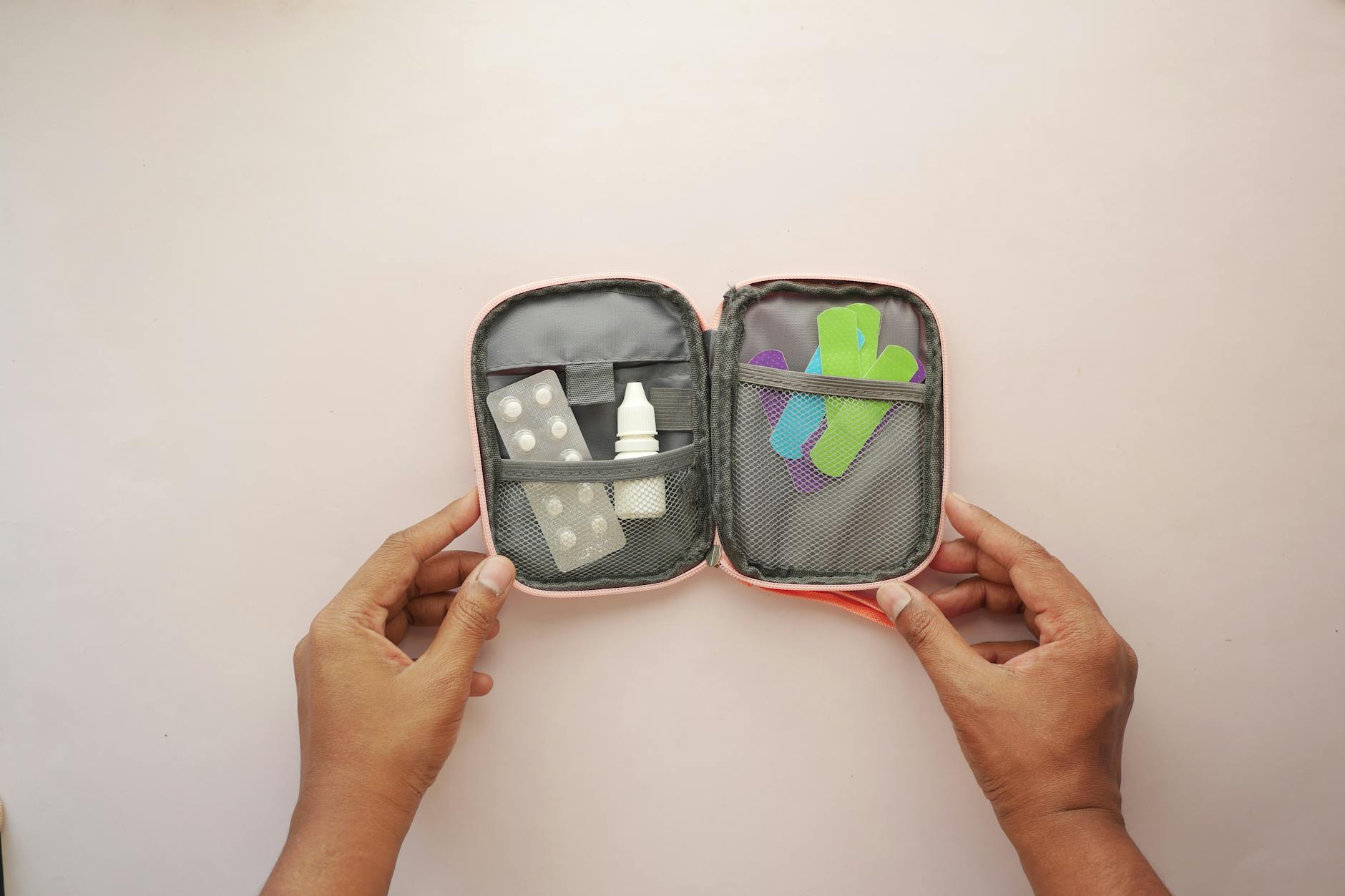
Here's what belongs in a family travel first aid kit — sized for a carry-on pouch, not an entire suitcase:
For pain and fever: Children's acetaminophen (Tylenol) and ibuprofen (Motrin/Advil) in age-appropriate doses. Bring the dosing chart. A digital thermometer — the forehead-scan kind is fastest with uncooperative kids.
For stomach issues: Anti-diarrhea medication (Imodium for adults, ask your pediatrician about children's options). Oral rehydration packets (Pedialyte powder packs are lightweight and critical for dehydration). Antacids.
For allergies and bug bites: Antihistamine (liquid Benadryl for young kids, tablets for older ones). Hydrocortisone cream for bug bites and rashes. If your child has severe allergies, two EpiPens — one in carry-on, one in checked luggage.
For cuts and scrapes: Adhesive bandages in kid sizes, antiseptic wipes, antibiotic ointment, gauze pads, medical tape. Tweezers for splinters.
For everything else: Sunscreen (SPF 50+), insect repellent, motion sickness remedy (Dramamine for kids), saline nasal spray (for dry airplane air), hand sanitizer.
Important
Keep all prescription medications in their original labeled containers when traveling internationally. Some countries will confiscate unlabeled pills at customs. Carry a letter from your doctor listing medications and conditions — especially for controlled substances.
Need help figuring out what to pack beyond the first aid kit? Our packing checklist by age breaks it down for every age group, and our flying with kids guide covers what can go through TSA.
How to Choose the Right Travel Insurance Plan
The insurance comparison process doesn't need to be complicated. Focus on these three things and you'll pick the right plan in under 30 minutes.
1. Match coverage to your destination. Domestic trip? Trip cancellation coverage is probably enough. International trip? You need medical coverage ($100,000 minimum) and medical evacuation ($250,000+). Cruise? Add missed-port and itinerary-change coverage.
2. Check what's actually excluded. Most plans exclude pre-existing conditions (diagnosed or treated in the 60-180 days before purchase). Some plans offer a pre-existing condition waiver if you buy within 14-21 days of your first trip deposit. Read the exclusions page — it's more important than the benefits page.
3. Look for family-specific features. Kids-covered-free pricing. Cancel-for-any-reason upgrades (costs more but lets you cancel for literally any reason and get 75% back). Coverage for traveling with grandparents or other non-parent guardians.
Comparison sites like Squaremouth and InsureMyTrip let you enter your trip details and family size, then sort by price and coverage level. Do the comparison even if you end up buying direct from the provider — it takes 10 minutes and can save you $100+.

The Bottom Line
For international family trips in 2026, travel insurance at 4-10% of your trip cost is one of the smartest investments you can make — it protects against medical bills, evacuation costs, and trip cancellations that would otherwise come straight out of your savings. Pair it with the document checklist above (especially the child medical consent form that most families skip), build a basic first aid kit, and you'll handle whatever comes up with a lot less panic and a lot fewer credit card charges.
The families who regret buying travel insurance? Almost none. The families who regret not buying it? Go read the horror stories on any travel forum. This one's a no-brainer for any trip over $2,000.
Frequently Asked Questions
Family travel insurance typically costs 4-10% of your total trip cost in 2026. For a $5,000 family vacation, expect $200-$500 for a plan that covers medical emergencies, trip cancellation, and baggage. Some providers offer kids-covered-free pricing — Travel Insured International covers up to 9 children per insured adult at no extra charge, which can save hundreds for large families. Use our budget calculator to factor insurance into your total trip cost.
Most U.S. health insurance plans do not cover medical costs outside the United States, and Medicare has no international coverage at all. The U.S. State Department explicitly states the government won't pay for citizens' medical care abroad. For international trips, travel medical insurance with at least $100,000 in emergency coverage is strongly recommended — and $250,000+ for destinations with expensive healthcare or remote locations requiring potential evacuation.
Every child needs a valid passport regardless of age — and child passports (under 16) expire after only 5 years, not 10 like adult passports. If one parent isn't traveling, many countries require a notarized travel consent letter from the absent parent. A child medical consent form is also strongly recommended, authorizing a named adult to approve emergency medical treatment. Some destinations require visas even for infants and toddlers.
For domestic trips, travel insurance is worth it mainly when you have significant non-refundable costs — $2,000+ in flights, resort deposits, or event tickets. Your regular health insurance covers domestic medical emergencies, so the primary value is trip cancellation and interruption coverage. If you're traveling during hurricane season, winter weather months, or your trip includes events with strict no-refund policies, the 4-10% cost is good protection.
A family travel first aid kit should include children's pain reliever and fever reducer (acetaminophen and ibuprofen), liquid antihistamine, adhesive bandages, antiseptic wipes, a digital thermometer, anti-diarrhea medication, oral rehydration packets, motion sickness remedy, sunscreen (SPF 50+), insect repellent, and all prescription medications in original labeled containers. Pack enough medication for your full trip plus 2-3 extra days in case of delays.
Data Sources and Methodology
This guide uses verified data from official sources:
- U.S. State Department — International travel checklist and STEP program
- Squaremouth — Travel insurance cost data and family plan comparisons (2026)
- MoneyGeek — Average travel insurance cost analysis (2026)
Last verified: March 2026