Vietnam Family Trip Cost: What Turns $5,300 Into $8,700
Actual prices for hotels, street food, domestic flights, and activities, broken down for a family of four
Quick Answer
A 10-day Vietnam trip costs $1,800 to $4,000 on the ground for a family of four in 2026. Add the four round-trip seats it takes to get there from the U.S. and the same trip lands at $5,300 to $7,500, or $8,700 to $10,900. Same route, same hotels, same family.
- 💰 Ground cost for a family of four over 10 days: $1,800 to $4,000, before international flights (as of August 2026, sources: Booking.com room rates, Google Flights domestic fares and published attraction tickets).
- ✈️ International flights: $800 to $1,600 per person round trip from the U.S., or $3,200 to $6,400 for four, the biggest line in the budget (as of August 2026, source: Google Flights, JFK to Hanoi and LAX to Ho Chi Minh City).
- 🍜 Food and rooms: a family of four eats for $20 to $30 a day and pho is $1.50 a bowl. Plan on $25 to $80 a night for a Hanoi family room; price-sorted listings run to $12, but that end is one full bed for four at a one-review property (checked August 2026 for February 2027 dates, source: Booking.com).
- 💡 Vietnam and Thailand are closer than the 60 to 70 percent gap travel blogs repeat. One line item drives more of the budget-tier difference than visas and insurance combined, and it is neither food nor hotels (our Thailand family guide has the figures).
- 🚌 Vietnam runs 1,000 miles north to south, and crossing it is its own budget line. The breakdown below prices both ways to do it, and what a day-hire driver adds on top.
- ✅ Skip this guide if you are already in Southeast Asia. Every number here assumes four people flying from the U.S., and that flight line is larger than any single item on the ground.
- 📈 Below: what turns $5,300 into $8,700 (When to Go), where the Thailand difference actually comes from (The Real Cost Breakdown), and the full line-item table. Or run your own dates through the budget calculator.
Most families budget this trip by the day, and the day rate is the wrong anchor: ten nights of hotels for a family of four start at $250 in the table below, less than one of the four seats it takes to get there (as of August 2026, source: Booking.com). What decides your total is the week you fly. That math is under When to Go, and the budget calculator prices your own dates.
The Real Cost Breakdown
A bowl of pho at a street stall costs $1.50. A hotel room in Hanoi's Old Quarter runs $40-$60. A family of four eats three full meals for less than one lunch at Disneyland. But a cheap destination is not a cheap trip: international flights take the biggest bite, and families spend more on comfort than backpackers do.
💵 What $50 a Day Buys
For a family of four: three street-food meals each (about $18 at $1.50-a-bowl pho prices), three cross-town Grab rides ($6), bottled water ($3) and Hoi An Ancient Town tickets for all four ($18). A full day out, hotel excluded, with change left over.International Flights
Round trips from the U.S. to Hanoi or Ho Chi Minh City run $800-$1,600 per person in economy, or $3,200-$6,400 for four, the single biggest expense. Few U.S. cities have a direct route, so you connect through Seoul, Tokyo or Hong Kong. Booking 3-4 months ahead typically saves $200-$400 a ticket.
Google Flights sorts results two ways and the gap between them is real money, so every fare here is off its Cheapest tab rather than its Best tab. For a mid-February 2027 departure the cheapest round trip was $855 a person JFK to Hanoi and $695 a person LAX to Ho Chi Minh City. Over Christmas, departing December 19 and returning December 29, 2026, the cheapest JFK to Hanoi seat was $1,713 (as of August 2026, source: Google Flights Cheapest tab, one adult, economy, priced in USD). Four February seats therefore run about $2,800 to $3,400 depending on your gateway, and four Christmas seats about $6,900.
Two of our own pages price this trip differently. Our 10-day Vietnam family itinerary puts its budget "International flights" row at "$2,000 to $2,500" for a family of four, and neither gateway we checked reaches that: four seats at the cheapest February LAX fare come to $2,780. Its ground costs run higher too, $1,900 to $2,630 budget and $3,100 to $4,450 mid-range against $1,223 to $2,045 and $1,853 to $4,085 here, because it budgets more for hotels, food and tours on one fixed route with a cruise and two flights already chosen. This page prices the floor of each line instead, which is also why its budget all-in reads $3,900 to $5,130 and the floor here is $5,300. Use its numbers for that itinerary, these if you are still deciding. Our Vietnam with kids guide is the other: it puts a family of four at $50 to $100 a day backpacking and $150 to $300 in comfort, against the $122 to $205 and $185 to $409 this table works out at. Its bands cover "guesthouse family rooms, street food, buses and trains, public beaches"; this table also carries $100 of e-visas, $100 to $200 of insurance and a Ha Long Bay day trip, so the gap is basket, not price.
💡 Flight Hack
Flying into Hanoi and out of Ho Chi Minh City (or vice versa) avoids backtracking and saves one domestic flight ($40-$100/person). Most airlines price open-jaw tickets the same as round-trips.Accommodation
This is where Vietnam's value really shows. Here's what families pay per night in 2026:
- Budget guesthouses and mini-hotels: $15-$40/night, family room with AC and hot water
- Mid-range hotels (3-4 star): $45-$100/night, often including breakfast
- Beach resorts (Da Nang, Phu Quoc): $100-$250/night, pools and kids' clubs
- Luxury (Amanoi, Six Senses): $300-$800/night
Most families land at $50-$80/night. A $60 hotel in Hoi An often includes a rooftop pool, breakfast buffet and free bike rentals.
Price-sorted, that floor goes lower than it goes useful. For two adults and two children in one Hanoi room for three nights in mid-February 2027, the cheapest 3-star or 4-star result was $36 for the three nights, $12 a night, a quadruple room with one full bed at a property carrying one review. Drop the star filter and the cheapest result, $23 for three nights, is an eight-bed female dormitory a mixed family cannot book (as of August 2026, source: Booking.com, price-sorted, dates outside Tet). The $25 to $80 in the table below is what a family room you would actually want costs.
Food
Food here is absurdly cheap. And good. Those two things don't usually go together. A family of four eats well for $20-$30 a day mixing street food and local restaurants:
- Street food meal (pho, banh mi, bun cha): $1-$3 per person
- Local restaurant meal: $3-$7 per person
- Western restaurant (pizza, burgers): $8-$15 per person
- Fresh fruit smoothie: $0.50-$1
- Bottled water (1.5L): $0.30-$0.50
Picky eaters won't starve. Plain rice, fried spring rolls and banh mi are everywhere, pho lets kids pick their own toppings, and every tourist area has a restaurant serving Western food.

Vietnam vs Thailand: Where the Gap Is Real
The line families hear most often is that Vietnam costs a fraction of Thailand. Our own numbers do not support it. Our Thailand family guide prices a family of four at $70 to $145 a day on a budget, $205 to $310 mid-range and $460 to $850 at the top. The table further down this page works out at $122 to $205, $185 to $409 and $415 to $763 a day for the same family over 10 days. Vietnam is modestly cheaper in the middle and at the top. At the budget tier it is dearer.
The gap at the budget low end is $523, and no single line explains it. Vietnamese hotels are $150 cheaper across ten nights. Moving between cities costs $260 more, because Vietnam runs 1,000 miles end to end while our Thailand table prices only local transport. Ha Long Bay and the other activities add $140, e-visas and medical-evacuation insurance add $200, food adds $50, water and repellent add $23. That is the whole $523, and transport is the largest driver, bigger than visas and insurance together. Some of it is basket rather than price: the Thailand table carries no visa, insurance or intercity row at all.
Transportation Costs Inside Vietnam
Getting around is cheap but needs planning: the country stretches 1,000 miles north to south.
Domestic Flights
Flights between major cities cost $40-$100 per person one way, with Hanoi to Da Nang typically $50-$70 and Ho Chi Minh City to Phu Quoc $40-$60 on Vietnam Airlines, VietJet Air or Bamboo Airways. Book 2-3 weeks ahead. For a February 2027 departure, Google Flights' Cheapest tab opened at $33 one way Hanoi to Da Nang and $40 Ho Chi Minh City to Phu Quoc; the convenient options on the same northern search were $48 on Vietjet and $60 to $73 on Vietnam Airlines (as of August 2026, source: Google Flights, one adult, priced in USD).
Trains
The Reunification Express runs the length of the country. A soft sleeper berth Hanoi to Da Nang costs $35-$50 per person and takes about 15 hours. Kids over 6 tend to love it. With kids under 4, skip it: the berths are narrow and there is no room for cribs.
Local Transport
Grab works in every major city and a 15-minute ride costs $1-$3. Take GrabCar, not the motorbike option, with small kids. Private drivers for day trips run $40-$70 for the whole day.
Car Seat Rule, and Who It Applies To
From July 1, 2026, a private car carrying a child under 10 and under 1.35 m may not seat them in the driver's row and must use a suitable restraint. Cars licensed for passenger transport, which covers taxis, contract cars and the Grab rides most families take, are exempt from the restraint requirement, though the front-row rule applies in every car. Since August 15, 2026 the restraint offence is a warning; the front-row offence carries 800,000 to 1,000,000 dong, about $30 to $38 (as of August 2026, source: Vietnam Traffic Police Department via chinhphu.vn, citing Law 118/2025/QH15 and Decree 238/2026/ND-CP). Bring a travel seat if you want one, and keep the kids out of the front.
Activities and Entrance Fees
Most museums, temples and historical sites charge $2-$10 per person, and some of the best family experiences cost nothing.
What Things Actually Cost
- Ha Long Bay cruise (2 days/1 night): $120-$300 per person, kids often 50-75% off
- Hoi An Ancient Town ticket: 120,000 dong, about $4.60 per person, covering the Old Town, one temple, the museums and three more sites of your choice (as of August 2026, source: Hoi An World Heritage Conservation Centre)
- Cu Chi Tunnels tour: $8-$15 per person
- Imperial City of Hue: $7 per person
- Water puppet show (Hanoi): $4-$8 per person
- Cooking class (Hoi An): $20-$35 per person including market tour
- Mekong Delta day tour: $15-$40 per person
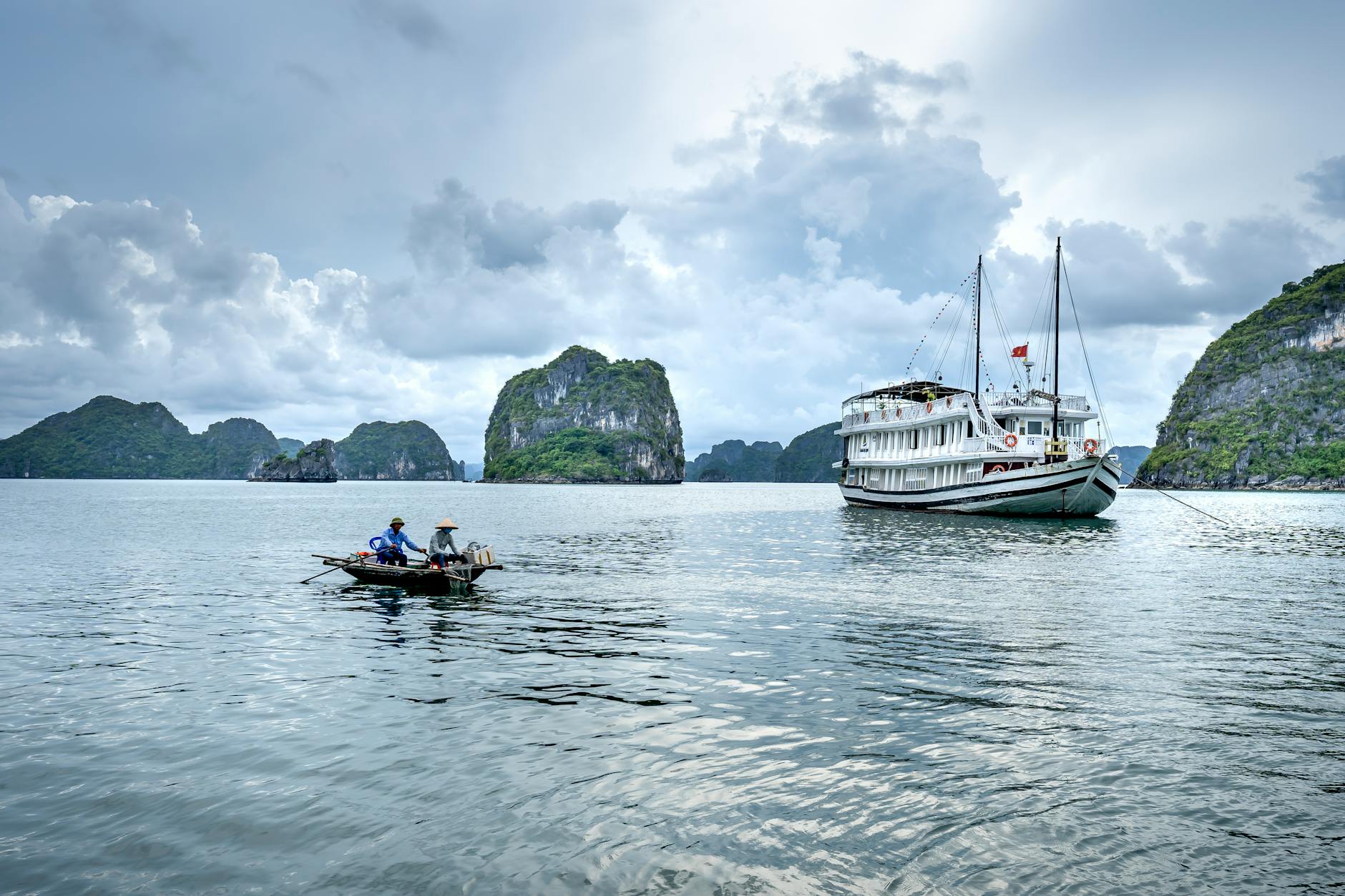
The Ha Long Bay cruise is the biggest splurge most families make. Worth it? Absolutely: limestone karsts, kayaking through caves, sleeping on a junk boat. Budget-conscious families can do a day trip from Hanoi for $50-$80 per person instead.
Free Family Activities
Beaches at Da Nang and Phu Quoc. Hoi An's lantern-lit streets at night. Sunrise over Hoan Kiem Lake. Ben Thanh Market in Ho Chi Minh City. Vietnam's best family moments often cost nothing.
Planning the Days Around the Moves
Ten days here is really three bases and two moves between them, and the moves are what a day-by-day plan has to absorb. The common family shape is Hanoi and Ha Long Bay, then Hoi An or Da Nang, then Ho Chi Minh City, flying each hop rather than taking a 15-hour train leg with young kids.
Two things drive what that shape costs. Every hop is four seats, not one, so a $50 fare is a $200 line. And the day you fly is a half day at both ends, which is why four bases in ten days buys an extra hop and shows you less. Build the days before you book the hops: flying into Hanoi and out of Ho Chi Minh City, as in the flight hack above, removes one outright.
Sample Budgets: Three Ways to Do Vietnam
Realistic 10-day budgets for a family of four, excluding international flights:
| Expense | Budget | Mid-Range | Splurge |
|---|---|---|---|
| Hotels (10 nights) | $250-$400 | $500-$800 | $1,500-$3,000 |
| Food (10 days, all meals) | $200-$300 | $280-$680 | $680-$1,320 |
| Getting between cities | $280-$400 (2 train legs) | $320-$800 (2 flights) | $480-$1,200 (3 flights) |
| Grab rides + private drivers | $30-$90 | $110-$230 | $190-$370 |
| Ha Long Bay | $200-$320 (day trip) | $300-$900 (overnight cruise) | $900 (premium cruise) |
| Other activities + entrance fees | $40-$200 | $120-$340 | $180-$500 |
| E-visas (4 × $25) | $100 | $100 | $100 |
| Travel insurance | $100-$200 | $100-$200 | $100-$200 |
| Bottled water + repellent | $23-$35 | $23-$35 | $23-$35 |
| Total | $1,223-$2,045 | $1,853-$4,085 | $4,153-$7,625 |
The low end of each column assumes you land the cheapest price on every line, which no real trip does. Treat them as floors: most families land at $1,800-$2,500, $2,500-$4,000 and $4,500-$8,000+ once souvenirs and the extra tour get counted.
What the Same Trip Costs All In
That table stops at the water's edge. It leaves out the four round-trip seats it takes to get a family from the U.S. to Vietnam, the largest single line in the budget. Here is the same 10 days with those seats added, using the mid-range ground column above and fares checked on Google Flights on August 30, 2026.
| Departure window | Round trip per person, JFK to Hanoi | Four seats | Mid-range ground | All in, family of four |
|---|---|---|---|---|
| Difference, same route and same hotels | $858 | $3,432 | none | $3,400 |
| Mid-February 2027 (shoulder season) | $855 | $3,420 | $1,853 to $4,085 | $5,300 to $7,500 |
| December 19 to 29, 2026 (Christmas week) | $1,713 | $6,852 | $1,853 to $4,085 | $8,700 to $10,900 |
All-in figures are rounded to the nearest $100. The ground column is held constant on purpose so the row isolates the airfare; peak-season hotels run 20 to 40 percent higher, which pushes the Christmas figure further up, not down.
Budget Style ($1,800-$2,500)
Guesthouses and mini-hotels ($25-$40/night), street food for most meals, buses and trains between cities, a Ha Long Bay day trip rather than the overnight cruise, 2-3 cities rather than the whole country. Tight, but these are clean private rooms with AC, not hostels.
Mid-Range ($2,500-$4,000)
Three-to-four star hotels ($50-$80/night), street food and restaurant meals, domestic flights between stops, the Ha Long Bay overnight cruise, a Hoi An cooking class, a private driver for day trips. The sweet spot for most families.
Luxury ($4,500-$8,000+)
Resort and boutique properties ($150-$300/night), fine dining and guided street food tours, private guides, a premium Ha Long Bay cruise, kids' clubs at beach resorts.
💡 Best Value Move
Spend up in Hoi An and Ha Long Bay, where the splurge shows, and go budget in Hanoi and Ho Chi Minh City, where cheap is just as good. For the day-by-day version, see our 10-day Vietnam family itinerary.
Health and Safety Costs
Travel Insurance
Non-negotiable. A family policy covering medical evacuation costs $10-$20 per day, or $100-$200 for a 10-day trip. Hanoi, Da Nang and Ho Chi Minh City have excellent private hospitals, and treatment there is expensive without cover.
Visas
The e-visa costs $25 per person, including children. That's $100 for a family of four. Apply through Vietnam's official immigration portal at least 5 business days before departure. Our 10-day Vietnam itinerary quotes 3 days before arrival; the portal itself was unreachable this cycle, so plan on the longer window. The 90-day single-entry e-visa is what most families need.
Health Precautions
Drink only bottled or filtered water, and budget $2-$3/day for water bottles for the whole family. Mosquito repellent with DEET is available locally for $3-$5 per bottle. Malaria risk is low in tourist areas, but dengue fever is present across Vietnam. Long sleeves and repellent during dusk hours protect kids.
Pack rehydration salts, children's ibuprofen and anti-diarrheal medication. Stomach trouble is common, usually mild, and the salts matter most for kids.
Money-Saving Tips That Actually Work
Most "budget tips" for Vietnam are recycled from 2015. What actually saves families money in 2026:
- Eat where locals eat. Tiny plastic stools and a Vietnamese-only menu means cheaper food that is also better than the tourist restaurants.
- Use Grab, not hotel taxis, which charge 2-3x. Download the app before you arrive; it takes international cards.
- Book hotels on Booking.com or Agoda. Walk-in rates are almost always higher, and Agoda is strong for Southeast Asian stock.
- Fly VietJet domestically. Base fares run 30-50% under Vietnam Airlines, but buy luggage allowance at booking, not at the airport.
- Skip Sapa with young kids. The 5-6 hour drive each way is rough on toddlers and the trekking isn't stroller-friendly. Ninh Binh, 2 hours from Hanoi, has similar scenery.
- Negotiate in markets, not restaurants. Vendors expect it; start at 50% of the asking price. Restaurant prices are fixed and the margins are thin.
When to Go (and How It Affects Cost)
The country spans 1,000 miles and three climate zones, so timing is a regional question.
Northern Vietnam (Hanoi, Ha Long Bay, Sapa)
Best October through December: dry and 65-75°F. June to August is hot and rainy.
Central Vietnam (Hoi An, Da Nang, Hue)
Best February through May: warm, dry, good beach weather. October and November bring the worst flooding, and Hoi An's Old Town floods regularly then.
Southern Vietnam (Ho Chi Minh City, Mekong Delta, Phu Quoc)
Best December through April, dry and in the 80s-90s°F. May-October is wet, though rain usually comes in afternoon bursts rather than all-day downpours.
Peak season (December-February) pushes hotel prices up 20-40%, especially around Tet (Vietnamese New Year, late January or February). Avoid Tet week unless you want the spectacle: restaurants close, domestic flights sell out and prices spike.
What the departure week does to the flight line
Timing moves a Vietnam family budget more than any other single decision, and almost all of the movement lands on the flight line. On one route, JFK to Hanoi, the cheapest round trip for a mid-February 2027 departure was $855 a seat. For a Christmas departure, December 19 to 29, 2026, the cheapest was $1,713 (as of August 2026, source: Google Flights Cheapest tab, one adult, economy, priced in USD). That is $858 a seat, or $3,432 for a family of four, for the same flights in a different week.
Google labelled the February fare $149 below its usual price for that search and the December fare typical, so roughly $709 of the $858 is the calendar and about $149 is a discount live on the February search today. It is what turns the $5,300 trip in the all-in table into the $8,700 one, and moving your dates out of the Christmas and Tet windows saves more than every tip in this guide put together.
Final Verdict
Vietnam is the best-value family destination in Southeast Asia for 2026 once you are past the budget tier, where Thailand's simpler basket comes in lower. It offers a 10-day trip for $1,800-$4,000 (excluding flights) with genuine cultural experiences, great food, and beach resorts that undercut their Bali equivalents.
What costs $400/day for a family in Europe or the U.S. costs $122 to $409/day here at the tiers in the table above. The trade-offs are more planning, longer flights and a few health precautions.
Kids remember this one: Ha Long Bay kayaking, Hoi An lantern-making, street food cheaper than a latte at home. Start with our Vietnam with kids guide, then run your dates through the budget calculator.
Frequently Asked Questions
A 10-day Vietnam family trip costs $1,800-$4,000 for a family of four in 2026, excluding international flights. Budget families spend about $100-$150 per day, mid-range travelers $180-$300. Those are reported day rates; this guide's line-item table, which also carries visas, insurance and a Ha Long Bay trip, works out slightly higher at $122-$205 and $185-$409 a day. International flights from the U.S. add $800-$1,600 per person, or $3,200-$6,400 for four, the single biggest expense.
Yes, $5,000 covers a 10-day Vietnam family vacation on the ground for a family of four in 2026, which runs $1,800-$4,000. It gets tight once U.S. flights are added, since international airfare costs $3,200-$6,400 for four. Families flying from the U.S. should budget $5,300-$10,900 all-in depending on the departure week, as the all-in table in this guide shows.
$1,000 is enough for one budget traveler to spend about two weeks in Vietnam in 2026, but not for a family of four. Street food is $1-$3 per person, budget guesthouse rooms $15-$40 a night and Grab rides $1-$3. A family of four spends $100-$150 per day, roughly $1,400-$2,100 for two weeks before international flights, or $1,712-$2,863 at this guide's line-item rate, so $1,000 falls short.
Yes, $500 USD goes a long way in Vietnam in 2026. A bowl of pho costs $1.50, a family of four eats three meals for $20-$30 total, a clean hotel room runs $15-$80 a night and a Grab ride across town is $1-$3. Across food, local transport and attractions ($2-$10 per person), $500 funds a family for several days, but not a multi-week trip once hotels and domestic flights are counted.
$2,000 covers two weeks in Vietnam for one or two budget travelers, but not a family of four. A family of four on a budget spends $100-$150 per day, so two weeks on the ground runs $1,400-$2,100 before a flight is booked, or $1,712-$2,863 at this guide's line-item rate. Either way ground costs alone consume most or all of the $2,000, and four international seats add $3,200-$6,400.
Families need $100-$150 per day for budget travel or $180-$300 per day for mid-range comfort in Vietnam in 2026. That covers accommodation, three meals, local transport and one activity. This guide's line-item table, which also carries visas, insurance and a Ha Long Bay trip, works out slightly higher at $122-$205 and $185-$409 a day. Use our budget calculator for your own dates.
Vietnam is an excellent family vacation in 2026, with some of the lowest travel costs in Southeast Asia and a culture that welcomes kids. A 10-day trip for a family of four runs $1,800-$4,000 on the ground. Highlights include the beaches at Da Nang and Phu Quoc, a Ha Long Bay cruise ($120-$300 per person, kids often 50-75% off) and Hoi An's lantern-lit old town (120,000 dong, about $4.60). The trade-offs are long flights ($800-$1,600 per person) and 2-3 domestic hops ($40-$100 per person each).
Vietnam is safe for families with children, with a low crime rate and a culture that is warm toward kids. The main concerns are traffic, food hygiene (bottled water, busy stalls) and mosquito-borne illness (DEET at dusk). Major cities have English-speaking private hospitals. From July 1, 2026 a private car carrying a child under 10 and under 1.35m must use a child restraint and cannot seat the child in the driver's row, while taxis and ride-hailing cars including Grab are exempt from the restraint requirement, though the front-row rule applies in every car (source: Vietnam Traffic Police Department via chinhphu.vn, August 2026).
The best time to visit Vietnam with kids is October through December for the north (Hanoi, Ha Long Bay) and December through April for the central and southern regions. Vietnam's weather varies dramatically by region, so timing depends on your itinerary. Avoid Tet (Vietnamese New Year, in late January or February) when many businesses close and prices spike.
Most nationalities need a visa for Vietnam, including children; the e-visa costs $25 per person and allows a 90-day single-entry stay. Apply online at Vietnam's official immigration portal at least 5 business days before departure. Every family member needs their own visa and a passport valid for at least 6 months.
Data Sources and Methodology
Background sources consulted for this guide. Only the first is an official body; the other three are secondary and every price taken from them was re-checked or is flagged below.
- Vietnam National Administration of Tourism: health and safety guidelines
- Custom Asia Travel: family trip cost breakdowns and budget data
- TravelynnFamily: parent-tested family travel tips for Vietnam
- BudgetYourTrip.com: daily cost averages from traveler reports
What we re-checked for this update
- International airfare, JFK to Hanoi and LAX to Ho Chi Minh City, round trip, one adult, economy, priced in USD, read off the Cheapest tab (as of August 2026, source: Google Flights).
- Domestic airfare, Hanoi to Da Nang and Ho Chi Minh City to Phu Quoc, one way (as of August 2026, source: Google Flights).
- Lodging, two adults and two children in one Hanoi room for three nights, price-sorted, outside Tet (as of August 2026, source: Booking.com).
- Our own published figures on the Thailand family guide and the 10-day Vietnam family itinerary, read directly from those two pages.
- The Hoi An Ancient Town ticket, on the Hoi An World Heritage Conservation Centre's own site (as of August 2026).
- The child car-seat rule, on the Vietnam Traffic Police Department's notice published by chinhphu.vn (as of August 2026).
Figures carried forward and not re-verified this cycle
Six prices below could not be confirmed on the fact owner's own site this cycle: the immigration portal serves an empty JavaScript shell and both Ha Long Bay operators keep prices behind a booking widget. These keep their July 2026 stamp:
- E-visa, $25 per person. Vietnam's immigration portal returned no readable content across seven separate attempts.
- Cu Chi Tunnels tour, $8 to $15 per person.
- Imperial City of Hue, $7 per person.
- Thang Long water puppet show, $4 to $8 per person.
- Reunification Express soft sleeper, Hanoi to Da Nang, $35 to $50 per person.
- Ha Long Bay cruise, $120 to $300 per person.
Last verified: August 2026. Every price here is a planning band rather than a quote, and moves with season and availability.