Vietnam with Kids: Best Bases, Real Costs, When to Go
The easiest bases, 2026 costs, day-by-day rhythm, and how Vietnam stacks up against Thailand, Bali, and a Cambodia add-on
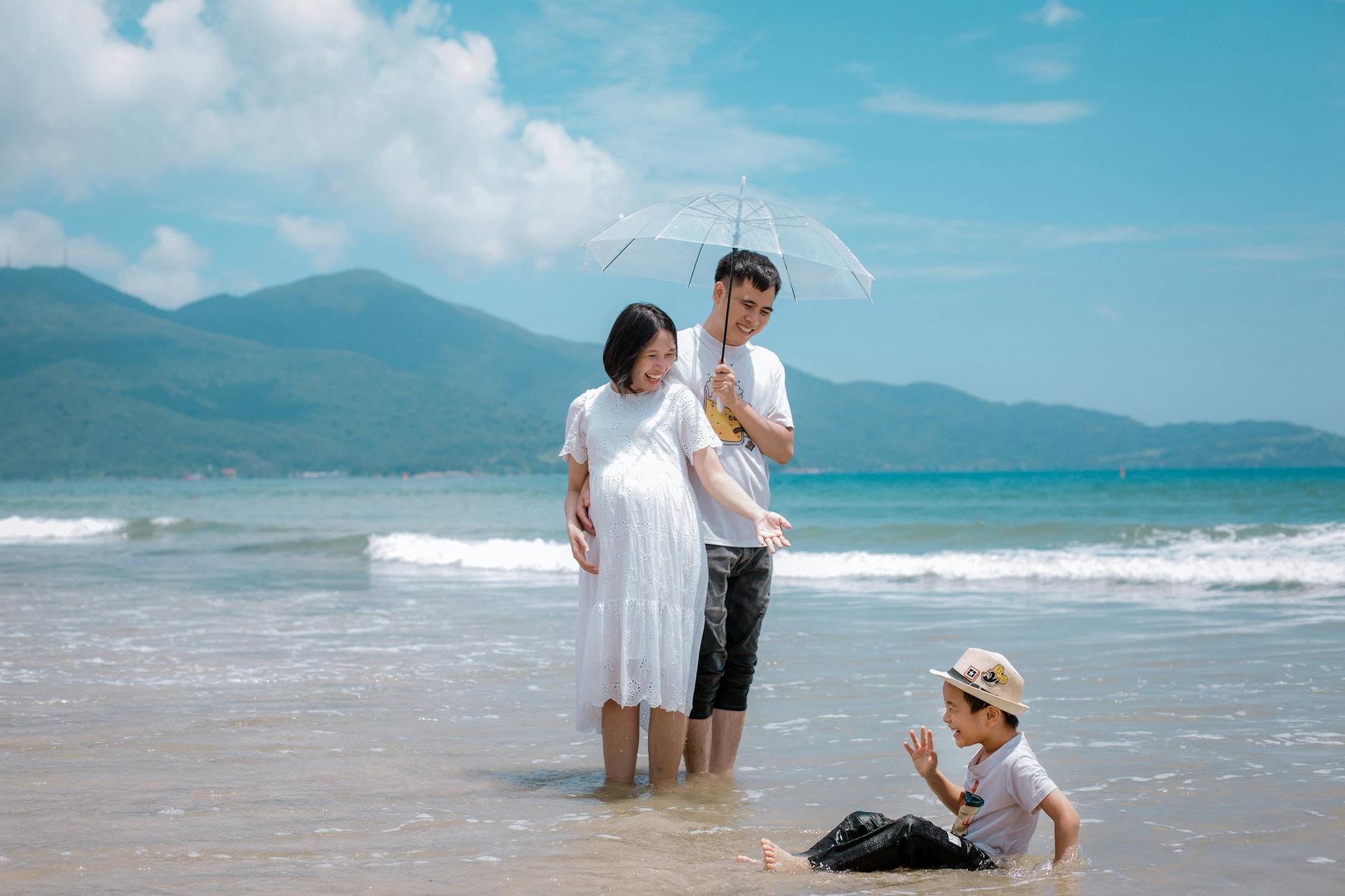
Quick Answer
- Vietnam is one of the easiest, best-value family destinations in Asia for 2026, with a 10-day trip for a family of four costing roughly $2,500 to $4,000 on the ground (international flights not included), warm locals who dote on kids, and Hoi An plus Da Nang as the gentlest base.
- 💸 Where families overspend: not safety or food, which both surprise parents in a good way, but transit : a rushed north-to-south loop can burn 20-plus hours in planes, trains, and cars. The plan below keeps travel days low.
- 👶 Best ages: 5 to 12 is the sweet spot, though Vietnam with toddlers works from one calm base like Hoi An.
- 🏝️ Best base: Hoi An and Da Nang on the central coast pack flat streets, beaches, and culture into one place.
- 🍜 Picky eaters: pho, banh mi, spring rolls, and fruit smoothies, plus pizza and pasta in every tourist town.
- 📅 When to go: December to April is the driest, most kid-friendly window, and December is a top month.
- 🧮 Price your own dates with our family budget calculator, or see the regional split in our Vietnam family cost guide.
Is Vietnam a Good Place to Take Kids?
Here's what most parents get wrong before a Vietnam trip. They fixate on safety and whether the kids will eat, and both turn out fine : often the best part. What actually decides how the trip feels is how far you try to move in how many days. Below: the easiest bases, a 2026 per-day cost table, the best months to go, a sample day rhythm, and where Vietnam beats Thailand, Bali, and a Cambodia add-on.
So, is Vietnam a good place to take kids? Yes, and more than most families expect. The country's backpacker reputation throws some parents off, but resort infrastructure in Da Nang and Phu Quoc now rivals Thailand, domestic flights are cheap and frequent, and Vietnamese people are famously warm toward children. Expect strangers to play with your kids at restaurants, offer them snacks, and treat them like visiting royalty. On r/VietNam, the running advice to nervous parents stays blunt: "Vietnam is a fun place to vacation," even with kids.
It isn't Disneyland, though. Traffic in Hanoi and Ho Chi Minh City is relentless, sidewalks turn into obstacle courses, and the heat gets brutal from April through September. Add the 15 to 20 hour flight from the US, and you can see why pacing matters more than any single attraction. Families who want cultural depth, great food, and real adventure at a fraction of Europe or Japan prices tend to love it. Families who need everything sanitized and predictable should skip it.
Skip Vietnam with kids if
- your children can't yet sit through a 15 to 20 hour flight and you only have five or six days
- you need everything sanitized, predictable, and stroller-smooth on every street
- anyone in the group uses a wheelchair or has heavy mobility needs (city sidewalks are rough and often blocked)
- your family wilts in heat and you can only travel June to August
- you want one resort you never leave : in that case pick Phu Quoc on its own, or choose Bali instead
When to Go with Kids (December and Beyond)
Vietnam runs more than 1,000 miles north to south, so there's no single best season : weather splits by region. The north gets a cool, misty winter; the center has a distinct autumn flood window; the south stays tropical year-round with a clear wet and dry pattern. Traveling in December? Good call for the south and the central beaches, and pack a light jacket for Hanoi and Ha Long Bay, where mornings turn cool.
| Region | Best, driest months for kids | Months to avoid |
|---|---|---|
| North (Hanoi, Ha Long Bay, Sapa) | October to April; December is cool and clear | June to August heat; July to September storms |
| Central (Hoi An, Da Nang) | February to August | October to November flood risk |
| South (Ho Chi Minh City, Mekong, Phu Quoc) | December to April | June to September heavy afternoon rain |
Seasonal pattern per Vietnam National Administration of Tourism regional guidance; conditions vary year to year, so check a forecast before you lock in flights.
The sweet spot for a full-country trip is late February to April, when all three regions line up dry at once. Short on flexibility? A December beach-and-central-coast trip skips the northern chill and still delivers warm swimming days in Da Nang and Phu Quoc.

Where to Stay: Best Bases in Vietnam with Kids
The best place to stay in Vietnam with kids depends on their ages and how much you want to move. Rather than chase the whole country, most families do better picking two bases and settling in. Here's how the main regions compare for a family trip.
| Base | Best for | How long, and why |
|---|---|---|
| Hoi An + Da Nang (central coast) | Toddlers, first-timers, beach plus culture | 4 to 5 days; flat, walkable Ancient Town, An Bang and My Khe beaches 10 to 20 minutes away, family cooking classes |
| Northern Vietnam (Hanoi, Ha Long Bay, Ninh Binh) | Kids 5 and up who can handle busy cities | 4 to 6 days; the best places to visit with kids in northern Vietnam, from water puppets to an overnight junk-boat cruise |
| Phu Quoc or Nha Trang (islands and coast) | Vietnam beach holidays with kids | 3 to 4 days; resort pools and calm swimming to wind down a trip |
| Ho Chi Minh City + Mekong Delta | Older kids and history (Cu Chi Tunnels) | 2 to 3 days; fast-paced city plus a slow boat day through the delta |
Central coast: the easiest first base
Hoi An is the most family-friendly town in Vietnam, full stop. The Ancient Town is compact and flat (which matters when you're pushing a stroller), the lantern-lit streets glow at night, and tailors run up custom kids' outfits overnight for $15 to $30. Pair it with Da Nang 30 minutes away, where My Khe Beach is wide, clean, and gentle enough for young swimmers. This is the base for Vietnam with toddlers.
Northern Vietnam: cities, karsts, and cruises
Hanoi is chaotic and wonderful, with the Old Quarter, the Thang Long water puppet theatre, and Hoan Kiem Lake at sunrise. It's tough with very young kids (thin sidewalks, fast traffic), so it suits ages 5 and up. From there, an overnight Ha Long Bay junk-boat cruise is the highlight of most family trips, and Ninh Binh, the "Ha Long Bay on land," adds calm rowboat rides through Trang An's caves.
Beaches and islands
For Vietnam beach holidays with kids, Phu Quoc is the easiest island because resorts handle everything from airport pickup to kids' clubs, and Long Beach and Sao Beach have soft sand and clear water. Nha Trang works as a mainland beach alternative with easy flights. Phu Quoc also makes a natural finish: a few lazy resort days before the long flight home.
What Vietnam with Kids Costs in 2026
Vietnam is cheap by any Western standard, which is exactly why questions like "is $4000 a month good in Vietnam" and "is $100 USD a lot in Vietnam" come up so often. Short answers: yes and yes. Here's what a family of four actually spends per day on the ground in 2026, not counting international flights.
| Style | Per day, family of 4 | What it buys |
|---|---|---|
| Backpacking | $50 to $100 | Guesthouse family rooms, street food, buses and trains, public beaches. This is backpacking Vietnam with kids on a budget. |
| Comfort (mid-range) | $150 to $300 | 3 to 4 star hotels with pools, a mix of local and Western meals, some domestic flights, private day tours. |
| Premium | $350 to $600 | 4 to 5 star beach resorts in Da Nang and Phu Quoc, a private guide and driver, Ha Long overnight cruise suites. |
Sources: Booking.com and Agoda room rates, Vietnam Airlines and VietJet domestic fares, and Numbeo Vietnam cost-of-living data (2026). Meals figured at pho $1 to $3 a bowl, banh mi under $2, and fruit smoothies $0.50 to $1.
Turn those day rates into trips and the math is friendly. A comfortable 7-day central-coast week runs about $1,800 to $3,000; a 10-day, three-region trip lands around $2,500 to $4,000; and 5 weeks in Vietnam with kids, done backpacking-style with slow rest weeks, comes in near $3,500 to $6,500 on the ground. What about a single $100 bill? It stretches to roughly 2.5 million dong : several family meals, a mid-range hotel night, or a full guided day with a driver.
Best Things to Do with Kids, Region by Region
The best place to go in Vietnam with kids really is a shortlist of experiences, not one city. Here's what works at each stop, age-tagged, with 2026 prices where they matter. For the full regional cost breakdown, see our Vietnam family cost guide.
Northern Vietnam
- Thang Long water puppet show : a uniquely Vietnamese art form on water; kids sit transfixed for the 45-minute run ($4 to $8 a person). All ages.
- Ha Long Bay overnight cruise : kayaking through caves and sleeping on a junk boat; the trip highlight for most families. Book a 2-day, 1-night cruise with a family cabin.
- Ninh Binh rowboat through Trang An : a local rower does the work while kids watch karsts drift past. Calm and stroller-free. All ages.
Central Vietnam
- Hoi An cooking class : a market tour plus hands-on rolling of spring rolls; kids 5 and up love it. One of the best family activities in Southeast Asia.
- Lantern-making workshop : kids build a paper lantern small enough to pack home ($8 to $12 a person). Ages 4 and up.
- My Khe Beach, Da Nang : free, wide sand, gentle waves, lifeguards. The daily reset every family needs.
Southern Vietnam
- Cu Chi Tunnels : kids crawl through widened Viet Cong tunnels; educational and thrilling. Best for ages 8 and up ($8 to $15 a person).
- Mekong Delta boat day : floating markets, coconut-candy stops, sampan rides through narrow canals ($15 to $40 a person from Ho Chi Minh City). All ages.
- Phu Quoc beaches : Long Beach and Sao Beach for clear water, soft sand, and beachside noodle shacks.
Planning the Days: 7-Day, 10-Day, and 5-Week Itineraries
The most common question after "where" is "how long." A good Vietnam with kids itinerary keeps travel days low and builds in rest. Here's how the lengths shake out.
- 7 days : two regions, no more. Pair the central coast (Hoi An and Da Nang) with either Ha Long Bay or Hanoi. This is the honest ceiling for a Vietnam with kids itinerary of 7 days.
- 10 days : three regions without rushing: north (Hanoi and Ha Long Bay), central coast, and a beach finish. Our detailed 10-day Vietnam family itinerary maps it out day by day.
- 2 to 3 weeks : north to south at a real pace, ending with the Mekong Delta or Phu Quoc.
- 5 weeks : the slow, backpacking-with-kids loop with rest weeks built in, so nobody burns out.
Whatever the length, the day rhythm stays the same: one anchor activity, a midday heat break, one easy thing after. Kids who nap through the hottest hours are far happier by sunset : and so are you.
Vietnam or Thailand? Bali, Cambodia, and Other Options
Plenty of families land here while weighing a wider Southeast Asia trip. So how does Vietnam compare with the usual alternatives, and what pairs well with it? Here's the honest read.
| Option | Best for | Our take |
|---|---|---|
| Thailand | Easy beach resorts, short internal hops | Vietnam or Thailand with kids is close. Thailand for a simpler first Southeast Asia trip; Vietnam for food, culture, and value. |
| Bali (Indonesia) | One-island resort ease | Bali or Vietnam with kids: Bali if you want to stay put by a pool, Vietnam if you want variety across a country. |
| Koh Samui (Thailand) | A pure island beach week | Koh Samui or Vietnam with kids: Samui for a beach-only week; Vietnam if you want culture plus beaches in Da Nang and Phu Quoc. |
| Cambodia (add-on) | Angkor Wat with older kids | Cambodia and Vietnam with kids pair beautifully over 2 to 3 weeks; tack Siem Reap onto the end after Ho Chi Minh City. |
| Singapore (add-on) | A clean, easy first or last stop | Vietnam with kids plus Singapore makes a gentle bookend for jet-lagged toddlers on the way in or out. |
A Cambodia and Vietnam holiday with kids is the classic two-country combo: Hanoi and Ha Long in the north, the central coast, then a hop to Siem Reap for Angkor. Give it at least 2 to 3 weeks so the temples don't become a forced march. And if you're deciding between whole countries, our Thailand family guide breaks that side down in detail.
What to Pack for Vietnam with Kids
Pack for heat, sudden rain, and rough sidewalks, and the rest sorts itself out. The single most useful item isn't a stroller.
- Lightweight carrier : a structured baby carrier beats a stroller on city days, since parked motorbikes, food stalls, and vendors block most sidewalks in Hanoi and Ho Chi Minh City.
- Packable travel car seat : a 2026 rule now requires children under 10 (and under 135 cm) to use car seats, and Grab cars rarely provide them.
- Kid-safe DEET repellent : 20 to 30 percent strength for children over 2 months; dengue mosquitoes bite by day, so it isn't just for evenings.
- Sun kit : reef-safe sunscreen, hats, and a light rain shell for the central coast's afternoon downpours.
- Comfort meds : children's ibuprofen, rehydration salts, and antihistamine cream, since pharmacies stock differently than at home.
Skip the bulky stroller unless you're resort-only. A compact umbrella stroller earns its place at airports and malls, and nowhere else.
Safety and Health in Vietnam with Kids
Vietnam is safe for families. Violent crime is low, tourists are rarely targeted beyond minor scams, and the culture treats kids with real warmth. The things to manage are practical, not scary.
Traffic
This is the number-one concern, and the fix is counterintuitive. In cities full of motorbikes, cross slowly and steadily and let the traffic flow around you : never stop short or run. Hold hands tightly. After a day or two it becomes routine, but those first crossings are nerve-wracking, so give the kids the rules before you step off the curb.
Mosquitoes and stomach bugs
Dengue is present countrywide, so DEET repellent, day and night, plus air-conditioned rooms do most of the work. For stomach trouble, which hits a fair share of travelers, the rules are simple: bottled water only (including for brushing teeth), skip ice from street carts, and choose busy stalls with high turnover. Pack rehydration salts just in case.
Medical preparation
Hanoi, Da Nang, and Ho Chi Minh City have excellent English-speaking private hospitals; rural areas don't. Travel insurance with medical-evacuation cover is non-negotiable. Bring children's ibuprofen, rehydration salts, DEET, antihistamine cream, and any regular prescriptions.
What Real Families Report
Search "Vietnam with kids reddit" and the tone is reassuring. One parent on r/VietNam wrote that "Vietnam is a fun place to vacation" even with young kids, describing the country as friendly and welcoming to families. The recurring themes across family forums are the same three: the kindness of strangers toward children, how well kids eat, and how much the logistics (traffic, transit, heat) shape whether the trip feels easy or exhausting.
Final Verdict
Vietnam is one of the most rewarding family destinations in Asia for 2026, delivering cultural depth, standout food, and real adventure at prices that make Japan or Europe look overpriced. It works for kids of every age, though the 5-to-12 range gets the most out of it.
The honest trade-off: Vietnam asks for more planning and flexibility than a single-resort week. Traffic is stressful at first, the flight is long, and you'll want good insurance. But families who push through those logistics come home with the stuff a theme park can't manufacture : kayaking Ha Long Bay's caves, rolling spring rolls in Hoi An, and eating $1.50 pho that beats any $15 bowl back home.
Start with the numbers in our Vietnam family cost guide, then build the days with the itinerary builder.
Frequently Asked Questions
Yes, Vietnam is one of the best places in Asia to take kids, with low violent crime, locals who dote on children, and food most kids happily eat. The honest trade-offs are chaotic city traffic and a 15 to 20 hour flight from the US, so Hoi An and Da Nang make the gentlest first base.
Yes, $4,000 a month is a strong budget in Vietnam. For a family living locally it sits well above average and covers a nice apartment, eating out, and help at home. For a family traveling and touring daily in 2026 it lands at the comfortable mid-range, since active family travel runs about $150 to $300 a day.
Both Thailand and Vietnam are excellent for kids aged 5 to 12. Vietnam wins on value, kid-friendly food, and Ha Long Bay cruises, while Thailand edges ahead on easy beach resorts and shorter internal hops. Choose Vietnam for culture and adventure, and Thailand for a simpler first trip to Southeast Asia.
The central coast is the best part of Vietnam for kids, where Hoi An and Da Nang sit 30 minutes apart and pair flat, walkable streets with calm beaches. Hoi An suits toddlers and young kids, while northern Vietnam (Hanoi, Ha Long Bay, and Ninh Binh) rewards children aged 5 and up who can handle busier cities.
Yes, $100 goes a long way in Vietnam, converting to roughly 2.5 million dong in 2026. It can cover several family meals of pho and spring rolls, a night in a mid-range hotel, or a full day of guided sightseeing with a private driver for a family of four.
According to the World Health Organization, stroke is the leading cause of death in Vietnam among the general population, not anything travel-related. For visiting families the real risk is road traffic, so hold hands crossing streets, use seat belts and car seats, and skip motorbike rides with young kids.
Data Sources and Methodology
This guide uses verified data from official and trusted sources:
- World Health Organization : Vietnam : leading causes of death and health data
- Numbeo Vietnam Cost of Living : food, lodging, and monthly budget benchmarks
- r/VietNam : Travelling with kids : first-hand family sentiment
- TraveLynn Family : parent-tested route and age-specific tips
Last verified: July 2026