Yellowstone vs Grand Canyon for Families: Complete Comparison 2026
Quick Answer: Yellowstone vs Grand Canyon
Two of America's most iconic parks, same entrance fee, wildly different experiences. Here's what matters most for families:
- Activity variety: Edge: Yellowstone — geysers, wildlife, hot springs, waterfalls, and horseback riding fill a solid week
- Visual impact per day: Edge: Grand Canyon — nothing else in the country hits quite this hard on a 2-day visit
- Entrance fees: Identical — $35 per vehicle at both parks (7-day pass)
- Total trip cost: Grand Canyon runs $1,500-$2,000 less for a family of four, mostly because you'll stay fewer days
- Best ages for Yellowstone: 5 and up — old enough to walk boardwalks, spot bison, and earn a Junior Ranger badge
- Best ages for Grand Canyon: Any age for rim views; 8+ for below-rim hikes on Bright Angel Trail
- Choose Yellowstone if: Your family has a full week and wants something different every single day
- Choose Grand Canyon if: You've got a long weekend and want maximum wow factor for minimum planning
The deciding factor: How many vacation days you can spend. Yellowstone rewards longer trips with its sheer variety, while the Grand Canyon delivers the biggest emotional punch per hour of any park in the system.
Side-by-Side Comparison
How do these two parks stack up on the things families actually care about? Here's the category-by-category breakdown, using verified pricing from NPS.gov and current booking platforms.
| Category | Yellowstone | Grand Canyon | Edge |
|---|---|---|---|
| Entrance Fee | $35/vehicle | $35/vehicle | Tie |
| In-Park Lodging | $164-$535/night | $180-$450/night | Tie |
| Camping | $20-$32/night | $18/night | Edge: Grand Canyon |
| Flights (family of 4 RT) | ~$900 to Jackson Hole | Drive from Phoenix (~3.5 hrs) | Edge: Grand Canyon |
| Recommended Stay | 5-7 days | 2-3 days | Depends on schedule |
| Annual Visitors (2024) | 4.7 million | 4.92 million | Tie |
| Kid-Friendly Activities | Geysers, wildlife, hot springs, horseback | Rim walks, mule rides, rafting, IMAX | Edge: Yellowstone |
| Stroller Access | Boardwalks at geyser basins | Paved Rim Trail sections | Tie |
Both parks hit the same $35 entrance fee for a private vehicle, valid for seven days. The real cost gap shows up in flights, lodging duration, and how many days your family will stay.
Getting There
This is where Grand Canyon pulls ahead fast. Phoenix Sky Harbor is a major hub with direct flights from most U.S. cities, and from there it's a 3.5-hour drive north to the South Rim. Families flying into Flagstaff cut that drive to about 80 minutes, though flights cost a bit more. Either way, the Grand Canyon is easy to reach without a complicated travel day.
Yellowstone takes more effort. Jackson Hole Airport sits just south of Grand Teton National Park and offers the closest access, but fares run around $225 per person round trip from a major hub — roughly $900 for a family of four. West Yellowstone Airport operates during summer months with fewer routes and smaller planes. Gateway towns like West Yellowstone and Gardiner offer lodging outside the park, but you're still looking at a full travel day to get settled.
West Yellowstone family hotels on Expedia — the gateway towns put you minutes from the north and west entrances when in-park lodges are full, with family rooms typically $130-$260 a night in peak summer.
True Cost Comparison
Entrance fees are identical, and the $80 America the Beautiful annual pass covers both parks (plus every other national park for a year — it's a solid deal if you'll visit more than two). New for 2026: non-U.S. residents pay an additional $100 per person surcharge at all national parks.
Lodging is where the math gets interesting. Inside Yellowstone, Old Faithful Snow Lodge starts around $164 per night, Canyon Lodge ranges from $267 to $1,225 depending on room type, and the iconic Old Faithful Inn averages $424 per night during peak summer. At the Grand Canyon, Mather Campground costs just $18 per night, and park lodges start around $180. El Tovar — the grand dame of canyon lodging — runs $350-$450.
But here's the piece most families overlook: trip duration changes everything. A proper Yellowstone visit takes 5-7 days. The Grand Canyon works beautifully in 2-3. Even if per-night costs were identical, you'd spend roughly half as much at the Grand Canyon because you're there half as long.
So what does that mean in real numbers? For a family of four, a week at Yellowstone — including flights, lodging, food, and park fees — typically runs $3,500-$5,500. A 3-day Grand Canyon trip from Phoenix? More like $1,200-$2,500. That's a meaningful gap, especially for families watching their travel budget.
Browse Grand Canyon South Rim and Tusayan hotels on Expedia — Tusayan sits just outside the entrance for $150-$250 a night when El Tovar and the in-park lodges are booked out months ahead.
Activities and Attractions
Yellowstone: A Week of Variety
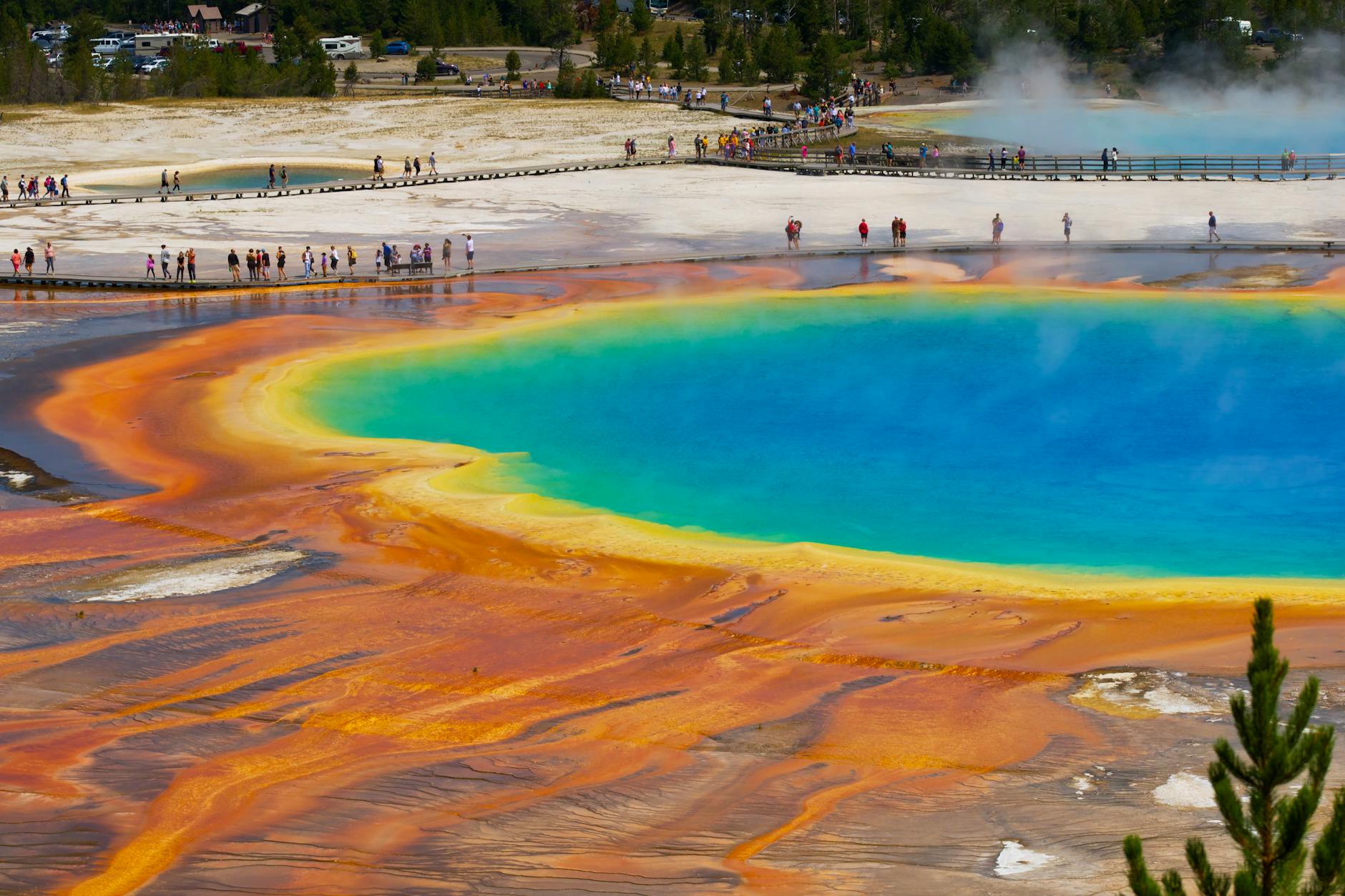
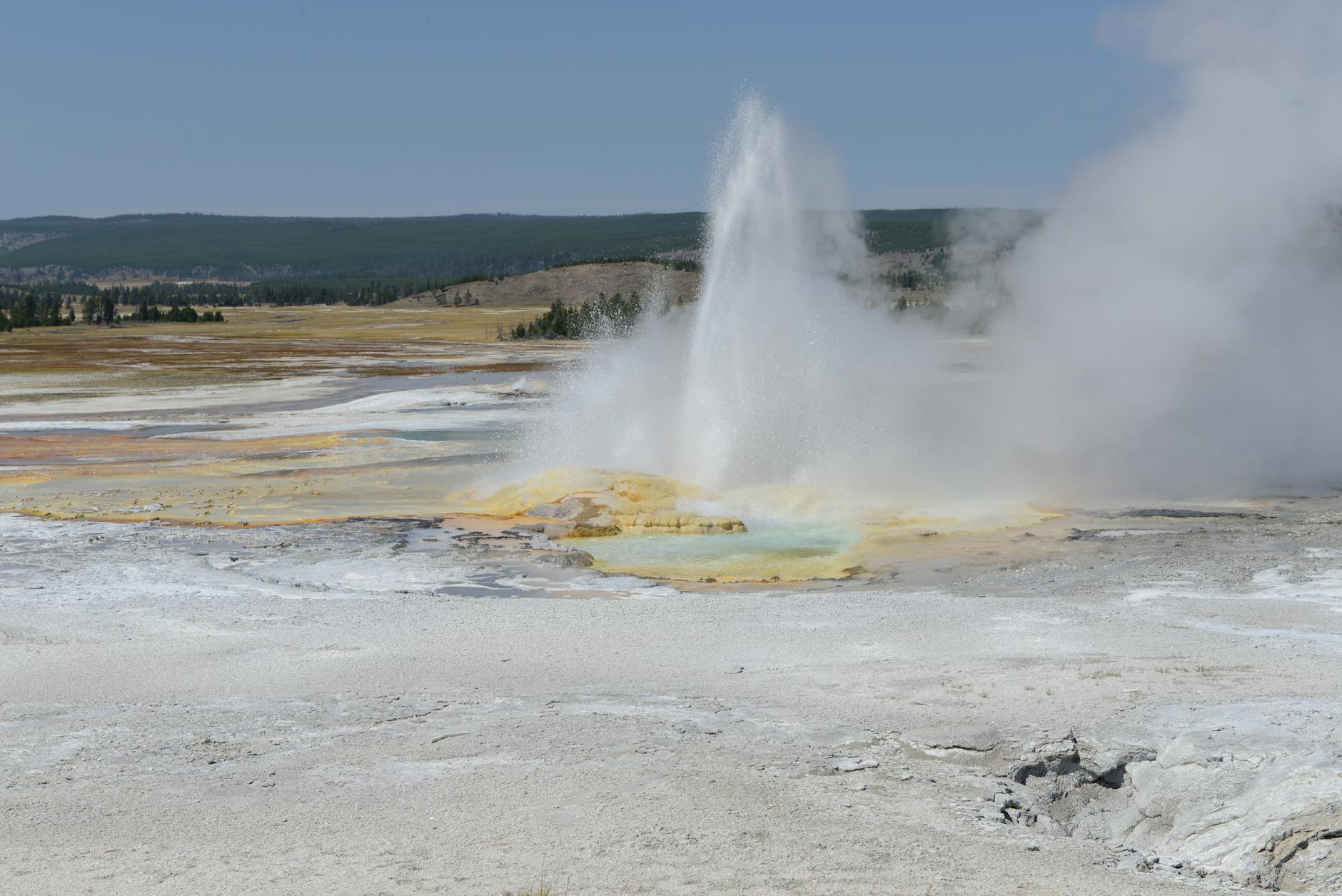
Yellowstone keeps families busy in a way few parks can match. The Upper Geyser Basin alone holds roughly a quarter of the world's geysers, and the boardwalks are flat enough for strollers — so even toddlers can see Grand Prismatic Spring and Old Faithful without anyone hauling them up a switchback.
Wildlife is the other major draw. Lamar Valley (sometimes called America's Serengeti) offers real chances to spot bison herds, wolves, bears, elk, and coyotes. Bring binoculars and plan for dawn or dusk — that's when the animals are active. Kids who've only seen these creatures in books tend to lose their minds.
Beyond the highlights, there's horseback riding from Roosevelt Corrals, the Grand Canyon of the Yellowstone with its 308-foot Lower Falls, and the Boiling River where a hot spring mixes with a cold river to create a swimmable temperature. That last one alone will make your kids think you're the greatest parent who ever lived.
The park's figure-eight loop road makes planning straightforward. Focus on the upper loop one day, the lower loop the next, and you'll never repeat yourself. Junior Ranger programs run throughout summer and give kids ages 5-12 something to work toward beyond "look at that."
Yellowstone wildlife safari tours on Viator — a guided dawn Lamar Valley safari hands you the spotting scopes and the wolf-and-bear know-how that turn a drive-through into real sightings.
Grand Canyon: Maximum Impact, Fewer Days
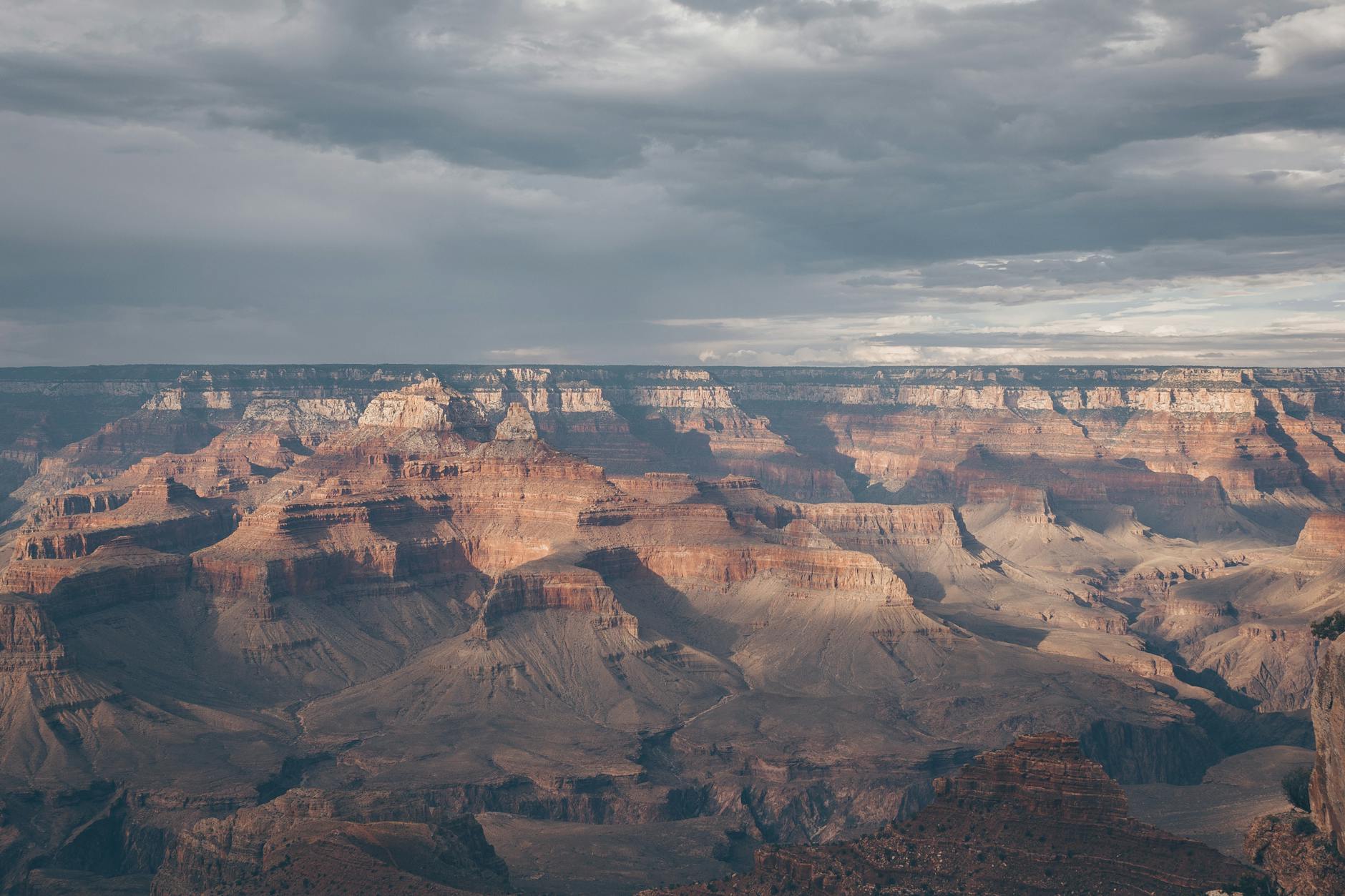
The Grand Canyon's appeal is almost the opposite of Yellowstone's — one staggering sight rather than a collection of attractions. Stand at the South Rim and watch your kids go quiet. That doesn't happen often.
For families staying topside, the Rim Trail offers paved sections between viewpoints, and the free shuttle bus system means you can hop between overlooks without wrestling car seats in and out. Ranger programs run daily during peak season. The Yavapai Geology Museum gives older kids some context for what they're seeing — rocks dating back nearly 2 billion years tend to land differently when you're staring right at them.
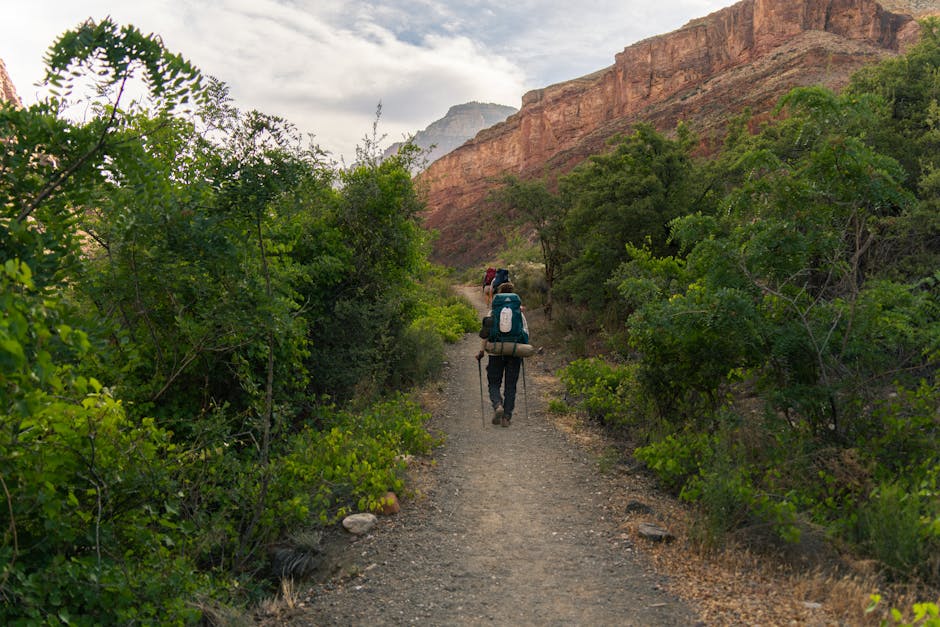
Mule rides along the rim are available for kids 7 and older. The IMAX theater in Tusayan screens a canyon orientation film that's worth the stop before your first overlook. Below-rim hiking on Bright Angel Trail is spectacular, but the steep grade and summer heat make it a poor match for kids under 8 or 9.
Is rafting the Colorado River worth considering? Absolutely — but most multi-day outfitters set minimum ages at 8-12, and trips book months ahead. For a shorter taste, smooth-water float trips from Glen Canyon Dam work for all ages.
Compare Grand Canyon rafting and mule tour options on Viator — multi-day rafting and rim mule rides set minimum ages at 7-12 and sell out months ahead, so check dates before you lock your travel week.
Best Time to Visit
Yellowstone's sweet spot is June through early September. All roads, lodges, and campgrounds are open during this window. Late June through August brings the warmest weather and the biggest crowds. September is the secret pick — thinner crowds, fall colors starting to pop, and wildlife more active as they prep for winter. The catch? Some facilities start closing mid-September, and snow can arrive early.
Grand Canyon's South Rim stays open all year, which gives families more flexibility. Spring (March through May) and fall (September through November) offer the best combination of comfortable temperatures and manageable crowds. Summer brings heat that makes below-rim hiking dangerous for kids. Winter brings snow to the rim, which is actually stunning — but the North Rim closes from mid-October through mid-May.
What Parents Actually Say
Travel forums paint a pretty consistent picture when it comes to families comparing these two parks.
One parent on TripAdvisor, choosing between the parks for kids ages 6 and 7, noted that Yellowstone provides a wider variety of things to do — and that it's set up as a "family" vacation in a way Grand Canyon isn't, thanks to its loop road and easy access between different features.
On the Bogleheads travel forum, another parent pointed out that the Grand Canyon is magnificent, but unless you're doing serious hiking, you're done in a day or two. Yellowstone, they wrote, is a week or more of vacation.
"There's more bang for your buck with wildlife, and unusual features like the geothermal geysers. Kids love those things."
— via TripAdvisor, Grand Canyon vs Yellowstone discussion
The Grand Canyon earns its own loyalty, though. Parents consistently mention the raw emotional reaction kids have seeing it for the first time — that moment of silence when they realize how enormous it actually is. But several also noted that two days on the rim feels about right for young kids before they're ready to move on.
Decision Framework
Choose Yellowstone if:
- Your family has 5+ vacation days to spend
- Your kids are ages 5-15 and light up around animals, science, or being outside all day
- You want a different activity every single day — geysers Monday, wildlife Tuesday, waterfalls Wednesday
- You don't mind spending $3,500-$5,500 for a week-long trip (family of four)
Choose the Grand Canyon if:
- You've got 2-3 days, or it's a stop on a bigger Southwest road trip
- Your family is near Phoenix, Las Vegas, or anywhere in Arizona already
- Your kids are any age — rim views work for toddlers through teenagers
- You want the single most dramatic natural sight in the U.S. without a week of planning
And here's a thought worth considering: these parks pair well together. Families with 10+ days sometimes drive from the Grand Canyon north through Utah to Yellowstone. That route passes Zion and Bryce Canyon along the way, turning the trip into one of the great American road trips.
The Verdict
There's no wrong answer here — only a choice that fits your family's schedule, budget, and travel style better.
Yellowstone is the stronger pick for families with a full week and kids old enough to hike short trails, scan the horizon for bison, and sit still long enough for Old Faithful to erupt. The day-to-day variety is hard to beat, and most families leave wanting to come back.
The Grand Canyon wins for shorter trips, tighter budgets, and families who want one absolutely unforgettable moment. It's also easier to reach from the Southwest, making it a natural add-on to a Phoenix or Sedona vacation.
Our take: for a first-ever national park trip with kids ages 6-12, Yellowstone edges ahead. The combination of geysers, animals, and the Junior Ranger program creates the kind of experience that turns kids into lifelong park enthusiasts. But seriously — you can't go wrong with either one.
Frequently Asked Questions
Data Sources and Methodology
This comparison uses verified data from official sources, checked in February 2026:
Official Sources
- NPS — Yellowstone Fees & Passes
- NPS — Grand Canyon Fees & Passes
- NPS — National Park Visitation Numbers
- Yellowstone National Park Lodges — Official lodging and pricing
Pricing Data
- Flight prices: Checked via Expedia, Orbitz, and Travelocity for family-of-four round trips
- Lodging prices: From official park lodge booking sites and NPS campground rates
- Price research date: February 2026
- Methodology: Round-trip fares and mid-range lodging for a family of four
Parent Experiences
- TripAdvisor — Grand Canyon and Yellowstone family travel forums
- Bogleheads — Travel subforum, Yellowstone vs Grand Canyon thread
- DISboards — National parks with kids discussion
- Only experiences from public forum discussions are referenced; no fabricated quotes