Best European National Parks for Families: Top 10 Ranked (2026)
Kid-friendly trails, family-fit ratings, real costs, and booking strategies for ten European national parks worth flying for in 2026
Quick Answer
- 🏆 Best Overall: Plitvice Lakes National Park (Croatia) — turquoise lakes, ninety waterfalls, and a kid-perfect boardwalk + ferry + train combo
- 🏔️ Best for First-Timers: Loch Lomond & The Trossachs National Park (Scotland, UK) — 35 minutes from Glasgow airport, English-speaking, stroller-friendly, packed with kid attractions
- ⛰️ Best Alpine Value: Picos de Europa National Park (Spain) — Alps-grade peaks and a 1,823m cable car ride at a fraction of Swiss or Norwegian prices
- 🏭 Best Single Base: Triglav National Park (Slovenia) — gorges, alpine lakes, cable cars, and castles all within 45 minutes of Lake Bled
- 🌊 Best for Beach + Hiking: Cinque Terre National Park (Italy) — five pastel villages, train-hopping, and Monterosso's beach all in one park
- 🏔️ Best for Summit Without Hiking: Snowdonia (Eryri) National Park (Wales, UK) — a 130-year-old mountain railway puts any family member on a real 1,085m summit
- 🧊 Best for Once-in-a-Lifetime Wow: Vatnajökull National Park (Iceland) — real glacier hiking, blue ice caves, and icebergs on black sand — nowhere else in Europe
- ⛰️ Best for Big Adventure: Jotunheimen National Park (Norway) — Norway's highest peaks plus the classic hut-to-hut Norwegian hiking tradition
- 🦌 Best for Wildlife: Swiss National Park (Switzerland) — reliably see ibex, chamois, marmots, and golden eagles in a single day in genuine wilderness
- 💰 Best Budget Pick: Tatra National Park (Poland / Slovakia) — near-2,500m peaks, cable cars, thermal baths, and Zakopane — $1,200-$2,000 on the ground per family-of-4 week, plus flights
Europe's national parks aren't America's national parks. They're smaller, more accessible, and usually free to enter — but they're scattered across 20+ countries with very different rules, languages, and travel logistics. The right park for your family depends as much on which airport you can fly into directly as on which scenery you love most.
The ten parks below were ranked for what actually matters to families crossing an ocean to get there: how kid-fit the headline trails are, whether the gateway towns work for non-driving families, how stroller-friendly the must-see sights are, and how the total trip cost stacks up against U.S. alternatives. We've called out the specific age band each park works best for — some are toddler-perfect, others are firmly tween-and-up.
1. Plitvice Lakes National Park (Croatia) — Best Overall for Visual Wow Factor
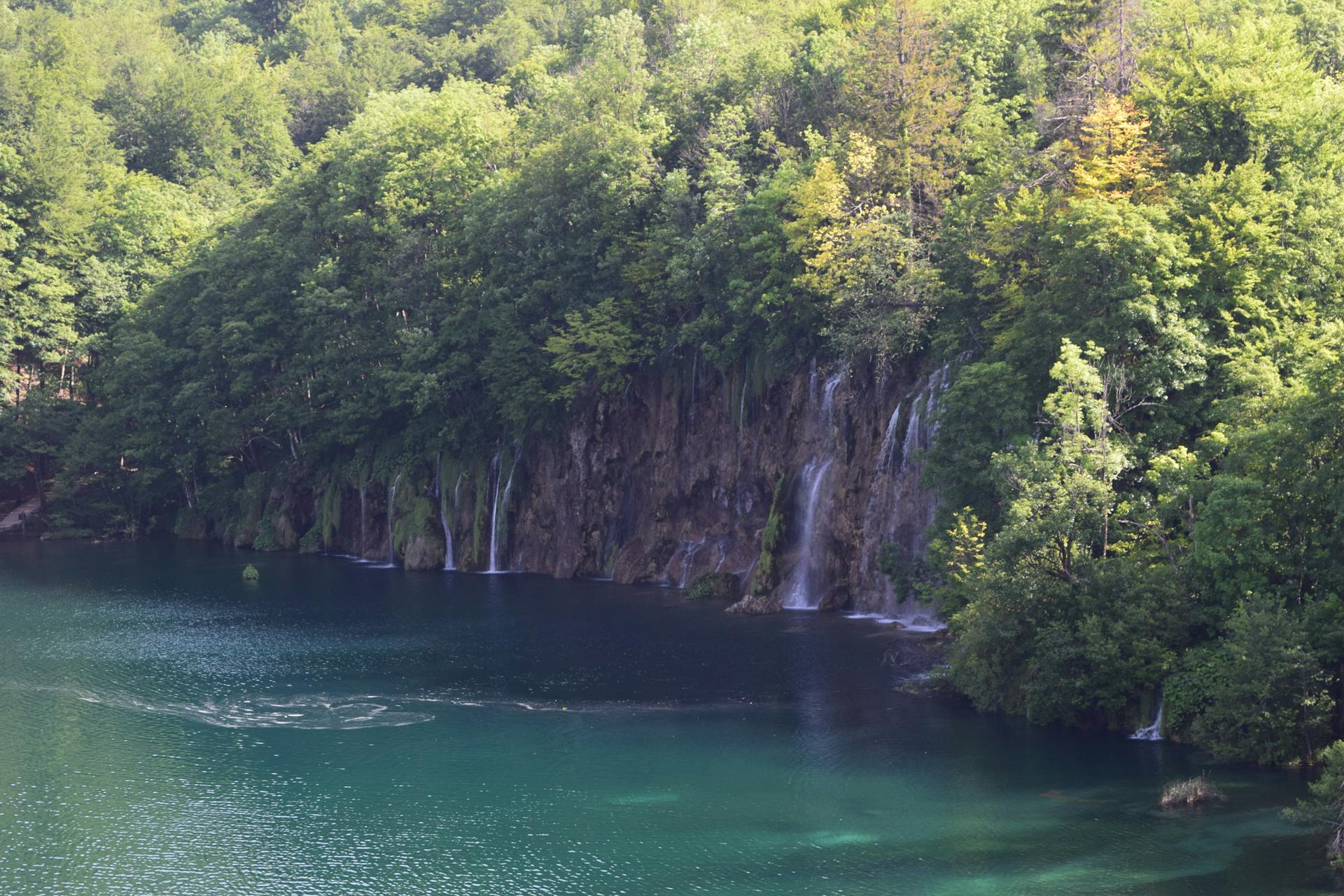
Plitvice is the most visually distinctive national park in Europe — sixteen terraced turquoise lakes connected by ninety-plus waterfalls, all stitched together by a network of wooden boardwalks that put kids inches above the water. Nowhere else in Europe gives families this much "how is this even real" payoff in a single half-day. The combination of boardwalks, an electric ferry across Lake Kozjak, and a panoramic shuttle train keeps young kids engaged the whole way.
Plitvice Family Highlights
- 🏞 Lower Lakes boardwalk loop: Easy 2-3 hour walk past Veliki Slap, Croatia's tallest waterfall (78m)
- ⛾️ Lake Kozjak electric ferry: A free 20-minute boat ride between the lower and upper lake sections — kids love it
- 🚂 Panoramic shuttle train: A free open-air train links the major sections; perfect for shortening walks with tired kids
- 🎉 Discovery Trail program: Kid-focused park experience for ages 6-12 — pick up materials at the visitor centre
- 👧 Best ages: All ages with a carrier; 5+ for self-walking the boardwalks safely
Late May through early June and September are the sweet spot — waterfalls run full, weather is mild, and you avoid the cruise-bus crowds of July and August. Book your timed-entry tickets online 2-4 weeks ahead in summer — the park caps hourly entries at around 300 people and gate sales are often unavailable in peak season. Note: the boardwalks have steps and narrow planks without railings, so bring a baby carrier rather than a stroller for toddlers.
2. Loch Lomond & The Trossachs National Park (Scotland, UK) — Best for Stroller-Friendly Access
Loch Lomond is the lowest-friction park on this list. It's 35 minutes from Glasgow airport, English-speaking, packed with kid-bait attractions, and uniquely stroller-friendly — the paved West Loch Lomond cycle path, Balloch Castle grounds, and Loch Katrine pier are all wheelchair- and stroller-accessible. For US families taking their first European national park trip, this is the easiest entry point in Europe.
Loch Lomond Family Highlights
- ⛵ Sir Walter Scott steamship: Hour-long Loch Katrine cruise on a 1900-built steamer kids find truly magical
- 🦈 SEA LIFE Loch Lomond: Scotland's largest shark collection sits at Balloch — great rainy-day backup
- 🌋 Conic Hill family hike: 2.5-hour round trip rewards school-age kids with panoramic loch views
- 🐲 Go Ape Aberfoyle: Tree-top zip lines for ages 7+; one of the highest-rated UK family adventures
- 👧 Best ages: All ages — easiest "national park experience" in this list for under-5s
May, June, and September give you long Scottish daylight and lower midge pressure than the July-August peak (biting midges can be brutal near the water on still summer evenings — pack repellent). Loch Katrine steamship sailings often sell out the same day in summer, so pre-book online. Park access is free; budget for attractions and parking (£3-£8/day at major trailheads).
3. Picos de Europa National Park (Spain) — Best Alpine Value in Western Europe
The Picos deliver Alps-grade peaks at a fraction of Swiss or Norwegian prices. Northern Spain's only true mountain national park sits between Asturias, Cantabria, and León — jagged limestone summits, deep gorges, and the kind of dramatic scenery families travel to Europe specifically for. Two cable cars and a network of accessible mountain roads put non-hikers on top of the peaks, which is the difference between a family adventure and a hiking trip.
Picos de Europa Family Highlights
- 🚈 Fuente Dé cable car: Rides to 1,823m in 4 minutes — gentle alpine walk to Áliva refuge at the top
- 🪴 Lakes of Covadonga: Two glacier lakes plus the iconic Covadonga sanctuary and cave, mandatory shuttle in peak season
- 🏠 Bajo los Picos trail from Mogrovejo: 9km mostly-flat circular walk — easiest family route in the park
- 🏚️ Cares Gorge (12+ only): Spain's most famous trail — spectacular but with exposed cliff edges, not for younger kids
- 👧 Best ages: 6+ for short walks; 12+ for Cares Gorge
Late May, June, or September dodge the July-August Spanish-domestic crowds and unpredictable shoulder-season weather. Critical gotcha: the road to the Lakes of Covadonga closes to private vehicles in peak season (mid-July to mid-September, Easter, plus weekends in shoulder months) — you must use the paid shuttle bus, and morning queues are long. Arrive before 9am or after 3pm. Spain remains relatively cheap: figure $1,500-$2,500 for a family-of-4 week.
4. Triglav National Park (Slovenia) — Best Single Base for Variety
Slovenia's only national park is the easiest park here to plan around one base — from Lake Bled you reach gorges, alpine lakes, cable cars, castles, and waterfalls all within 45 minutes. English is widely spoken, Euro-zone prices stay below the Alps, and Ljubljana airport is under 90 minutes away. For families who want maximum variety from a single hotel, Triglav is hard to beat.
Triglav Family Highlights
- 🪴 Vintgar Gorge boardwalk: 1.6km wooden walkway through an emerald-green gorge — Slovenia's "mini-Plitvice"
- 🌊 Lake Bohinj: Slovenia's largest natural lake — swimmable, paddleboard-able, surrounded by family hikes
- 🚈 Vogel cable car: Above Lake Bohinj to a 1,535m ridge with a high-mountain playground and easy walk
- 🏚️ Bled Castle and Lake Bled: Iconic island church with a rowboat ride; medieval castle perched above the lake
- 👧 Best ages: All ages (Bohinj + Bled area); 8+ for higher-altitude trails
June and September are ideal — Lake Bohinj is warm enough to swim (22-23°C in July-August), and shoulder months mean much smaller crowds at Vintgar Gorge. Vintgar now requires timed-entry online tickets in peak season — book 1-2 weeks ahead. If you're driving in via Austria, remember the country's 10-day vignette (around $11). Budget $1,800-$2,800 for a family-of-4 week.
5. Cinque Terre National Park (Italy) — Best for Coastal-and-Hiking Combo
Cinque Terre is the only park on this list that doubles as a proper Mediterranean beach vacation. Five pastel cliffside villages connected by a train line on one side and walking trails on the other — even a 4-year-old can "hike" the park by train-hopping every five minutes. Monterosso al Mare has the only true sandy beach of the five villages, making it the easy base for families with younger kids.
Cinque Terre Family Highlights
- 🚋 Train-hop the five villages: 5-minute rides between Monterosso, Vernazza, Corniglia, Manarola, Riomaggiore
- 🏔️ Monterosso al Mare beach: Only true sandy beach of the five — perfect for breaking up hiking days
- 🏃️ Manarola-Corniglia walking trail: Easiest connecting trail when open — verify status before going
- 🍺 Cinque Terre Card: Family card (2 adults + 2 kids) only €19.60/day for trail and bus access
- 👧 Best ages: 6+ for coastal trails (steps, exposed paths); all ages for trains and beach
Late April through mid-June or mid-September through October avoid the brutal July-August heat and cruise-day day-tripper crowds. The Via dell'Amore and Manarola-Corniglia trails have been intermittently closed for years due to landslides — check parconazionale5terre.it for trail status the week of travel. Day-trippers are now capped, so book accommodation IN the villages to retain freedom of movement. Cinque Terre is the most expensive of the four cheaper parks: $2,500-$3,800 for a family-of-4 week.
6. Snowdonia (Eryri) National Park (Wales, UK) — Best for Summit Access Without Hiking
Snowdonia — officially called Eryri in Welsh — is the only park in this list where a 3-year-old, a grandparent, and a serious hiker can all reach a real mountain summit in the same morning. The 130-year-old Snowdon Mountain Railway carries non-hikers to the 1,085m peak of Yr Wyddfa, while adjacent zip lines, slate caverns, and Welsh village walks fill out the rest of the trip with family-friendly adventure.
Snowdonia Family Highlights
- 🚂 Snowdon Mountain Railway: Llanberis to Yr Wyddfa summit — no hiking required, runs mid-March to early November
- 🏋️ Zip World Velocity 2: Fastest zip line in Europe — age and weight minimums apply (typically 7+)
- ⛺ Llanberis lake path: Lake Padarn shoreline walk — flat, paved, stroller-friendly
- 🏠 Betws-y-Coed village + Swallow Falls: Pretty Welsh village with a riverside walk to a popular waterfall
- 👧 Best ages: All ages with the railway; 8+ for the easiest hiking route (Llanberis Path)
May, June, and September are the driest months in famously rainy Wales. The Snowdon Mountain Railway sells out 2-4 weeks ahead in summer and on bank holidays — book the day tickets are released. Pen-y-Pass parking MUST be pre-booked via JustPark or you will be turned away. Fly into Manchester or Liverpool (2-2.5 hours drive) rather than London Heathrow (4.5 hours). Budget $2,200-$3,500 for a family-of-4 week.
7. Vatnajökull National Park (Iceland) — Best for Once-in-a-Lifetime Wow
Vatnajökull is the only park here with actual glacier hiking, blue ice caves, and icebergs washing up on black volcanic sand. Europe's largest national park covers 14% of Iceland, including the Jökulsárlón glacier lagoon and the Skaftafell wilderness area. Nothing else in Europe delivers this kind of "another planet" payoff — which is what justifies the very real cost of getting there.
Vatnajökull Family Highlights
- 🏔️ Svartifoss waterfall hike: 5.5km round trip past hexagonal basalt columns — the park's signature walk
- 🧨 Jökulsárlón glacier lagoon: Zodiac or amphibian boat ride past icebergs — the visual moment of any Iceland trip
- ⛈️ Skaftafellsjökull glacier-tongue trail: 3.7km easy walk to a glacier-front viewpoint — works for younger kids
- 🧊 Guided glacier hike or ice cave: Operator-led only, age 8+ minimum — book reputable companies in advance
- 👧 Best ages: 8+ for glacier walks; all ages for self-guided trails and the lagoon
June through August is the only realistic window for self-driving + glacier hikes — you get near-24-hour daylight and all roads open. Book accommodation 4-6 months ahead: south-coast lodging in Höfn, Kirkjubaejarklaustur, and surrounding villages sells out by January for July travel. Rental cars also spike. The flagship cost reality: $5,500-$8,500 for a family-of-4 week — lodging alone runs $300-$450/night even in family-suitable rooms. Glacier walks legally require a licensed guide.
8. Jotunheimen National Park (Norway) — Best for Big Alpine Adventure
Jotunheimen ("Home of the Giants") holds Norway's highest peaks, including Galdhøpiggen at 2,469m — the closest your family can get to Alps-grade scenery in Scandinavia. The iconic hut-to-hut Norwegian mountain hiking tradition is baked in here: DNT-run lodges with hot meals and bunks at the end of each day's walk. For families with school-age kids ready for real mountain days, this delivers a serious sense of accomplishment.
Jotunheimen Family Highlights
- ⛵ Gjende boat to Memurubu: Stunning lake cruise past towering peaks — kid-friendly even if you skip the famous Besseggen ridge
- 🏔️ Valley walks from Spiterstulen: Easy floor-of-the-valley routes in Visdalen that suit under-10s
- 🚕 Sognefjellet scenic road: Norway's highest mountain pass — drivable in summer with panoramic stops
- 🏠 DNT mountain huts: The classic Norwegian hike-stay-hike-stay format — book early
- 👧 Best ages: All ages for valley walks; 12+ for the Besseggen ridge scramble
Mid-June through mid-September is the only window with all huts staffed, ferries running, and roads open. Book DNT huts 6+ months ahead for summer weekends — Gjendesheim, Memurubu, and Spiterstulen fill within weeks of opening. Fly into Oslo Gardermoen (4-5 hour drive to Lom or Gjendesheim). Sognefjellet road closes mid-October to late May. Norway is expensive: $5,000-$7,500 for a family-of-4 week, with $40+ restaurant meals.
9. Swiss National Park (Switzerland) — Best for Wildlife and Strict Wilderness
Switzerland's only national park is Europe's oldest (founded 1914) and its strictest wilderness reserve. This is the one park here where you'll reliably see ibex, chamois, marmots, and golden eagles in a single day, in untouched Alpine landscape. The rules are firm: stay on trails, no dogs, no off-path picnics, no strollers. Manage expectations with kids — it's a "look, don't touch" park, not a "let kids run free" one.
Swiss National Park Family Highlights
- 🏘️ National Park Centre Zernez: Interactive exhibition with deer, ibex, and eagle dioramas — visit before hitting trails
- 🦌 Margunet Trail (P8 to Alp Stabelchod): Easiest family route with high marmot and ibex viewing odds
- 🦧 Val Mingèr trail: Gentle valley walk — chance to spot bearded vultures soaring overhead
- 👨👣 Ranger-led family programs: English-language park-ranger walks geared at school-age kids in summer
- 👧 Best ages: 6+ — strict no-off-trail rules mean kids must walk on path; toddlers struggle
Late June through September — many trails are snow-bound otherwise. July-August has the most active wildlife; September is quieter with golden larch color. Fly into Zurich (~2 hour 20 minute drive to Zernez) and remember Switzerland's annual motorway vignette (CHF 40, around $45, valid the full calendar year). This is not a free-roaming park — leaving the path can result in fines. Family hotels in Zernez run $200-$350/night; budget $4,500-$7,000 for a family-of-4 week.
10. Tatra National Park (Poland / Slovakia) — Best Budget Pick
Tatra delivers the best budget alpine experience in Europe — near-2,500m peaks (Rysy on the Polish side tops out at 2,499m), cable cars, paved family trails, thermal baths, and the lively mountain-town vibe of Zakopane — all for a fraction of Swiss, Norwegian, or Icelandic prices. Polish-side park fees run about $2.75/adult, $1.40/child, free under 7. A family-of-4 week here costs $1,200-$2,000 on the ground (excluding international flights).
Tatra Family Highlights
- 🌊 Morskie Oko trail: 7.9km paved walk to Poland's most beautiful alpine lake — the only stroller-friendly flagship trail outside Loch Lomond
- 🚈 Kasprowy Wierch cable car: From Kuźnice to a 1,987m peak in 12 minutes — non-hikers reach Polish high-mountain views
- 👟 Horse-drawn carriages: Optional ride for about two-thirds of the Morskie Oko trail — classic mountain experience
- 🛀 Termy Bania thermal baths: After-hike soak in Zakopane — kids love it as much as adults
- 👧 Best ages: All ages on Morskie Oko; 10+ for harder mountain hikes
Late May, September, or early October dodge the brutal July-August peak (Morskie Oko alone sees roughly half a million summer visitors). Palenica Białczańska parking (Morskie Oko trailhead) MUST be pre-booked online via tpn.pl — lots fill by 8-9am, so arrive at 7am or take the bus from Zakopane. Fly into Kraków (2-2.5 hour drive) or Katowice (2.5 hours).
More Top European Family Parks at a Glance
Need a quick scan? Here's a single-screen reference table covering all ten parks ranked in this guide.
| Park | Best For | Best Ages | Location |
|---|---|---|---|
| Plitvice Lakes National Park | Visual wow, boardwalks, waterfalls | 5+ (carrier for under-5) | Croatia |
| Loch Lomond & The Trossachs National Park | Easy access, strollers, mixed ages | All ages | Scotland, UK |
| Picos de Europa National Park | Alpine scenery, cable cars, budget | 6+ (12+ for Cares Gorge) | Northern Spain |
| Triglav National Park | Variety from one base, English-friendly | All ages (8+ for high routes) | Slovenia |
| Cinque Terre National Park | Coastal villages, beach, train access | 6+ for trails; all ages for trains | Liguria, Italy |
| Snowdonia (Eryri) National Park | Mountain railway, mixed-ability families | All ages (8+ for hikes) | Wales, UK |
| Vatnajökull National Park | Glaciers, ice caves, dramatic landscape | 8+ for glacier walks | Iceland |
| Jotunheimen National Park | Norwegian mountain adventure, hut-to-hut | 8+ (12+ for Besseggen) | Norway |
| Swiss National Park | Wildlife viewing, alpine wilderness | 6+ | Switzerland |
| Tatra National Park | Budget, paved alpine trails, thermal baths | All ages | Poland / Slovakia |
Best Time to Visit Each Park
European park seasons split roughly into three zones, each with its own family-trip window:
- Mediterranean parks (Cinque Terre, Plitvice, Picos de Europa): May, June, and September are the sweet spot — warm enough for kids, before/after the July-August crowd peak when accommodation prices double. July-August also brings the highest wildfire risk at some southern parks.
- UK and Continental parks (Loch Lomond, Snowdonia, Triglav, Swiss NP, Tatra): June through early September is your window. UK school holidays (late July through August) push prices up; aim for the second half of June or first week of September if you can travel outside US summer break.
- Nordic parks (Vatnajökull, Jotunheimen): Truly short season. Mid-June through August is the only realistic window for hiking with kids — many lodges and roads close by mid-September. Shoulder season here is "closed," not "cheaper."
One non-obvious tip: the second week of September is the single best week to visit Europe with kids if your school calendar allows it. Crowds drop sharply after Labor Day, weather is still warm in southern and central Europe, and lodging rates drop 20-40% from peak. The Nordic and high-Alpine parks are riskier in September (early snowfall), but everywhere else this is the calendar's sweet spot.
Essential Tips for European National Park Family Trips
European national park trips work differently from US ones in ways that catch first-time families off guard. The biggest tips:
- Book lodging far earlier than you would in the US. Continental Europe's gateway villages are tiny — Slovenia's Bohinj has maybe 200 family-suitable rooms in total. Six months out is normal for Plitvice and Cinque Terre. Twelve months out is the rule for in-park lodging in Norway or Iceland.
- Skip the rental car if you can. Several of these parks (Cinque Terre, Snowdonia, Loch Lomond) have excellent train and bus access from major hubs. Driving in Europe with kids adds stress: narrow roads, manual transmissions in some rental fleets, mandatory vignettes/tolls in Austria/Switzerland/Slovenia/Czechia, and parking nightmares at trailheads. The car is really necessary for Picos de Europa, Triglav, Tatra, and the Nordic parks — not the others.
- Bring real hiking shoes. Sneakers don't cut it on European mountain trails the way they often do in US parks. Trails are older, rockier, and often steeper. Bring lightweight hiking shoes for every family member, broken in before the trip.
- Layer for weather swings. Mountain weather across Europe changes fast. Pack rain jackets even in July. A 20°F temperature swing in a single day is normal at any alpine park — Triglav, Picos, Swiss NP, Jotunheimen all guaranteed.
- Cash matters more than you think. Smaller gateway villages, mountain huts, and ferry operators in Croatia, Slovenia, and Italy still operate cash-only. Pull euros at the airport ATM.
- Check the local school holiday calendar. European park crowds spike with European school breaks (German, Italian, UK schools are out at different times). Mid-August is brutal almost everywhere. Late June and mid-September are gold.
- Most parks are free. Some aren't. Iceland's Vatnajökull, Norway's Jotunheimen, the UK parks, Croatia's Plitvice, and Slovenia's Triglav all have free general entry. Spain's Picos and Switzerland's Swiss NP are also free. Plitvice charges per-person for the boardwalk loops (the actual must-see). Always check the official park site for current fees.
Frequently Asked Questions
What's the best age to take kids to European national parks?
How much does a European national park trip cost for a family of four from the US?
Are European national parks free?
Which European national parks are stroller-friendly?
How far in advance should I book European park lodging?
Do I need a permit, vignette, or special pass to visit European national parks?
Which European national parks are easiest to combine with a city trip?
What essential gear should families pack for European national parks?
Data Sources and Methodology
This ranking uses verified data from authoritative sources, cross-referenced and researched in May 2026:
Official Sources
- EUROPARC Federation — pan-European park network data, visitor statistics, and accessibility ratings
- Plitvice Lakes National Park Authority — 2026 ticket pricing, opening hours, route maps
- Loch Lomond & The Trossachs National Park Authority — family programs, ranger contacts, transport guides
- Spain's MITECO (Red de Parques Nacionales) — Picos de Europa fees, trail status, regulations
- Triglav National Park Authority — Slovenia's only national park, official planning information
- Cinque Terre National Park Authority — Cinque Terre Card pricing, trail closures, regulations
- Eryri (Snowdonia) National Park Authority — mountain railway pricing, Hafod Eryri visitor centre info
- Vatnajökull National Park — Iceland's largest park, glacier hike concessioners
- Norwegian Environment Agency — Jotunheimen and national park fee structure
- Swiss National Park Authority — strict-protection park rules, ranger-led family programs
- Tatra National Park (Poland) — Zakopane gateway, trail conditions, accessibility
Pricing Data
- Lodging prices: Booking.com aggregator pricing, cross-checked against Airbnb, sampled May 2026 for May-September 2026 travel dates
- Flight prices: Google Flights and Skyscanner, US East Coast and West Coast departures, sampled May 2026
- Park entry fees: verified directly from each official park authority website (links above)
- Calculation basis: median prices for family of 4 (2 adults, 2 children ages 5-12), 7-night stays, mid-tier accommodations
Parent Experiences
- Family travel publications including Family Can Travel, The Family Voyage, and Travel Mad Mum
- Reddit travel communities (r/EuropeTravel, r/FamilyTravel, r/Iceland, r/Norway) consulted for practical tips and seasonal updates
- UK-specific input from Mumsnet Travel forums for European park family experiences
Related Family Travel Guides
- Best US National Parks for Families (the American equivalent of this guide)
- Best European Cities for Families: 2026 Rankings
- Family Europe Planning Guide: Your First Trip Step-by-Step
- US Family Europe First-Trip Itinerary (10-14 days)
Interactive Planning Tools
- Budget Calculator — estimate true cost per park
- Visual Itinerary Builder — plan day-by-day
- Smart Packing List — weather-aware packing
- Family Vote — settle the destination debate