Yosemite with Kids: The Reservation Reality Most Miss
Real-cost 2026 family guide — the no-reservation entry reality and the parking crunch that replaced it, shuttle logistics, age cutoffs per hike, in-park vs gateway-town lodging, and a toddler-to-tween pace. No marketing fluff.
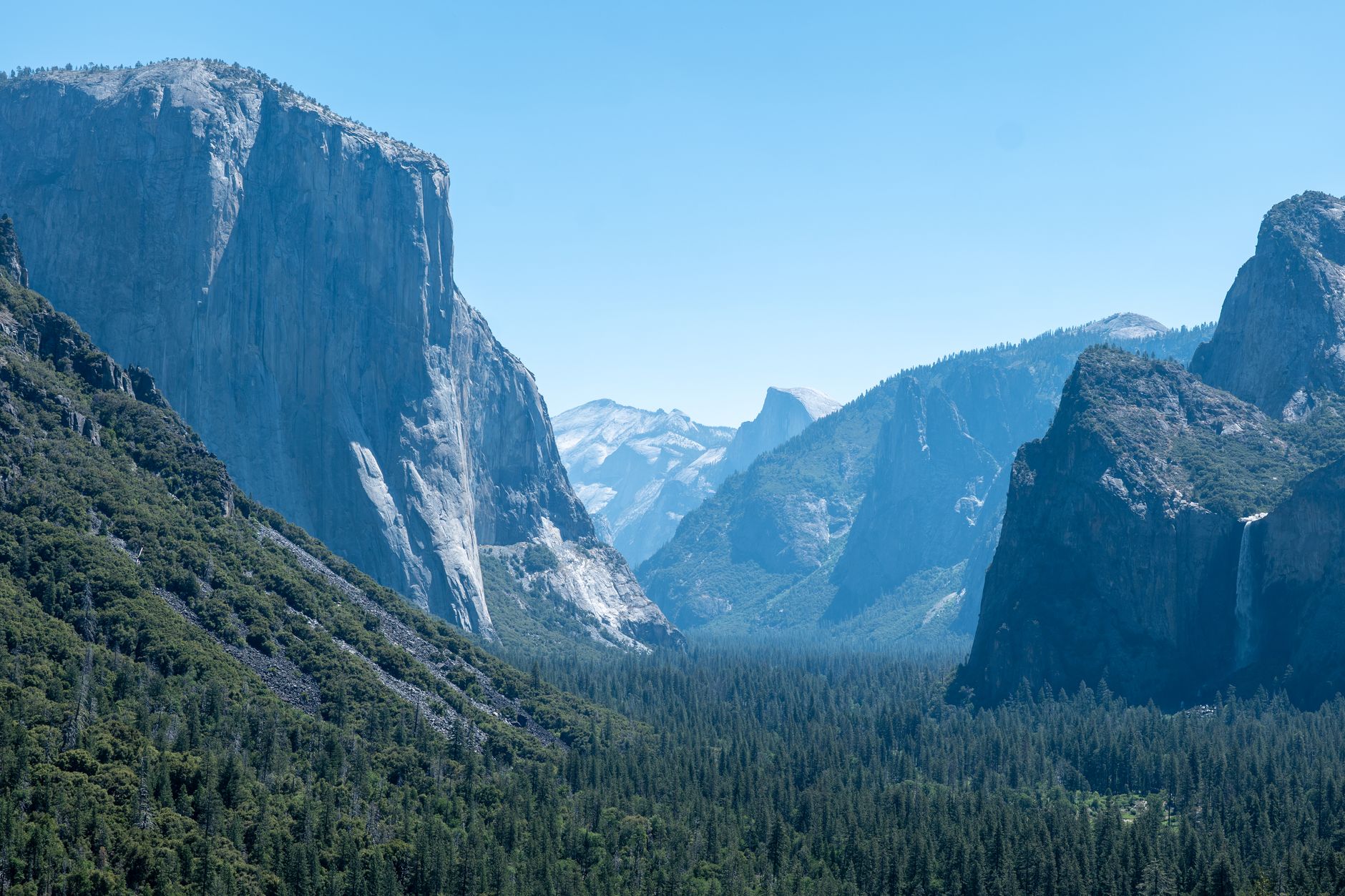
Quick Answer
- Yosemite has no vehicle or peak-hours reservation for 2026 — entry is the standard $35 per vehicle for 7 days, and the real friction is a midday parking crunch in Yosemite Valley, not a booking screen (as of June 2026, source: NPS.gov).
- 🚐 The free Yosemite Valley shuttle runs 2026 — Valleywide every 12-22 min, East Valley every 8-12 min, about 7 a.m. to 10 p.m. Park once, ride between trailheads.
- 🏔️ A 4-night family-of-4 trip runs roughly $2,500-$3,200 in 2026 before flights; lodging is the swing line (in-park $250-$650/night vs gateway-town $180-$320). See our Yellowstone vs Yosemite vs Grand Canyon comparison for the side-by-side.
- 👧 Best for kids 6+ ready for flat valley walks; toughest of the western parks for toddlers under 5.
- ⚠️ Skip Yosemite if: kids under 5 and you want a marquee trip, you can't reach the Valley before ~9 a.m. on a summer weekend, your window is before mid-May, or you needed in-park lodging and didn't book ahead.
- 🧮 Use our budget calculator to stack the per-person math on your dates and group size.
The Reservation Reality: What Changed for 2026
For several recent summers, Yosemite ran a timed-entry or peak-hours reservation system that families had to grab weeks ahead — and missing it meant missing the park. That's the advice baked into half the guides still online. It's wrong now.
Yosemite announced on February 18, 2026 that it will not use a vehicle or peak-hours reservation system this year (as of June 2026, source: NPS.gov news release). In the park's words, "a season-wide reservation requirement is not the most effective approach for the coming season." Instead, rangers manage summer crowds with real-time traffic monitoring, active parking management in Yosemite Valley, and extra staffing at key intersections.
So what's the catch? The reservation used to ration the cars. Take it away, and on a July weekend the Yosemite Valley parking lots can fill by mid-morning — and once they're full, you're circling, parking far out, or waiting. That's the reservation reality most families miss: the bottleneck didn't vanish, it just stopped being something you can pre-book. The fix is timing plus the free shuttle, both covered below.
One more 2026 change worth knowing: non-US residents age 16 and up now pay an extra $100 per person on top of the entrance fee unless they hold an Annual or America the Beautiful pass (as of June 2026, source: NPS.gov fees). US families pay the standard $35 per vehicle.
The Real-Cost Test: Family of 4, 4 Nights, 2026
Yosemite's entry is honest — $35 covers your whole vehicle for 7 days, no resort-fee games. The list-price trap sits in lodging. "Stay in the park" sounds romantic until you see the gap between an in-park room and a gateway-town motel 45 minutes out. Here's the line-item stack for a mid-range family of 4 (two adults, two kids), 4 nights, summer 2026.
| Cost line | Family of 4 total (USD) | Notes |
|---|---|---|
| Lodging (4 nights, gateway-town to in-park range) | $720-$2,200 | Gateway $180-$320/night; in-park $250-$650/night and books months ahead |
| Entrance fee (7-day vehicle pass) | $35 | One pass covers the whole vehicle; free entrance days a few times a year |
| Food (4 days for 4) | $480-$760 | $120-$190/day; in-Valley dining is limited and pricey, so a cooler of supermarket lunches is the cost-control move |
| Rental car + fuel (from FAT/SFO) | $350-$650 | A car is effectively required; fuel ~13 cents/mile, gas ~$3.15/gal |
| Activities + extras (ranger programs, Mariposa Grove, gear) | $100-$300 | Junior Ranger booklet is a few dollars; Glacier Point and shuttle are free |
| Total before flights | $1,685-$3,945 | Mid-range planning estimate ≈ $2,500-$3,200 |
| Round-trip flights to FAT or SFO (4 people) | $800-$2,200 | Varies by hub and season; West Coast families often drive instead |
Sources: NPS.gov entrance fees and free days (June 2026); Booking.com aggregator gateway-town and in-park nightly rates for El Portal, Mariposa, Groveland, and Yosemite Valley (June 2026); AAA Your Driving Costs fuel figures (2025); Google Flights route data to FAT and SFO (June 2026). Mid-range planning estimate of $2,500-$3,200 matches our 3-way western parks comparison.
Run the Real-Cost Test and the pattern is clear: lodging swings the budget by more than $1,400, and almost nothing else does. A family that's flexible on staying inside the park saves the most by far. Build in a cushion anyway — Yosemite's hidden costs are a $14 ice cream after a hot hike, an unplanned second day because you couldn't park the first, and gateway-town gas that runs higher than the city.
Skip-If Filter: 4 Conditions to Skip Yosemite
Most travel writing won't tell you to pick somewhere else. Run the Skip-If Filter honestly — here's where Yosemite is the wrong family trip.
1. Kids under 5 and you want a marquee trip
Yosemite is the toughest of the major western parks for toddlers. The granite scale that floors a teenager means little to a 3-year-old, and the payoff sits at the end of long drives between vista points. A 2-3 day low-key valley visit works; a week of "epic" hikes doesn't. For toddler families weighing parks, our Yellowstone vs Zion with toddlers guide lays out gentler picks.
2. You can't reach the Valley before about 9 a.m. on a summer weekend
With no reservation rationing cars in 2026, Yosemite Valley lots can fill by mid-morning in July and August. Late arrivals burn an hour hunting parking with cranky kids. If your travel logistics force a midday arrival on a peak weekend, shift to a weekday or shoulder month — or expect to park far out and shuttle in.
3. Your window falls before mid-May
The Yosemite Valley floor is open year-round, but Glacier Point Road usually opens in early May and Tioga Road in late May or June, both weather-dependent. Visit too early and you get a partial-park experience — no Glacier Point overlook, no Tuolumne Meadows, no Tioga high country. Snow-closed roads aren't a deal-breaker, but know what you're trading.
4. You needed in-park lodging but didn't book months ahead
Yosemite Valley Lodge, The Ahwahnee, and Curry Village release months in advance and sell out for summer fast. If staying inside the park is non-negotiable and you're planning late, you'll be disappointed — or paying top of the $250-$650/night range. Families flexible on a 45-75 minute gateway-town drive each way have far more availability and pay less.
When to Go: Crowd and Weather Windows
Apply the Shoulder-Season Lens. Yosemite Valley sits at about 4,000 feet, so summer is warm and dry — July averages a high near 89°F and a low around 57°F (as of June 2026, source: NOAA 1991-2020 climate normals, Yosemite Valley). The question isn't whether it's pleasant; it's how to dodge the crowds while still catching the waterfalls.
| Window | Crowds | What works | Watch out |
|---|---|---|---|
| Late May – June (sweet spot) | Building, not peak | Waterfalls at full snowmelt flow; Glacier Point and Tioga roads usually open; warm days | Tioga Road may open late in a heavy-snow year |
| July – August (peak) | Heaviest | Full park access, every road and trail open, long daylight | Parking fills by mid-morning; book lodging far ahead; hottest afternoons |
| September – October | Thinning | Warm days, easier parking, fall light, smaller shuttle lines | Waterfalls reduced to a trickle; high roads close once snow arrives |
| November – April | Lightest | Snow play, quiet valley, low lodging rates, no parking battle | Glacier Point and Tioga roads closed; partial-park experience; chains may be required |
Sources: NOAA Yosemite Valley climate normals (June 2026); NPS.gov Glacier Point and Tioga Road seasonal opening pages (June 2026).
So when's the actual best time for a family? Late May into June, if waterfalls are the draw — full flow, open high roads, and crowds that haven't peaked. Want easy parking over roaring falls? September delivers. Either way, weekdays beat weekends by a wide margin now that nothing rations the cars.
Where to Base: In-Park vs Gateway Town
This is the decision that swings your budget and your mornings. Inside the park, you wake up steps from the trailheads and skip the daily drive-in — but you pay for it and you book early. From a gateway town, you save real money and find availability, at the cost of a 45-75 minute drive each way and an earlier alarm to beat the parking crunch.
| Base | Best for | $/night family of 4 | Why |
|---|---|---|---|
| Yosemite Valley Lodge | Beat the parking crunch / first-timers | $250-$450 | In the Valley near Yosemite Falls; walk or shuttle to trailheads; no daily drive-in; books months ahead |
| The Ahwahnee | Special-occasion splurge | $500-$650+ | Historic grand hotel in the Valley; premium pricing; pool; the priciest in-park option |
| Curry Village | Budget in-park / older kids | $150-$300 | Heated tent cabins and rooms in the Valley; rustic shared-bath options; the cheapest way to sleep inside the park |
| El Portal / Mariposa / Groveland | Value / availability / road-trip families | $180-$320 | Gateway towns 30-75 min out; more rooms, lower rates, kitchens at some rentals; you drive in each day |
Sources: Travel Yosemite (Aramark concessioner) in-park lodging pages and Booking.com aggregator gateway-town rates (June 2026). The Wawona Hotel is currently closed for assessment (June 2026, source: Travel Yosemite).
The honest pick for most families: if waterfalls and easy mornings matter and you can plan 4-6 months out, book Yosemite Valley Lodge or Curry Village inside the park. If you're price-sensitive or planning late, El Portal on Highway 140 keeps the drive shortest among the gateway towns. The Ahwahnee is a lovely night, not a four-night strategy.
What to Do, by Age
Yosemite rewards matching the hike to the kid. Here's what actually works, with the age and effort reality and the cost where it isn't free.
- Lower Yosemite Falls trail (all ages): a flat, paved 1-mile loop to the base of the falls. Stroller-friendly, free, and the single best toddler-to-tween payoff in the park. Loudest and wettest in late spring.
- Cook's Meadow and Sentinel Meadow loops (all ages): flat boardwalk-and-path loops with El Capitan and Half Dome views. Easy on little legs; great for a sunset stroll.
- Mirror Lake (ages 5+): a 2-mile round-trip on a paved road to a seasonal lake reflecting Half Dome; mostly flat. Wading-friendly in early summer. Lake shrinks to mud by late summer.
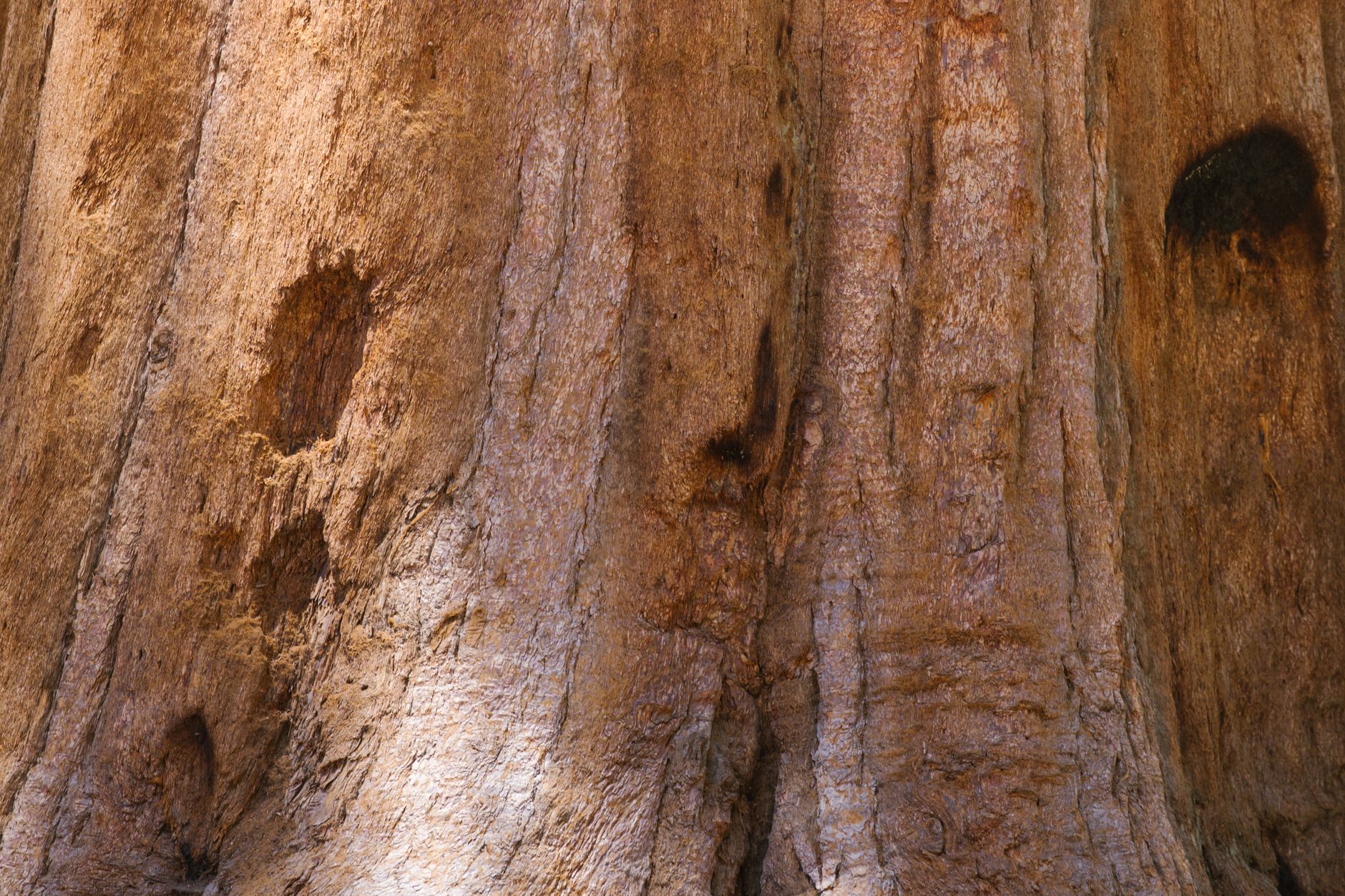
- Mariposa Grove of Giant Sequoias (ages 4+): a free seasonal shuttle (starting around April 15) carries you to the grove; the Big Trees Loop is a flat, accessible 0.3-mile path. Older kids can push on to Grizzly Giant (2 miles round-trip).
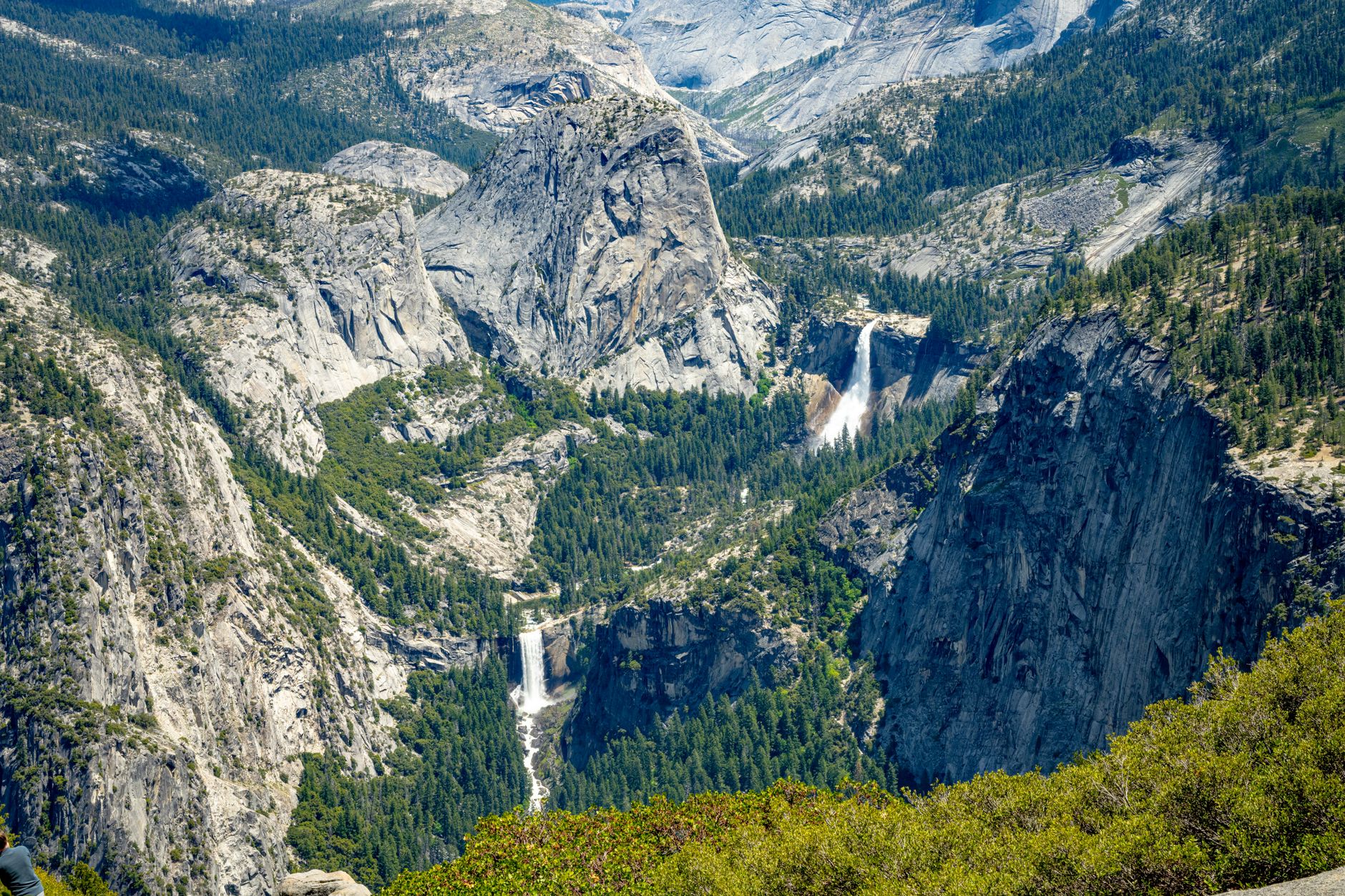
- Glacier Point (all ages, drivable): a jaw-dropping Valley overlook reached by car once the road opens (about late May through September). Short paved walk from the lot — huge reward, minimal effort.
- Vernal Fall footbridge (ages 8+): a steep 1.6-mile round-trip to the bridge view; the granite Mist Trail steps above it are strenuous and slick — turn around at the bridge with younger kids.
- Junior Ranger program (ages 7-13, roughly): grab a booklet at any visitor center (a few dollars), complete the activities, earn a badge. The best engagement-per-dollar in the park for elementary kids.
Common parent pattern on family-travel forums: families who treat the Valley floor as the trip — flat loops, the shuttle, a meadow picnic — report far smoother days than those who chase Half Dome-adjacent ambition with kids who aren't ready for it. The granite is the show; you don't have to climb it.
Planning the Days: One-and-One Structure
Apply the One-and-One Day Structure: one major thing in the morning, one in the afternoon, the rest of the day open for a meadow nap, the river, or doing nothing. Family park days break when overplanned — and Yosemite's heat plus altitude wears kids down faster than parents expect.
| Day | Morning | Afternoon |
|---|---|---|
| 1 (arrive) | Arrive early, park at a Valley day-use lot, ride the shuttle | Lower Yosemite Falls loop; Cook's Meadow; river time |
| 2 | Drive Glacier Point Road for the overlook (open late May–Sept) | Open afternoon — Mirror Lake walk or pool downtime |
| 3 | Mariposa Grove shuttle + Big Trees Loop among the sequoias | Junior Ranger booklet; visitor center; ice cream |
| 4 (older kids) | Vernal Fall footbridge hike (turn around at the bridge) | Souvenir stop; early dinner; depart or relax |
Substitution: under-5 families drop the Vernal Fall hike and add a second slow Valley-floor day. Visiting before mid-May? Swap Glacier Point for a Valley museum or snow-play day — the road's likely still closed.
What to Pack for the Sierra
Yosemite Valley swings from 57°F mornings to 89°F afternoons in July, so layers aren't optional (as of June 2026, source: NOAA 1991-2020 climate normals, Yosemite Valley). The sun is strong at 4,000 feet, the granite reflects heat, and afternoon thunderstorms can roll through in summer. The packing misses that bite families: not enough water, no sun hats, and sandals on slick granite near the falls.
- Layers — a fleece or light jacket for cool mornings and Glacier Point's higher elevation, plus breathable shirts for hot afternoons
- Closed-toe trail shoes with grip — the Mist Trail and falls-area granite get wet and slippery
- Refillable water bottles for everyone; Valley fill stations are easy to find, dehydration is the most common kid issue
- High-SPF sunscreen, hats, and sunglasses — sun exposure is intense at altitude
- A small daypack with snacks; in-Valley food is limited and pricey
- A bear-aware mindset — store food in lockers, never in a car overnight (rangers enforce this)
Getting There and Around
Fly into Fresno Yosemite (FAT) for the shortest drive — about 90 minutes to the south entrance — or San Francisco (SFO) for cheaper flights and a 4-hour drive (as of June 2026, source: Google Flights route data). A rental car is effectively required; Yosemite is too spread out to do car-free. Once inside the Valley, though, the free shuttle is your friend: park once at a day-use lot, then ride between trailheads instead of fighting for spaces at each stop. YARTS regional buses run from Merced (Highway 140, year-round) and Fresno (Highway 41, summer) if you'd rather skip a rental.
Can't decide between Yosemite and the other big western parks? The whole family gets a say — our family vote tool turns "geysers or granite?" into a quick poll instead of a backseat argument, and our top US family destinations guide ranks the alternatives by real cost.
The Bottom Line
For families with kids 6 and up who can arrive early and embrace the Valley floor, Yosemite in 2026 is more accessible than it's been in years — no reservation to chase, just a parking crunch you beat by timing and the free shuttle. Budget $2,500-$3,200 for a 4-night family-of-4 trip before flights, book in-park lodging months ahead if you want it, and aim for late May through June for full waterfalls. For toddler families, late arrivals, pre-mid-May windows, or last-minute in-park lodging hopes, temper the plan or pick a gentler park. Run your dates through the budget calculator and sequence the days in the itinerary builder before you book.
Frequently Asked Questions
Data Sources and Methodology
Pricing and operational details verified June 2026 against these named sources:
- NPS — Yosemite Entrance Reservations (no vehicle/peak-hours reservation system in 2026; operational crowd management)
- NPS — No Vehicle Reservations 2026 release (February 18, 2026)
- NPS — Yosemite Fees and Passes ($35 vehicle 7-day; $70 annual; free days; $100 non-US-resident surcharge)
- NPS — Yosemite Public Transportation (Valleywide and East Valley shuttle frequencies; Mariposa Grove and Glacier Point seasonal shuttles; YARTS)
- NPS — Tioga and Glacier Point Road Dates (seasonal opening windows)
- Travel Yosemite — In-Park Lodging (Yosemite Valley Lodge, The Ahwahnee, Curry Village; Wawona Hotel closed)
- AAA — Your Driving Costs (fuel ~13 cents/mile; gas ~$3.15/gallon)
- Booking.com (gateway-town lodging averages for El Portal, Mariposa, Groveland)
Last verified June 2026. Cost figures are planning estimates; verify current rates at booking. Frameworks applied: Real-Cost Test, Skip-If Filter, Shoulder-Season Lens, and One-and-One Day Structure. Cost band cross-checked against our Yellowstone vs Yosemite vs Grand Canyon comparison for corpus consistency.