Best Family Hikes at Rocky Mountain National Park (2026)
Trail-by-trail breakdown with distance, elevation, age suitability, and the altitude tips families actually need before hitting the trailhead.
Quick Answer
- Rocky Mountain National Park offers 9+ family-friendly hikes under 4 miles in 2026, with trails suitable for strollers through school-aged kids at elevations from 8,500 to 10,000 feet.
- 💡 Where most Rocky Mountain hiking plans go sideways: It isn't picking the prettiest trail or the mileage. It's altitude, which hits 20-30% of visitors, so the real fix is keeping Day 1 below 10,000 feet and drinking 1 liter of water per person every 2-3 hours. The trail-by-trail breakdown below sorts every hike by age and elevation so families can build the day around it.
- 🥾 Best stroller trail: Sprague Lake Loop (0.8 miles, flat, Continental Divide views, moose sightings common)
- ⛰️ Best for school-aged kids: Alberta Falls (1.6 miles round trip) and Emerald Lake (3.6 miles round trip via Bear Lake)
- ⚠️ Altitude warning: 20-30% of visitors experience altitude sickness. Stay below 10,000 ft on Day 1 and drink 1L water per person every 2-3 hours
- 🎟️ 2026 timed entry: Required May 22 - Oct 12, 9 AM-2 PM ($2 reservation via Recreation.gov). Bear Lake Road needs a separate reservation
- 📖 Don't miss the Rocky Mountain Family Guide for lodging, dining, and full trip planning
- 🧮 Map your hiking days with our Visual Itinerary Builder to avoid overloading any single day
Why Rocky Mountain Is Perfect for Family Hiking
Rocky Mountain National Park sits about 70 miles northwest of Denver. No connecting flights to tiny regional airports. No gravel roads to reach the trailhead. Just a straightforward drive from a major city to stunning alpine scenery.
What makes it different from other national parks for families? The trail variety. Most family-friendly parks offer a handful of easy walks and then jump straight to strenuous backcountry routes. Rocky Mountain fills that middle ground with trails ranging from flat stroller loops to moderate hikes with real payoffs (waterfalls, alpine lakes, mountain panoramas) that kids aged 5-12 can actually complete.
The catch? Altitude. Estes Park already sits at 7,522 feet. Popular trails start between 8,500 and 9,500 feet. That's not a detail to brush aside. It shapes your entire hiking plan, and families who ignore it often end up with miserable first days.
2026 Timed Entry Reservations Explained
Rocky Mountain runs a timed entry reservation system every summer. Showing up without a reservation during peak hours means getting turned away at the entrance.
2026 Timed Entry Rules
- General park entry: Reservations required May 22 - October 12, 2026, between 9 AM and 2 PM
- Bear Lake Road corridor: Separate reservation required, 5 AM - 6 PM (this is where most family hikes are)
- Cost: $2 per vehicle reservation fee through Recreation.gov
- Pro tip: Arrive before 9 AM to skip the general timed entry requirement, but you'll still need a Bear Lake corridor reservation
- Payment: Entrance stations accept cards only, no cash
The Bear Lake corridor reservation trips up families. Most kid-friendly hikes require driving Bear Lake Road, so you need both reservations if arriving between 9 AM and 2 PM. Reservations drop in batches on Recreation.gov and sell out fast for July and August weekends.
Altitude Sickness and Kids: What Families Need to Know
Roughly 20-30% of visitors experience some form of altitude sickness. Kids under 5 are more susceptible while being less able to tell you what's wrong. This isn't a footnote. It's the factor that shapes your entire hiking plan.
The Day 1 Rule
Keep all activities below 10,000 feet on your first day. That means Sprague Lake (8,710 ft), Lily Lake (~8,900 ft), Alluvial Fan (~8,500 ft), and Copeland Falls (~8,500 ft) are fair game. Bear Lake sits at 9,475 feet, which is fine for adults but worth monitoring with young children on arrival day.
By Day 3, most families are fully acclimated. That's when you can push higher for Dream Lake and Emerald Lake without worry.
Symptoms to Watch For
In adults: headache, dizziness, nausea, shortness of breath. In toddlers: unusual fussiness, refusal to eat, excessive sleepiness, or vomiting. The tricky part? Altitude sickness looks like a standard meltdown. If symptoms appear, descend immediately. Even dropping 1,000-2,000 feet usually helps within an hour.
Hydration Is Non-Negotiable
Drink at least 1 liter of water per person every 2-3 hours while hiking. At altitude, you lose moisture faster through breathing in the dry mountain air. Kids won't ask for water on their own. Set timers on your phone. Bring salty snacks (pretzels, trail mix) to encourage drinking and replace electrolytes. Skip alcohol for adults on Day 1.
Stroller-Friendly Trails (Ages 0-3)
These three trails are paved or hard-packed enough for standard strollers and still deliver real mountain scenery.
Sprague Lake Loop
A flat, fully accessible loop around an alpine lake with Continental Divide views. Ducks paddle the shoreline. Chipmunks dart between rocks. Moose sightings are common near the marshy edges at dawn. If you only do one trail with a toddler, make it this one.
Alluvial Fan
A short walk to the base of Horseshoe Falls that's stroller-friendly along the main path. The cascading water holds toddler attention like nothing else, and the rocky debris field from a 1982 flood gives the landscape an otherworldly quality. It's located on the park's east side along Fall River Road, away from the Bear Lake crowds.
Lily Lake Loop
A quiet loop with wildflowers blooming late June through August. Located along Highway 7 south of Estes Park, so no Bear Lake corridor reservation needed. That alone makes it a smart Day 1 pick.
Easy Trails for Young Kids (Ages 3-6)
These trails step up slightly in distance but stay well within what a motivated preschooler can handle. Child carrier backpacks are still a good idea as backup for the 3-4 age range.
Bear Lake Loop
The park's most famous starting point. Towering peaks reflected in still water, dense pine forest, and interpretive signs for parents to read aloud. The problem? Crowds. By 10-11 AM, the parking lot is full. Arrive before 8 AM or skip to Sprague Lake instead. Bear Lake also serves as the trailhead for Nymph, Dream, and Emerald Lakes.
Nymph Lake
A quick uphill walk from the Bear Lake trailhead to a small lily-pad-covered lake. The elevation gain is gentle and the distance is short enough for most 4-year-olds. It makes a natural first stop before continuing to Dream Lake, giving families a test to see how kids handle the altitude before committing to more distance.
Coyote Valley Trail
On the park's west side near Grand Lake, this boardwalk trail winds through a river meadow where elk and moose graze at dawn and dusk. Rarely crowded. Kids love the boardwalk, and the open meadow views of the Continental Divide are hard to beat.
Moderate Trails for School-Aged Kids (Ages 6-12)
This is where the payoffs get special. Waterfalls, alpine lakes, mountain panoramas that kids remember for years. These trails demand more effort but reward it.
Alberta Falls
The most rewarding short hike for families. The path winds through pine forest before delivering a thundering 30-foot waterfall that thrills kids. Falls are most dramatic in June and early July during snowmelt. Start from the Glacier Gorge trailhead (not the Bear Lake shuttle stop) to shave off extra distance.
Dream Lake
If families could only do one real hike here, this should be it. The trail passes Nymph Lake before climbing to Dream Lake, a turquoise alpine pool backed by Hallett Peak. The elevation gain is steady but not steep, with lily pads, rocky outcrops, and mountain views keeping kids engaged. Allow 2 hours round trip. Bring layers because the lakeside temperature runs noticeably cooler than the trailhead.
Emerald Lake (via Bear Lake)
A three-lakes-in-one adventure passing Nymph and Dream Lakes. The final push adds steeper terrain but the reward is an emerald-green lake surrounded by sheer cliff walls. Kids who've hiked to earn it feel truly accomplished.
Families don't have to commit from the start. Walk to Nymph Lake. Feeling good? Continue to Dream. Still going strong? Push to Emerald. The natural turnaround points make this the most flexible moderate hike in the park. Most families finish in 3-4 hours with snack breaks.
Wildlife on the Trails: What Families See (and How to Stay Safe)
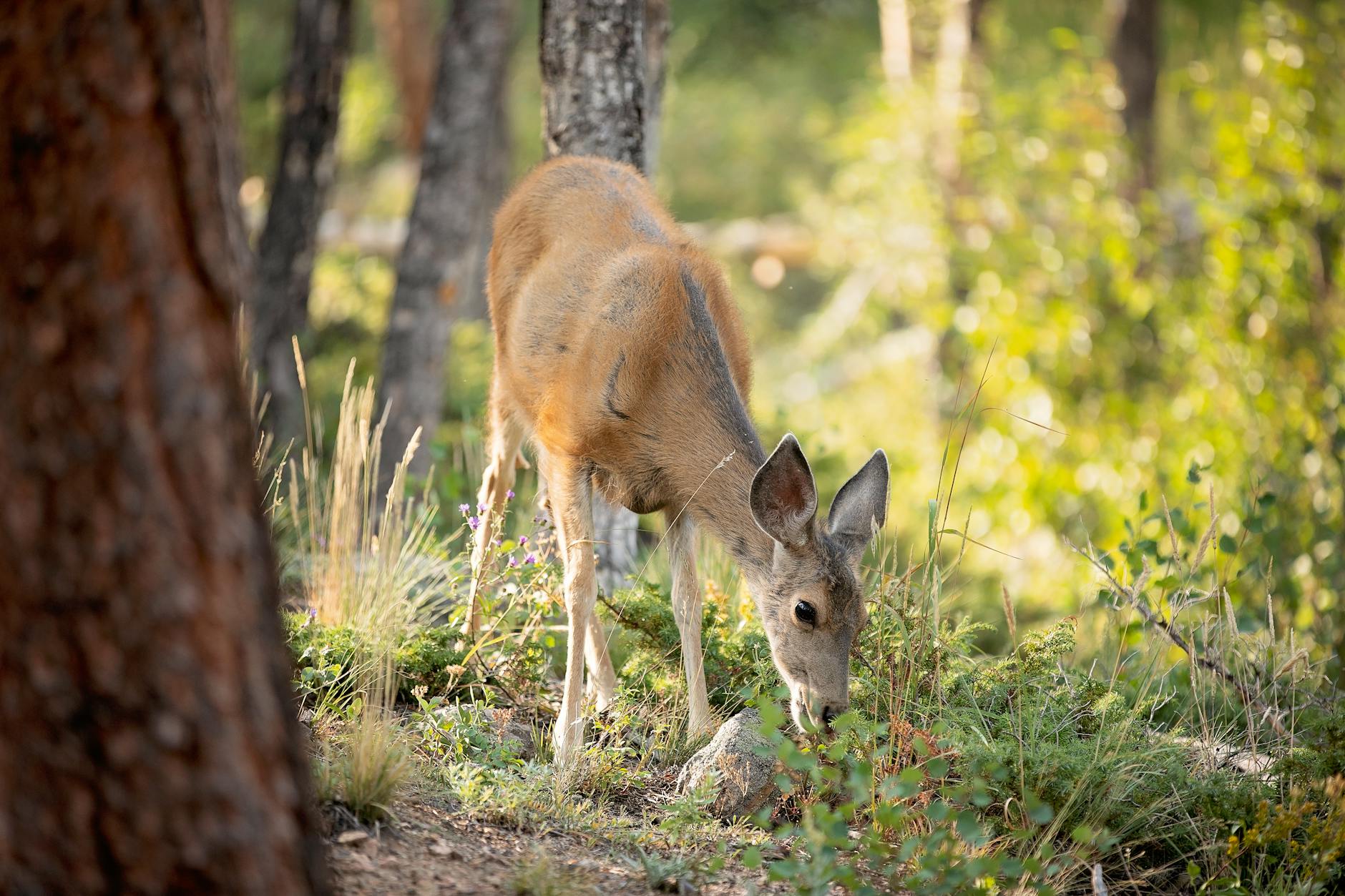
Elk graze in meadows. Marmots sunbathe on rocks. Chipmunks are everywhere. Moose occasionally appear near Sprague Lake and Coyote Valley. The rules are simple but critical:
- Elk and moose: Stay at least 75 feet away (about 3 bus lengths). Bull elk during rutting season (September-October) are especially unpredictable.
- Never feed wildlife. Not chipmunks, not squirrels, not anything. It's illegal and it changes animal behavior.
- Keep kids close when wildlife is present. Toddlers running toward a moose is a genuine safety concern, not a photo opportunity.
- Marmots near Dream Lake and Emerald Lake will try to steal snacks. Keep food sealed and watch backpacks.
For the best wildlife viewing, hit trails early (before 8 AM) or in the last hour before sunset. Midday heat sends most animals into shade and hiding.
The Junior Ranger Program
Free activity booklets at any visitor center for kids ages 5-13. Complete activities about trails, wildlife, and conservation, then show a ranger to earn a badge. It transforms hikes for kids who need a goal beyond "look at the pretty lake." Pick up booklets at the Beaver Meadows Visitor Center near the east entrance.
Best Time to Visit for Family Hiking
Late June through September. The specifics depend on your priorities:
- Late June - Early July: Waterfalls at peak flow from snowmelt. Wildflowers starting. Some higher trails may still have snow patches. Moderate crowds.
- July (mid-month through August): Warmest temperatures, all trails fully open, longest days. But also the heaviest crowds and the worst parking competition. Afternoon thunderstorms are almost daily from 1-4 PM.
- September: The sweet spot. Smaller crowds, fall colors beginning, elk rutting season (dramatic bugling calls), and Trail Ridge Road still open. Temperatures are cooler (bring warmer layers), but the hiking conditions are excellent.
Avoid July 4th Week
Parking lots fill by 7 AM. Timed entry reservations sell out months ahead. Trail congestion makes moderate hikes feel like a shopping mall. Shift your trip by even one week in either direction and the difference is dramatic.
Regardless of when you visit, start hikes before 9 AM. This beats the timed entry crowds, secures parking, and gets your family off exposed trails before afternoon thunderstorms build. At high elevation, lightning is a serious danger, not a background inconvenience.
What to Pack for Family Hiking at Altitude
Altitude, UV intensity, and weather volatility at Rocky Mountain demand more deliberate packing than sea-level trails.
The Non-Negotiables
- Layers: Temperature drops 3-5 degrees per 1,000 feet. A 75-degree trailhead can mean 55 degrees at Dream Lake. Fleece and windbreaker for everyone.
- Rain jackets: Afternoon thunderstorms are standard June through August. Not optional.
- Water: 1 liter per person per 2-3 hours. Bring a filtered bottle as backup.
- Sunscreen SPF 50+: UV increases ~10% per 1,000 feet. Reapply every 90 minutes.
- Wide-brim hats and sunglasses: For everyone, including toddlers.
- Sturdy closed-toe shoes: Not sandals, not Crocs. Rocky trails need real hiking shoes.
- Salty snacks: Trail mix, pretzels, cheese crackers. Salt replaces electrolytes.
For Families with Kids Under 3
- Child carrier backpack: Essential, not optional. Even on "easy" trails, toddlers tire unpredictably at altitude.
- Extra layers for the carried child: Kids in carriers aren't generating body heat from walking. They get cold faster.
- Shade cover for the carrier: The sun at 9,000 feet is intense.
Costs Breakdown: Rocky Mountain Family Hiking Trip (2026)
Trails are included with your park entrance fee. Most costs are getting there and staying nearby.
| Item | Cost (2026) | Notes |
|---|---|---|
| 7-Day Vehicle Pass | $35 | Covers unlimited entry for 7 days |
| 1-Day Vehicle Pass | $30 | Single day only |
| Per Person (16+), 7-Day | $20/person | For walk-ins, cyclists, shuttle riders |
| Annual Park Pass | $70 | Rocky Mountain only (America the Beautiful is $80 for all parks) |
| Timed Entry Reservation | $2/vehicle | Required May 22 - Oct 12, via Recreation.gov |
| Non-US Residents (16+) | $100/person additional | On top of standard entrance fees |
For a family of 4, the 7-day vehicle pass at $35 is the best value. Visiting other national parks this year? The $80 America the Beautiful pass pays for itself in two visits. Get a full cost estimate with our Budget Calculator.
Sample 3-Day Family Hiking Itinerary
This schedule accounts for altitude acclimation and builds difficulty gradually. Adjust based on your kids' ages and energy levels.
Day 1: Acclimate Below 10,000 Feet
- Morning: Sprague Lake Loop (0.8 mi, flat) to ease into altitude
- Afternoon: Lily Lake Loop (0.8 mi, flat) or Alluvial Fan (0.7 mi RT)
- Evening: Explore Estes Park, pick up Junior Ranger booklets at Beaver Meadows Visitor Center
Keep it relaxed. Drink water constantly. Skip alcohol. Go to bed early.
Day 2: Bear Lake Area
- Early morning (before 8 AM): Bear Lake Loop + Nymph Lake (1.8 mi combined)
- If kids feel strong: Continue to Dream Lake (+1.2 mi RT from Nymph)
- Afternoon: Alberta Falls from Glacier Gorge trailhead (1.6 mi RT)
This is the big hiking day. Most families handle the altitude well on Day 2, and the Bear Lake area delivers the park's most iconic scenery.
Day 3: Challenge Hike or West Side
- Option A: Full Emerald Lake hike from Bear Lake (3.6 mi RT) for school-aged kids
- Option B: Trail Ridge Road drive with short stops at Alpine Visitor Center
- Option C: Coyote Valley Trail on the west side (1.0 mi, flat, great for wildlife)
By Day 3, you know your family's rhythm. Choose based on how everyone handled Day 2.
Rocky Mountain vs. Glacier for Families
Deciding between these two mountain parks? Rocky Mountain wins on accessibility (closer to a major airport, easier trails for young kids, lower altitude base) while Glacier wins on dramatic backcountry scenery. See our full Rocky Mountain vs Glacier comparison for a side-by-side breakdown with cost data.
Final Verdict
Rocky Mountain is one of the best national parks for family hiking, specifically strong for the 3-10 age range. Trail variety from flat stroller loops to moderate alpine lake hikes means every family member gets challenged at their level. The altitude demands respect — don't skip acclimation day and don't ignore hydration. But families who plan around it consistently rate Rocky Mountain as a top park experience. Start with Sprague Lake on Day 1, work up to Dream Lake or Emerald Lake by Day 3, and grab that Junior Ranger booklet. Your 7-year-old will still be talking about the badge six months later.
Frequently Asked Questions
Dream Lake (2.2 miles round trip) is the most beautiful family hike in Rocky Mountain National Park, a turquoise alpine pool backed by Hallett Peak. The trail passes Nymph Lake on the way up, with a steady 450-foot climb that most kids 5 and older can finish in about 2 hours round trip. Families wanting a bigger payoff can continue to Emerald Lake (3.6 miles round trip), an emerald-green lake ringed by sheer cliff walls. Both reward the effort without the steep terrain of harder backcountry routes.
For families, the big three trails at Rocky Mountain are the connected lake hikes off Bear Lake: Nymph Lake (1.0 mile round trip), Dream Lake (2.2 miles round trip), and Emerald Lake (3.6 miles round trip). They share one trailhead and stack onto each other, so families can stop at Nymph, push to Dream, or finish at Emerald depending on how kids are holding up. Nymph Lake sits at about 9,700 feet and makes a natural altitude test before committing to more distance. The full chain to Emerald takes most families 3-4 hours with snack breaks.
Families should not miss Sprague Lake (0.8 miles), Alberta Falls (1.6 miles round trip), and Dream Lake (2.2 miles round trip) at Rocky Mountain National Park. Sprague Lake Loop is the top stroller trail, a flat loop around an alpine lake with Continental Divide views where moose often appear at dawn. Alberta Falls delivers a thundering 30-foot waterfall that peaks in June and early July during snowmelt. Dream Lake is the one real hike to prioritize if a family does only one. The full lineup of lodging, dining, and trip planning sits in the Rocky Mountain Family Guide.
Sprague Lake Loop (0.8 miles, flat, stroller-friendly) and Alluvial Fan (0.7 miles round trip to Horseshoe Falls) are the two best toddler hikes at Rocky Mountain National Park. Both are paved or hard-packed with minimal elevation gain and sit below 9,000 feet. Lily Lake Loop (0.8 miles) is another strong option that does not require a Bear Lake corridor reservation.
Altitude sickness affects 20-30% of Rocky Mountain National Park visitors. Kids under 5 are more susceptible but less able to describe symptoms like headache or nausea. Stay below 10,000 feet on Day 1, drink 1 liter of water per person every 2-3 hours, and watch for unusual fussiness or excessive sleepiness in young children. Most families fully acclimate by Day 3. If symptoms appear, descend immediately, since dropping 1,000-2,000 feet usually helps within an hour.
Rocky Mountain National Park requires timed entry reservations from May 22 through October 12, 2026, between 9 AM and 2 PM. The Bear Lake Road corridor, where most family hikes are, needs a separate reservation from 5 AM to 6 PM. Reservations cost $2 per vehicle through Recreation.gov. Arriving before 9 AM avoids the general timed entry requirement, but families still need the Bear Lake corridor reservation for that road, and entrance stations take cards only, no cash.
The Bear Lake to Emerald Lake hike (3.6 miles round trip, 650 feet elevation gain) works well for school-aged kids 6 and older with some hiking experience. The trail passes Nymph Lake and Dream Lake along the way, giving families natural turnaround points if younger kids tire out. Most families complete the full route in 3-4 hours with snack breaks.
Lily Lake Loop (0.8 miles), Alluvial Fan (0.7 miles round trip), and Coyote Valley Trail (1.0 mile) are three family hikes at Rocky Mountain that skip the Bear Lake Road reservation. Lily Lake Loop sits along Highway 7 south of Estes Park and is explicitly outside the Bear Lake corridor. Alluvial Fan is on the park's east side along Fall River Road, leading to the base of Horseshoe Falls and a debris field left by a 1982 flood. Coyote Valley Trail runs along the west side near Grand Lake, where elk and moose graze at dawn and dusk. All three stay below 9,000 feet, which also makes them smart Day 1 picks.
Families hiking at Rocky Mountain should pack layers, at least 1 liter of water per person every 2-3 hours, and salty snacks like pretzels or trail mix. Lakeside temperatures run noticeably cooler than the trailhead, so layers matter even on warm days, and the dry mountain air speeds dehydration at altitude. Salty snacks help replace electrolytes and encourage kids to keep drinking, since young children rarely ask for water on their own. Families with kids in the 3-4 age range should bring a child carrier backpack as backup, because even easy trails tire small legs at elevation.