Lake Powell Houseboat: First-Timer Guide (2026)
A first-timer's decision guide to boat size, marina, timing, and real rental cost for a Lake Powell houseboat trip

Quick Answer
- A first-time Lake Powell houseboat trip works best on a mid-range boat (50 to 59 feet, sleeps 8 to 12) launched from Wahweap Marina near Page, Arizona, during May, early June, or September. Weekly rental runs $3,000 to $6,000 plus fuel and groceries, and no boating license is required in 2026.
- 🚤 Best boat for first-timers: mid-range 50-59 ft; drop to a 40-46 ft economy boat to test a first trip; skip the 60-75 ft luxury tier unless three or more families are splitting.
- ⚓ Where to launch: Wahweap Marina has the largest fleet and closest supplies, which beats Antelope Point for a first trip; both sit near Page, Arizona.
- 📄 No license needed: a mandatory 1-2 hour marina orientation covers steering, anchoring, and the generator, and the boats top out near 6-8 mph.
- 📅 Best timing: May to early June or September for swimmable water, thinner crowds, and rates 20-30% below the July-August peak.
- 👶 Kid-safety rule: children 12 and under must wear a Coast Guard-approved life jacket whenever the boat is underway.
- ⚠️ Skip it if your family needs reliable cell service, restaurants, or hotel comfort, since resupply after launch ranges from limited to none.
- 🧮 See the full Lake Powell houseboat cost breakdown or run your dates through our budget calculator.
The First-Timer Fit Test: 4 Decisions
Every good first Lake Powell houseboat trip comes down to four choices. Work them in this order, because each one narrows the next.
- Boat size : how many people, how much to spend, how easy it is to pilot
- Marina : where you launch, your drive time, and how close supplies sit
- Timing : peak summer heat and price versus shoulder-season calm
- Booking channel : marina rental, by owner, or a shoulder-season deal
The rest of this guide is those four decisions, each with a clear call, the numbers behind it, and the trade-off you accept. Then it answers the questions first-timers ask most: real cost, best time, safety, and the odd ones about sewage and rattlesnakes.
Which Lake Powell Houseboat Should a First-Timer Rent?
Boat size drives everything else: price, how easy it is to pilot, and how many people you can split the cost with. Match the tier to your group and your comfort level, not to the flashiest listing photos.
| Boat tier | Best for | Weekly rate (2026) | Main trade-off | First-timer verdict |
|---|---|---|---|---|
| Economy (40-46 ft, sleeps 6-8) | One family, a first test trip, 3-4 nights | $1,500-$3,000 | Older fleet, tight sleeping, fewer amenities | Try houseboating without overcommitting |
| Mid-range (50-59 ft, sleeps 8-12) | Two families splitting a week-long trip | $3,000-$6,000 | Books out first; needs 3-6 months lead time | The default first-timer pick, best cost per person |
| Luxury (60-75 ft, sleeps 12-16) | Reunions, three-plus families, repeat renters | $6,000-$12,000+ | Hardest to pilot, highest fuel burn | Skip on trip one unless splitting across 3+ families |
Lake Powell houseboat rentals almost always price per week, and the per-person math flips once you split a mid-range boat two ways. A $5,000 mid-range week across two families of four is about $625 per person, less than many lakeside resort rooms. That split is why the mid-range tier wins for most first-timers. Lake Powell luxury houseboat rentals look tempting in photos, but a 70-foot boat is more to steer, more to fuel, and more to fill with people before the price makes sense. Save the luxury tier for a repeat trip or a big reunion.
Which Marina Should You Launch From?
Three marinas rent houseboats on Lake Powell, and the launch point sets your drive, your fleet options, and how far the nearest grocery store sits. For a first trip, closer supplies beat a slightly newer boat.
| Marina | Best for | Drive time | Fleet and fuel | First-timer verdict |
|---|---|---|---|---|
| Wahweap Marina (Page, AZ) | First-timers, biggest selection, closest supplies | 4.5 hr Phoenix / 4 hr Las Vegas | Largest houseboat fleet; fuel billed on usage | Winner for first-timers, book here first |
| Antelope Point Marina (Page, AZ) | Newer and luxury houseboats, quieter launch | About 10 min past Wahweap | Premium fleet; fuel not included, billed at trip end | Pick for a newer boat if Wahweap is sold out |
| Bullfrog / Halls Crossing (UT) | Utah-side access, smaller crowds | 4.5-5 hr Salt Lake City | Smaller fleet, northern end of the lake | Only if you drive from the Salt Lake City side |
Wahweap is the Lake Powell Marina most first-timers mean when they say "the marina," and it sells out first for July and August. Antelope Point runs a premium fleet and states plainly that fuel is not included and is billed on actual usage at the end, so budget for it either way. Both marinas sit near Page, Arizona, within a short drive of the last real grocery run before you launch.
When to Go: The Best Time for a First Houseboat Trip
The best time to houseboat on Lake Powell as a first-timer is May through early June or the month of September. Water is warm enough to swim, daytime highs stay under the harsh midsummer peak, and rental rates sit 20 to 30 percent below the July-August high season.
- May to early June : warming water, spring rates, thinner crowds, the best overall first-timer window
- Mid-June to mid-August : peak heat near 100 degrees and peak prices, so book 3-6 months out or not at all
- September : still-warm water, fewer boats, and the season's better houseboat deals
- October onward : cool nights and cold water, fine for scenery, less so for swimming kids
Shoulder-season timing is also where the deals live. Marinas discount slower weeks, and Lake Powell Resorts has run promotions such as 15 percent off a houseboat rental with fuel credits, so it pays to price a May or September week against peak summer before you commit. Lake Powell houseboat deals almost never show up for the Fourth of July or Labor Day, which is exactly when demand is highest.
Do X If Y: First-Timer Scenarios
Every family's constraint is different. Match your situation to the scenario that fits, then follow the call.
Rent the economy boat if it is your first houseboat ever
A 40-46 foot economy boat at $1,500-$3,000 lets one family test houseboating for 3-4 nights without a five-figure commitment. You give up space and newer fixtures, but you learn if your crew loves lake life before booking bigger.
Book the mid-range boat if two families are splitting a week
A 50-59 foot boat sleeping 8-12 is the sweet spot for cost per person and comfort. Reserve 3-6 months ahead for summer, because this is the exact tier that sells out first at Wahweap Marina.
Go shoulder season if price or heat is your worry
May, early June, and September deliver swimmable water at 20-30 percent below peak rates, plus quieter coves. Families with school-age kids who can flex a few days around the calendar save the most here.
Rent by owner or chase a deal if budget is tight
Beyond the marinas, private Lake Powell luxury houseboat rentals by owner list on peer-to-peer sites and can undercut marina luxury tiers. Read the reviews, confirm exactly what is included, and price the by-owner option against a marina shoulder-season deal.
Add a powerboat if your crew wants to ski or explore fast
Houseboats top out near 6-8 mph, so many groups tow or rent a fast boat alongside. Lake Powell boat rentals include ski boats and personal watercraft for roughly $400-$800 a day. Add one for day trips to Rainbow Bridge or wakeboarding; skip it if anchoring and swimming is enough.
Skip the houseboat entirely if you need connectivity or comfort
Cell service is spotty to nonexistent, there are no restaurants once you launch, and the boat is functional rather than plush. Families who need reliable Wi-Fi or hotel-level ease are happier at a lakeside lodge with day-boat rentals.
How Much Does a Lake Powell Houseboat Cost for a Week?
A Lake Powell houseboat costs roughly $1,500 to $12,000 for a week in 2026 before extras, and the rental is only part of the bill. First-timers who budget the boat but forget fuel and groceries are the ones who get surprised at checkout. Here is where a realistic family-of-four week actually goes.
| Line item | Typical 2026 range | Notes |
|---|---|---|
| Mid-range houseboat, 1 week | $3,000-$6,000 | Peak July-August runs 20-30% higher |
| Fuel | $300-$700 | Houseboats can burn 10-25 gallons per hour underway |
| Groceries and ice | $300-$500 | Buy everything in Page before launch |
| Damage waiver / insurance | $150-$300 | Usually required, not optional |
| Towables and powerboat | $150-$800 | Tubes and kayaks cheap; a ski boat adds the most |
| Glen Canyon entrance | $30 per vehicle | Free with an America the Beautiful pass |
Add it up and a first-timer family of four on a mid-range boat lands around $4,500 to $7,500 all in for the week. TripAdvisor forum regulars put it bluntly: houseboats are slow and use a lot of gas, so the fuel line is the one most first-timers lowball. If you would rather test the water cheaply, Forbes has reported an introduction-to-houseboating course as a two-night package around $349, a low-commitment way to learn the boat before booking a full week. For the line-by-line version, see our Lake Powell houseboat cost breakdown.
What First-Timers Actually Report
Search "Lake Powell houseboat first timer reviews" and the same lessons repeat across Reddit's r/LakePowell, TripAdvisor's Lake Powell forum, and Facebook's Lake Powell groups. The honest consensus is more useful than any brochure.
- Claim your beach early. MasterCraft forum veterans advise studying lake maps for sandy spots and locking in a camp site by noon or 1 p.m., because competition for good sand is real.
- Preboarding is worth it. On the Wayne's Words forum, first-timers repeatedly say arriving early, settling in, and cooking the first meal onboard takes the stress out of day one.
- The boat is easy to drive. Lake Powell Resorts notes even first-time boaters can pilot a houseboat after a quick lesson, and Forbes confirms there is no experience required at roughly 10 mph.
- Water and ice go fast. The most repeated regret is underestimating fresh water and ice, since resupply after launch ranges from limited to none.
Safety, Sewage, and Wildlife Before You Book
A few National Park Service rules and lake realities separate a smooth first trip from a scary one. None of them should stop you from booking; all of them are worth knowing first.
Life jackets and carbon monoxide
Every person needs a Coast Guard-approved life jacket, and children 12 and under must wear one whenever the boat is underway. The bigger danger is invisible. Carbon monoxide from the engine and generator collects near the swim platform, so no one should swim behind the boat while either is running.
Safety Note
Carbon monoxide poisoning has caused deaths on Lake Powell houseboats. The National Park Service warns against swimming near the swim step, or hanging on the back deck, while engines or generators idle. Keep kids off the rear platform until everything is shut off.
Where the sewage goes
Houseboat sewage stays in a sealed onboard holding tank and never enters the lake. You empty it at a floating pumpout station or the marina pumpout dock, and dumping into the water is illegal inside Glen Canyon National Recreation Area. If you camp on shore, the park requires a portable toilet, and burying waste in the desert is not allowed.
Can you still houseboat here, and what about the water level
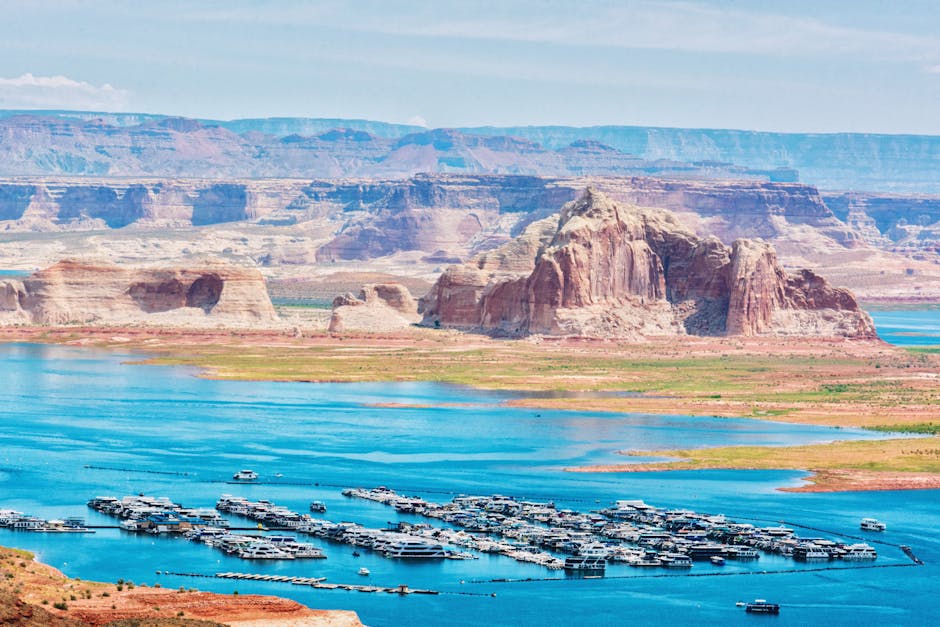
Yes, you can still houseboat on Lake Powell in 2026. Water levels swing year to year, which reshapes the shoreline and can expose rocks and old stumps that were submerged a season earlier. Go slow, skip night boating, and treat unfamiliar coves with caution, especially in a low-water year.
Rattlesnakes and other wildlife
Rattlesnakes can swim in Lake Powell and occasionally turn up crossing coves or sunning on ledges, though sightings are uncommon and the snakes avoid people. Wear water shoes on shore, scan sandy beaches before setting up camp, and keep kids away from rock crevices. That is enough to keep the risk very low.
What to Pack for a First Lake Powell Houseboat Trip
Pack like you are provisioning a floating campsite with a kitchen, because once you leave the marina, resupply ranges from limited to none. Sun protection comes first: reef-safe SPF 50-plus sunscreen, wide-brim hats, UV shirts, and polarized sunglasses for everyone, reapplied every couple of hours against sun that reflects off the water.
- Extra drinking water, at least a gallon per person per day beyond the tank
- More ice than you think you need, then double it
- Sturdy water shoes for sharp canyon rock
- Headlamps for every family member and a stocked first-aid kit
- Waterproof dry bags and a battery pack for phones and cameras
- All groceries, spices, and condiments, bought in Page before you launch
The First-Timer Verdict
For a first Lake Powell houseboat trip in 2026, book a mid-range boat (50 to 59 feet) from Wahweap Marina for a May, early-June, or September week, and budget $4,500 to $7,500 all in for a family of four. That mix gives you the easiest boat to pilot, the largest fleet and closest supplies, swimmable water, and shoulder-season pricing.
Houseboating rewards families who like camping but want a kitchen, a bed, and a base that moves. It frustrates anyone who needs Wi-Fi, restaurants, or hotel polish. If your crew is in the first group, few vacations in the West beat waking up anchored in a red-rock cove with the kids already in the water.
Ready to price your own trip? Run your dates and group size through our budget calculator, then map the week with our 5-day Lake Powell houseboat itinerary. Still weighing lakes? The Lake Tahoe vs Lake Powell comparison shows which one fits your family.
Frequently Asked Questions
A Lake Powell houseboat rents for roughly $1,500 to $12,000 per week in 2026, and most first-timer families pay $3,000 to $6,000 for a mid-range boat sleeping 8 to 12. Add about $300 to $700 for fuel, plus groceries and a damage waiver, so a realistic all-in week lands near $4,500 to $7,500.
The best time to houseboat on Lake Powell is May through early June or September, when the water is warm enough to swim, crowds thin out, and rental rates sit 20 to 30 percent below peak. July and August bring heat near 100 degrees and the highest prices, so shoulder season is the first-timer sweet spot.
The most common houseboat problems are running out of fresh water, underestimating fuel burn, and hitting submerged rocks as Lake Powell's water level shifts. Engines and generators also produce carbon monoxide near the swim deck, the single most dangerous issue. The marina orientation covers the freshwater system, generator, and anchoring, which prevents most first-timer headaches.
Yes, you can still houseboat on Lake Powell in 2026. Wahweap Marina near Page, Arizona and Antelope Point Marina both rent houseboats across the roughly 186-mile reservoir inside Glen Canyon National Recreation Area. Water levels rise and fall year to year, which reshapes the shoreline and exposes new hazards, but the lake stays open for houseboating.
On a Lake Powell houseboat, sewage collects in a sealed onboard holding tank, never in the lake. You empty it at a floating pumpout station or the marina pumpout dock, both free to renters. Dumping waste into the water is illegal inside Glen Canyon National Recreation Area, and rental crews show you the tank system during orientation.
Yes, rattlesnakes can swim in Lake Powell, and hikers occasionally spot them crossing coves or sunning on rock ledges. Sightings are rare and bites are rarer still, since the snakes avoid people. First-timers stay safe by wearing water shoes on shore, checking sandy beaches before camp, and keeping kids clear of rock crevices.
Data Sources and Methodology
This guide uses verified data from official and industry sources:
- National Park Service : Glen Canyon NRA : safety regulations, entrance fees, sewage and pumpout rules
- Lake Powell Resorts & Marinas : Wahweap houseboat rental pricing, orientation, and promotions
- Antelope Point Marina : premium fleet details and fuel billing policy
- NPS Glen Canyon Boating Safety : life jacket rules, carbon monoxide warnings, navigation
Rental ranges reflect 2026 mid-season rates and vary by boat, marina, and week. Verify current pricing with the marina before booking. Last verified July 2026.