Lake Powell 5-Day Houseboat Itinerary (2026)
A day-by-day guide to hidden canyons, sandy beach camps, and unforgettable water adventures from Wahweap Marina
Quick Answer
- Best route: A 5-day Lake Powell houseboat trip from Wahweap Marina covers approximately 60-80 miles round-trip, winding through Wahweap Bay, Warm Creek Bay, Padre Bay, and several side canyons with overnight beach anchoring.
- 💡 Where most Lake Powell houseboat trips go sideways: It isn't fitting in the canyons. It's moving the boat every day instead of anchoring two days at two spots, which is how families keep total cruising to just 3-4 hours over 5 days and save serious fuel. The day-by-day plan below is built around that two-anchor rhythm.
- 2026 pricing: Five-day rentals range from $2,487 (46-foot Expedition, peak) to $8,250 (75-foot Excursion, peak), plus a $225 service fee. Check the full cost breakdown for budget planning.
- When to go: Late May through early June and September deliver warm water, fewer crowds, and shoulder-season savings of 25-40% off peak rates.
- Did you know? Lake Powell has 96 major side canyons and more shoreline than the entire U.S. Pacific coast, making it nearly impossible to explore even a fraction on a single trip.
Why Five Days Is the Sweet Spot
Three days on Lake Powell barely scratches the surface. Seven days can stretch the budget and test the patience of younger travelers. Five days, though, hits a rhythm that balances exploration with relaxation, giving families enough time to discover hidden slot canyons, spend lazy afternoons floating in turquoise water, and still feel the tug of wanting to come back.
This itinerary departs from Wahweap Marina, the largest marina on the lake and the closest to Page, Arizona. Wahweap sits just 5.5 miles from Glen Canyon Dam and offers the widest selection of houseboats, from compact 46-foot Expeditions to spacious 75-foot Excursions with five staterooms. For first-timers deciding between options, the first-timer guide breaks down what to expect during orientation, boarding, and that first hour at the helm.
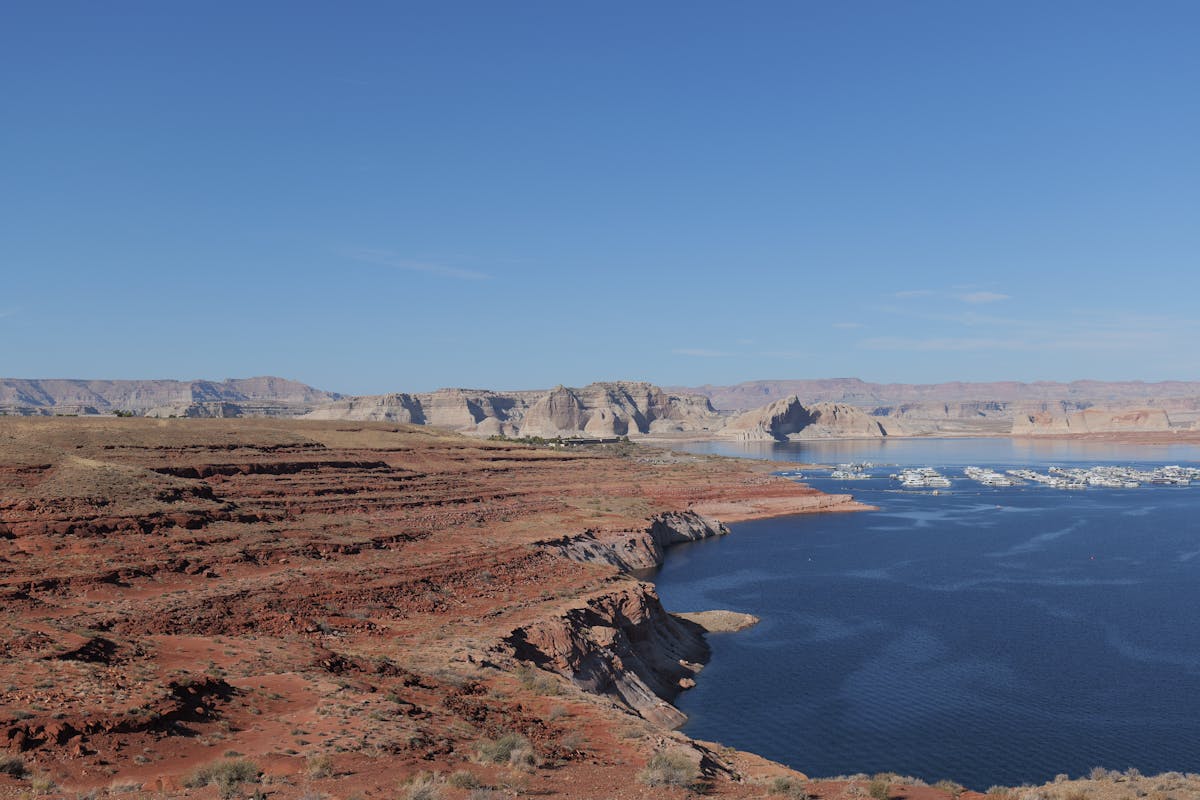
The route outlined below covers roughly 60-80 miles round-trip, depending on how many side canyons catch your eye. Lake Powell stretches 186 miles through the Colorado Plateau, and every bend reveals different sandstone formations, from the Navajo sandstone cliffs near Wahweap to the Wingate walls farther uplake. Lower water levels in recent years have exposed previously submerged beaches and rock formations, creating new camping spots but also requiring extra caution around shallow areas.
Before You Launch: Essential Preparation
Choosing the Right Houseboat
Lake Powell Resorts and Marinas operates eight houseboat models from Wahweap and Bullfrog marinas. For a family of four to six, the 50-foot Nomad (two staterooms, one bathroom, up to 10 guests) offers a solid balance between space and affordability, with 2026 peak-season five-day rates around $3,423. Larger groups or multi-family trips benefit from the 62-foot Journey, which includes a water slide off the upper deck and sleeps 12.
Antelope Point Marina, five miles uplake on the Arizona side, provides an alternative departure point along a deep-water channel with consistent access even during lower water periods.
Provisioning and Packing
There are no grocery stores, gas stations, or supply shops on the water. Everything needed for five days must come aboard at the marina. Plan meals in advance and pack a cooler with ice for perishables. Most houseboats include a full kitchen with a stove, oven, refrigerator, and microwave, so cooking onboard is comfortable.
Key items that often get overlooked: polarized sunglasses (critical for spotting submerged rocks and sandbars), water shoes with good grip for scrambling over slickrock, reef-safe sunscreen in SPF 50+, and a basic first aid kit with blister treatment and antihistamines. The desert sun at 3,700 feet elevation burns faster than most people expect.
Water Level Advisory
Lake Powell water levels fluctuate seasonally and year to year. Previously deep channels may have shallow rock formations just below the surface. Always consult the latest NPS conditions report before departure and use updated GPS bathymetric data if available. Polarized sunglasses help spot submerged hazards in shallow water.
Navigation and Safety Basics
No boating license is required to rent a houseboat on Lake Powell. Wahweap Marina provides a mandatory orientation covering engine operation, anchoring techniques, generator management, and navigation rules. Pay close attention to the beaching demonstration. Properly beaching the houseboat means driving the bow onto a sandy shore at a controlled speed, then setting stern anchors to keep the boat stable. Done wrong, the boat can swing sideways in wind gusts or drift off the beach overnight.
Life jackets must be available for every person on board, and children should wear them anytime they're on the open deck or in the water. The lake's clarity can be deceptive, as water drops deep quickly off many beaches, and cold pockets from canyon-fed springs can surprise even confident swimmers.
Day 1: Wahweap Bay to Warm Creek Bay
Morning: Departure and Orientation
After a final walkthrough with marina staff, untie from the dock by mid-morning. The first stretch through Wahweap Bay is wide and forgiving, a perfect place to get comfortable with the houseboat's handling. These vessels don't turn like a car. Expect a delay between steering input and response, and always give other boats and canyon walls wide clearance.
Head northeast through the main channel toward Castle Rock, the iconic formation visible from Page that marks the transition from the marina area into the open lake. This first leg covers about 8-10 miles and takes roughly 90 minutes at a comfortable cruising speed of 6-8 mph.
Afternoon: Warm Creek Bay
Warm Creek Bay is a wide, protected inlet that serves as an excellent first-night anchorage. The bay's sandy beaches make beaching practice low-stakes, and the shallow, calm water near shore gives younger kids a safe swimming area. Several coves along the north side of the bay provide privacy from other boats.
Spend the afternoon swimming, inflating towable tubes, and exploring the nearest shoreline on foot. The sandstone shelves around Warm Creek Bay hold interesting geological layers, and short scrambles up the slickrock offer panoramic views of the lake.
Evening: First Night on the Water
Grilling on the houseboat's upper deck as the sun drops behind the Kaiparowits Plateau is the moment that sells people on the Lake Powell experience. Desert sunsets here are routinely spectacular, with red and orange light bouncing off canyon walls on both sides of the bay. After dark, the absence of light pollution turns the sky into a dome of stars that makes sleeping on the upper deck tempting, though nighttime temperatures can dip into the 50s even in summer.
Day 2: Padre Bay and Hidden Canyons
Morning: Cruising to Padre Bay
Depart Warm Creek Bay early and continue northeast toward Padre Bay, one of the largest and most popular areas on the lake. The cruise takes about an hour and passes through a section where the canyon walls narrow and the water shifts from milky blue to deep emerald. Watch for Cookie Jar Butte, a distinctive mushroom-shaped rock formation that signals the entrance to Padre Bay.
Padre Bay is ringed with sandy beaches and offers several coves sheltered from afternoon winds. The bay's size means finding a private beach is usually manageable, even during peak season, though holiday weekends bring larger crowds.
Afternoon: Side Canyon Exploration
The real magic of Lake Powell lives in the side canyons, and Padre Bay gives access to several. Labyrinth Canyon and Face Canyon are reachable by kayak or small powerboat from anchor points within the bay. These narrow waterways wind between towering sandstone walls, sometimes only 15-20 feet apart, with light filtering down to create shifting color patterns on the water's surface.
If the group rented a towable watercraft (jet ski or small powerboat), this is the day to use it. Side canyons that look like dead ends from the entrance often extend much deeper, opening into hidden chambers with sandy landings where the only footprints are from the occasional hiker who reached the water from the rim above.
For families weighing this trip against other western lake options, the Lake Tahoe vs Lake Powell comparison covers the key differences in water temperature, scenery, activities, and cost.
Evening: Beach Bonfire and Stargazing
Padre Bay's wide beaches allow for evening bonfires, though fire restrictions vary by season. Check current NPS fire regulations before lighting anything. Even without a fire, evening activities are plentiful: card games on the upper deck, fishing off the stern (striped bass and smallmouth bass are the primary catches), or simply watching the stars emerge over the desert.
Day 3: Rainbow Bridge and Forbidding Canyon
Morning: The Journey to Rainbow Bridge
Day 3 features the longest cruising segment: a 25-30 mile run from Padre Bay south toward Rainbow Bridge National Monument, one of the world's largest natural stone bridges. The bridge spans 275 feet across Bridge Canyon and rises 290 feet above the canyon floor. It's a sacred site for several Native American tribes, and visitors are asked to remain on the trail and not walk beneath the bridge.
The approach through Forbidding Canyon (the waterway leading to Rainbow Bridge) is one of the most dramatic stretches on the lake. Canyon walls climb hundreds of feet on both sides, and the waterway narrows enough that the houseboat needs careful maneuvering. Some larger houseboats may not fit through the narrowest sections during lower water periods, so check current conditions with the marina before committing to this route.
Afternoon: Exploring the Monument Area
After viewing Rainbow Bridge, anchor in one of the coves near the monument area for lunch and swimming. The water here tends to be colder due to the depth and canyon shade, so it's refreshing on a hot afternoon. This is also a prime fishing spot, with striped bass commonly caught in the deeper water near canyon walls.
The return trip to Padre Bay or a nearby anchorage takes 2-3 hours, so plan to depart Rainbow Bridge by mid-afternoon to reach your evening camp before sunset. Alternatively, several beaches along the return route offer excellent overnight spots with west-facing views for sunset watching.
Evening: Reflections at Anchor
Day 3 covers the most distance, and the group will likely be ready for a quiet evening. Choose a sheltered cove, beach the boat early, and let the kids burn remaining energy swimming while dinner cooks. The canyon acoustics at this end of the lake carry sound in unexpected ways, and quiet evenings occasionally bring the eerie echo of coyotes on the rim above.
Day 4: Last Chance Bay and Water Play
Morning: Slow Start and Swimming
After three days of exploration and cruising, Day 4 is designed for minimal driving and maximum water time. Begin working back toward the Wahweap end of the lake, but take the scenic route through Last Chance Bay, a quieter area on the south side of the main channel. The bay got its name from early explorers who saw it as the "last chance" for water access before the desert stretched endlessly.
Find a beach with a gradual sandy entry and spend the morning swimming, floating on inflatables, and jumping from the upper deck (check water depth first, always). The houseboat's water slide, if the rental includes one, gets its heaviest use on days like this.
Afternoon: Kayaking and Shore Hiking
Last Chance Bay connects to several shallow side channels that are ideal for kayaking. The water here is often crystal clear, and the narrow passages between sandstone fins create a natural maze. Bring the kayaks close to shore and hike up the slickrock for views back across the bay. These informal trails aren't marked, so keep track of landmarks and bring water even for short explorations.
The Navajo sandstone in this area displays striking cross-bedding patterns, petrified sand dunes from 180 million years ago that were deposited in a vast desert larger than the modern Sahara. Running a hand along these ancient dune surfaces is a tangible connection to deep geological time that resonates with kids studying earth science.
Evening: Final Night Celebration
The last night on the water calls for something memorable. Some families designate it as a themed dinner night. Others set up a movie on a laptop under the stars, projecting onto a white sheet hung from the upper deck railing. The generator provides power, but keep noise to a minimum out of courtesy to any nearby boats.
This is also a good evening to consolidate trash and organize the houseboat for tomorrow's return. The marina charges a service fee that covers cleaning, but leaving the boat reasonably tidy speeds up the checkout process and is simply good practice.
Day 5: Return to Wahweap Marina
Morning: Final Cruise
The return to Wahweap Marina typically covers 15-20 miles, depending on where the group spent the previous night. Plan for a 2-3 hour cruise at a relaxed pace. Take this final stretch slowly. The morning light hits the canyon walls differently than the afternoon sun, and formations that looked uniform on the way out reveal new textures and color bands during the return.
Houseboats are typically due back by early afternoon, though specific return times vary by rental company. Build in a 30-minute buffer for unexpected delays like wind chop in the main channel or congestion near the marina entrance.
Late Morning: Docking and Checkout
Marina staff assist with docking, which is a relief after five days of self-beaching. The checkout process includes a boat inspection (check for damage), fuel charge settlement, and return of any rented add-on equipment like towable tubes or fishing gear.
Afternoon: Page, Arizona Exploration
Most families aren't ready to drive home immediately after checkout. Page, Arizona offers several attractions worth an afternoon visit. Horseshoe Bend is a 1.5-mile round-trip walk to one of the most photographed viewpoints in the Southwest. Antelope Canyon, a slot canyon on Navajo land, requires a guided tour booked in advance but delivers unforgettable photo opportunities with its sculpted sandstone walls and light beams.
For food, Page has expanded its restaurant scene in recent years, with options ranging from Southwestern cuisine to craft breweries. After five days of houseboat cooking, a meal at a restaurant feels like a celebration.
2026 Costs and Booking Details
Houseboat pricing at Lake Powell follows a three-tier seasonal structure. Peak season runs from June 13 through August 23, 2026. Shoulder season covers May 16 through June 12 and August 24 through October 3. Off-peak encompasses the rest of the year, with the lowest rates and cooler conditions.
Five-day rental rates for 2026 (peak season):
- 46-foot Expedition (sleeps 6): approximately $2,487
- 50-foot Nomad (sleeps 10): approximately $3,423
- 59-foot Discovery XL (sleeps 12): approximately $5,691
- 62-foot Journey (sleeps 12): approximately $7,776
- 75-foot Excursion (sleeps 14): approximately $8,250
All rates exclude taxes and fees. A $225 service fee per trip covers water tank filling, cleaning, and linen laundering. Damage protection is required for all rentals. Early booking discounts of up to 25% are available for advance reservations through Lake Powell Resorts and Marinas.
Additional costs to budget for: fuel (varies by distance traveled, typically $200-$400 for five days), groceries ($300-$500 for a family of four), add-on watercraft rental ($300-$600 for a jet ski for five days), and Glen Canyon National Recreation Area entrance fees ($30 per vehicle or free with an America the Beautiful pass). For a detailed breakdown, the Lake Powell houseboat cost guide covers every line item.
Month-by-Month Conditions
April-May: Water temperatures in the mid-50s to low 60s. Comfortable air temperatures (70s-80s). Fewer boats on the water. Off-peak and early shoulder pricing makes this the best value window for families who don't mind cooler water.
June-August: Peak season with water temperatures reaching 75-82 degrees, full sun, and air temperatures regularly above 100 degrees. The busiest period on the lake. Book 6-12 months ahead for these dates.
September-October: Water temperatures gradually cool from the upper 70s to low 60s. Air temperatures moderate into the 80s and 90s. Shoulder pricing returns. Many experienced Lake Powell visitors consider September the single best month for the trip.
November-March: Off-peak season with the lowest rates and coolest conditions. Water temperatures drop below 55 degrees. Shorter daylight hours limit exploration time, but the solitude and dramatically lit canyons appeal to photographers and couples without young children.
What to Bring: The Complete Gear List
Sun Protection and Clothing
- Reef-safe sunscreen, SPF 50+ (apply every 2 hours on the water)
- Wide-brimmed hats for every family member
- Polarized sunglasses (essential for spotting submerged rocks)
- Lightweight, long-sleeve UPF shirts
- Water shoes with good traction for slickrock
- Warm layer for evenings (fleece or light jacket)
Water Gear
- Coast Guard-approved life jackets for every person
- Towable tubes and inflatables
- Kayaks or paddleboards (can be rented at the marina)
- Snorkel masks for clear-water areas
- Waterproof phone cases
Food and Kitchen
- All groceries for five days (plan every meal in advance)
- Extra ice or frozen water bottles for coolers
- Grilling supplies (charcoal or propane, depending on boat model)
- Reusable water bottles (refill from the houseboat's tank)
- Heavy-duty trash bags (pack out everything)
Safety and Miscellaneous
- First aid kit with blister treatment, antihistamines, and burn cream
- Headlamps or flashlights with extra batteries
- Binoculars for canyon wildlife spotting
- Playing cards, board games, or fishing gear for downtime
- Portable phone charger (cell service is unreliable on the lake)
Frequently Asked Questions
Most families need about 5 days at Lake Powell to balance exploring its side canyons with relaxed beach time, since 3 days barely scratches the surface and 7 days can stretch the budget. A 5-day houseboat trip from Wahweap Marina covers roughly 60-80 miles round-trip and leaves room to anchor two days at each of two favorite spots instead of relocating the boat every day.
Yes, 5 days is enough for a Lake Powell houseboat trip, with total boat driving adding up to only about 3-4 hours across the full 5 days when you anchor at two spots instead of relocating the boat daily. That pace leaves long, unhurried afternoons for swimming and exploring the side canyons off Padre Bay. With 96 major side canyons on the lake, even 5 days only samples a fraction, leaving plenty of reason to come back.
The best months to visit Lake Powell are late May through early June and September, which deliver warm water, thinner crowds, and shoulder-season savings of 25-40% off peak rates. Peak summer brings the warmest water but the highest houseboat rates and the most crowded canyons, so these shoulder windows hit the sweet spot for families.
A 5-day Lake Powell houseboat rental in 2026 ranges from about $2,487 for a 46-foot Expedition to $8,250 for a 75-foot Excursion during peak season, plus a $225 service fee per trip. A mid-size 50-foot Nomad that sleeps up to 10 runs around $3,423 for a five-day peak-season trip, and shoulder-season rates across all models drop 25-40% lower.
Yes, Lake Powell is still worth visiting in 2026, with 96 major side canyons and more shoreline than the entire U.S. Pacific coast spread across its 186 miles. Lower water levels in recent years have actually exposed new sandy beaches and rock formations for camping, though they call for extra caution around newly shallow areas. Marinas like Antelope Point sit on a deep-water channel that keeps access reliable even in lower-water periods.
The narrow side canyons are widely considered the prettiest part of Lake Powell, where sandstone walls in spots like Labyrinth Canyon and Face Canyon close to just 15-20 feet apart. Reached by kayak or small powerboat from Padre Bay, these passages filter light into shifting color patterns on the water. Above the waterline, landmarks like Castle Rock and Cookie Jar Butte mark the most photogenic stretches of the run from Wahweap.
No, there are no alligators in Lake Powell, a desert reservoir sitting at about 3,700 feet elevation on the Arizona-Utah border, well outside any alligator's natural range. The bigger water concern for families is temperature, not wildlife: the clear water drops deep quickly off many beaches, and cold pockets from canyon-fed springs can surprise even confident swimmers, so kids should wear life jackets in the water.
Yes, Lake Powell houseboating is safe and popular for families with young children, with houseboats cruising at just 6-8 mph and sandy beaches offering shallow, calm water for protected swimming. Children should wear life jackets anytime they are on the open deck or in the water, and every rental starts with a mandatory marina safety orientation. Watch for cold pockets from canyon-fed springs and water that deepens quickly just off the beach.
No boating license is required to rent a houseboat on Lake Powell. Wahweap Marina runs a mandatory orientation before departure covering engine operation, anchoring, generator management, and navigation rules, with special attention to the beaching demonstration. Basic comfort steering a large, slow-responding vessel helps, especially in the narrow canyons.
How This Itinerary Was Developed
This itinerary draws from publicly available information including the National Park Service Glen Canyon NRA visitor resources, Lake Powell Resorts and Marinas 2026 rate sheets, and community trip reports from Lake Powell boating forums. Pricing data reflects published 2026 rates from Lake Powell Resorts and Marinas (Aramark). Water level conditions are subject to change; check the Bureau of Reclamation for current readings. Learn more about our research process on our methodology page.