How Much Is a Trip to Hawaii? What Moves the Family Total
One family of four, one November week, four islands and three home airports, priced at the source.
Quick Answer
- 📊 A 7-night Hawaii trip for a family of four costs $4,792 to $8,044 with flights, a mid-range hotel, car, food and three activities; Oahu from the West Coast is cheapest (as of September 2026, source: ETP basket).
- 🧾 Hawaii taxes a hotel room at 11% state tax, a county tax of up to 3% and up to 4.712% general excise tax, up to 18.712% on top of the rate you're quoted (as of September 2026, source: Hawaii Department of Taxation).
- ✈️ The island with the cheapest flights from Chicago and Dallas is the most expensive week on the ground, and one boat trip is what puts it there.
- 🅿️ One big Waikiki resort charges more to park for the week than the cheapest rental car on Oahu costs.
- 🚫 Skip this page if you're still deciding between Hawaii and a Caribbean beach week; our Hawaii vs Caribbean comparison settles that first.
- 🧮 Put your own airport and hotel into the Budget Calculator before you book either.
- 👇 Below: yes-or-no answers to "Is $2,000 enough for a week in Hawaii?" and three other budgets, and all 12 island and airport totals under "How Much Is a Trip to Hawaii for a Family of Four?"
Families price the flights first, but on Oahu the room is the bigger bill. From Los Angeles, four round-trip fares to Honolulu came to $1,460, while a mid-range Waikiki room for the same seven nights came to $1,704 after tax (as of September 2026, sources: Google Flights, Google Hotels). The table below prices all four islands from three airports, and the Budget Calculator redoes it with yours.
How Much Is a Trip to Hawaii for a Family of Four?
We priced one week on every island on 19 September 2026: two adults and children aged 10 and 7, November 7 to 14, 2026. Flights are each route's middle fare times four, since children pay the adult fare; hotels are the middle 3- or 4-star rate, taxed at 18.712% (as of September 2026, sources: Google Flights, Google Hotels, Hawaii Department of Taxation).
| 7 nights, family of four | Oahu (Waikiki) | Maui | Big Island (Kona) | Kauai |
|---|---|---|---|---|
| Hotel, 7 nights, taxes included | $1,704 | $3,083 | $2,285 | $3,041 |
| Rental car, cheapest SUV for the week | $261 | $271 | $323 | $266 |
| Food, lean: groceries plus 7 casual dinners out | $798 | $798 | $798 | $798 |
| Three paid activities | $569 | $772 | $596 | $1,320 |
| Four round-trip flights from Los Angeles | $1,460 | $1,808 | $1,940 | $1,820 |
| Four round-trip flights from Dallas | $2,720 | $2,756 | $3,112 | $2,268 |
| Four round-trip flights from Chicago | $2,708 | $3,120 | $3,260 | $2,380 |
| Trip total from Los Angeles | $4,792 | $6,732 | $5,942 | $7,245 |
| Trip total from Dallas | $6,052 | $7,680 | $7,114 | $7,693 |
| Trip total from Chicago | $6,040 | $8,044 | $7,262 | $7,805 |
Sources: flights and hotels read on Google Flights and Google Hotels, cars on Kayak, for November 7 to 14, 2026, on 19 September 2026; food from the USDA Thrifty Food Plan for Hawaii and Zippy's menu; activities from each operator's own site; tax rates from the Hawaii Department of Taxation (as of September 2026). Totals are our arithmetic (ETP basket, as of September 2026). Fares exclude checked bags.
The spread is $3,252 between the cheapest and priciest cells. The island moved the total more than the airport did: from Los Angeles, Kauai cost $2,453 more than Oahu, while no island's total moved more than $1,320 between airports (ETP basket, as of September 2026).
Google Flights called Los Angeles to Honolulu prices "typical" and suggested booking before October 24 (as of September 2026, source: Google Flights). Swapping two dinners out for groceries saves about $125, and the comfort food line below adds $439 to every total above (ETP basket, as of September 2026).
Island by Island: What a Hawaii Trip Costs on Oahu, Maui, the Big Island and Kauai
The same family, the same week and the same kind of hotel produced a ground cost (everything except flights) of $3,332 on Oahu and $5,425 on Kauai (ETP basket, as of September 2026). Table 2 shows where the room line comes from.
| Island | Middle 3- or 4-star rate, per night | Hotels priced | 7 nights with 18.712% tax | Island average rate, September 2025 |
|---|---|---|---|---|
| Oahu (Waikiki) | $205 | 16 | $1,704 | $259.47 |
| Maui | $371 | 17 | $3,083 | $423.67 (Maui County) |
| Big Island (Kailua-Kona) | $275 | 14 | $2,285 | $353.83 |
| Kauai | $366 | 13 | $3,041 | $383.51 |
| Maui's week runs $3,083 after tax, $1,379 more than the same week in Waikiki. | ||||
Sources: nightly prices with fees, before tax, for November 7 to 14, 2026 (as of September 2026, source: Google Hotels); tax rates from the Hawaii Department of Taxation, Maui County and the City and County of Honolulu (as of September 2026); all-class island averages are Hawaii Tourism Authority figures as reported by Hawaii-Guide (as of May 2026, source: Hawaii-Guide).
Our mid-range rates sit below each island's all-hotel average, which includes luxury resorts. One Waikiki stay total backed the tax math: $190 a night with fees became $1,581 for the week with taxes, 18.9% more (as of September 2026, source: Google Hotels).
Oahu: the cheapest week, if you book two reservations early
Oahu's three paid days came to $569: the Polynesian Cultural Center's Islands of Polynesia group tour with the Aliʻi Lūʻau, on its booking site for a September date, at $134.95 per adult and $107.96 per child aged 4 to 11, Hanauma Bay at $25 per non-resident adult with children 12 and under free plus $3 parking, and Diamond Head at $5 a person plus $10 to park the car (as of September 2026, sources: Polynesian Cultural Center, City and County of Honolulu, Hawaii State Parks). Our Oahu family guide fills the free days; for Disney's resort, see our Aulani family cost breakdown.
Maui: the priciest room, not the priciest flight
Maui County adds a 3% county room tax to a middle rate of $371 a night (as of September 2026, sources: Google Hotels, Maui County). Its three paid days came to $772: Pride of Maui's Molokini snorkel trip at $198 per adult and $158 per child aged 4 to 12, taxes included, Haleakalā National Park at $30 per car for three days, and ʻĪao Valley, where non-residents must book parking and entry together: $10 per car plus $5 a person (as of September 2026, sources: Pride of Maui, National Park Service, Hawaii State Parks). Condos with kitchens claw back the room line; browse Kaanapali beachfront condos on Expedia.
Big Island: the priciest flights, a middle-priced week
Kona had the highest fares from all three airports (as of September 2026, source: Google Flights). On the ground it's cheaper than Maui or Kauai: Fair Wind's morning Kealakekua Bay snorkel trip from $158 per adult and $115 per child aged 4 to 12 plus taxes, Hawaii Volcanoes National Park at $30 per car for seven days, and Puʻuhonua o Hōnaunau at $20 per car came to $596 (as of September 2026, sources: Fair Wind, National Park Service). Compare Big Island volcano and snorkel tours on Viator too.
Kauai: the cheapest flight, the priciest week on the ground
Kauai had the cheapest fares from Dallas and Chicago in our search (as of September 2026, source: Google Flights). Then the boat trip lands. Holoholo Charters' Nāpali Coast snorkel trip starts at $235 per adult and $215 per child aged 5 to 12, plus taxes, $900 for this family, and Smith's Family Garden Luau adds $150 per adult and $45 per junior aged 7 to 13, plus $5 per person state park entry and $10 parking (as of September 2026, sources: Holoholo Charters, Smith's Kauai). That's $1,320 of activities, the most of any island. Without the boat, Kauai's ground cost would be $4,525, below Maui's $4,924 (ETP basket, as of September 2026).
From Chicago, Kauai still came in $239 under Maui with the boat day included, so we'd keep it if the Nāpali Coast is the point of the trip. If it isn't, drop the boat and Kauai's week falls to $6,905 from Chicago (ETP basket, as of September 2026). Our best Hawaiian island for families comparison and Big Island vs Maui vs Oahu guide weigh more than cost.
Compare Hawaii luau and snorkel tours on Viator with the operators' own prices, and check current rates for Hawaii family condos and hotels on Expedia.

Hawaii Flight Costs From Los Angeles, Dallas and Chicago
Median round trips per person to Honolulu and Maui: $365 and $452 from Los Angeles, $680 and $689 from Dallas, $677 and $780 from Chicago, basic economy, no checked bags (as of September 2026, source: Google Flights). Dallas and Chicago had no nonstops to Kona or Lihue for our dates.
Hidden Costs: Hawaii Hotel Tax, Resort Parking and Park Reservations
Hotel tax: 11% state transient accommodations tax since January 1, 2026, a county tax of up to 3%, and general excise tax passed on at up to 4.712% (as of September 2026, source: Hawaii Department of Taxation). Honolulu and Maui County both charge the 3% county rate (as of September 2026, sources: City and County of Honolulu, Maui County).
Rental car surcharge: $7.50 a day from January 1, 2026, which is $52.50 for a week if your quote leaves it out (as of September 2026, source: Hawaii Department of Taxation).
Hanauma Bay: $25 per non-resident adult, children 12 and under free, closed Mondays and Tuesdays, $3 parking in cash (as of September 2026, source: City and County of Honolulu).
Diamond Head and ʻĪao Valley: reservation required up to 30 days ahead, $5 entry per person plus $10 per car to park, children 3 and under free (as of September 2026, source: Hawaii State Parks).
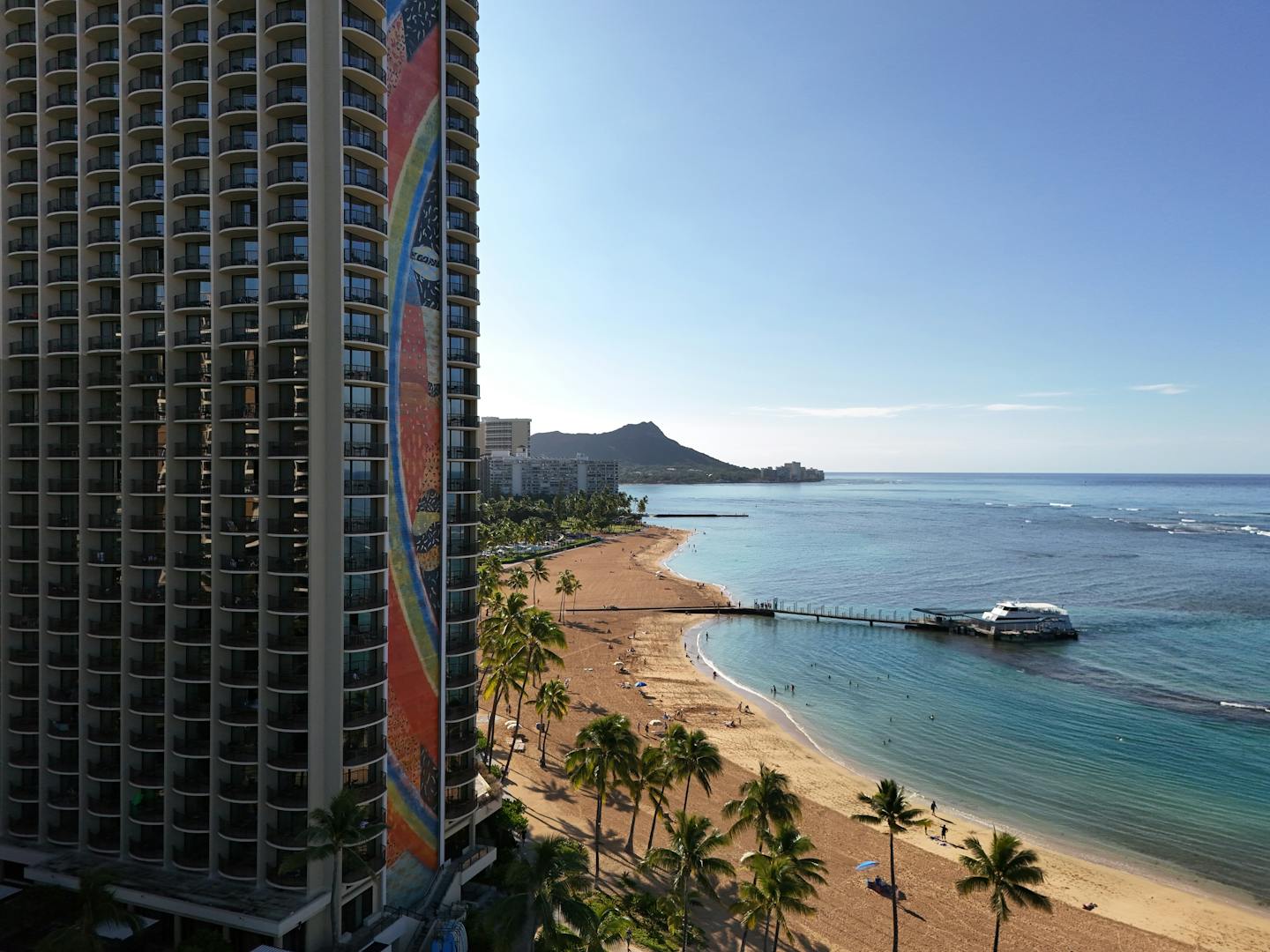
Resort fees: Table 1 uses Google's nightly price with fees, so resort charges are in it; Hilton Hawaiian Village is one resort that adds a daily charge to the room rate (as of September 2026, sources: Google Hotels, Hilton Hawaiian Village).
Hotel parking: the line that can outcost the car
Hilton Hawaiian Village charges $72.25 a day for self-parking (as of September 2026, source: Hilton Hawaiian Village). A week of self-parking is $505.75, almost twice the $261 week on our cheapest Oahu car (ETP basket, as of September 2026). In Waikiki, TheBus at $3.25 cash a ride, with a $7.50 day cap on a HOLO card, can beat keeping a car all week (as of September 2026, source: TheBus).
Food: What a Week of Hawaii Groceries and Dinners Costs
The USDA's Thrifty Food Plan for Hawaii puts a month of home-cooked food for two adults and children aged 6 to 8 and 9 to 11 at $1,555.70, about $359 a week at Honolulu prices (as of September 2026, source: USDA Food and Nutrition Service). Seven Zippy's dinners, two regular and two mini Korean Fried Chicken plates at $17.20 and $12.75, come to $62.72 a night with general excise tax, or $439 for the week (as of September 2026, source: Zippy's).
The USDA figure covers every meal at home, so the dinners out sit on top. Eat lunch out too, at the same plate price, and the food line becomes $1,237 for the week, the comfort level, $439 above the lean $798 (ETP basket, as of September 2026). That is why a condo kitchen matters here.

Is $2,000, $5,000 or $1,000 Enough for a Week in Hawaii?
Is $2000 enough for a week in Hawaii?
No, not for a family of four, and not for two people either. Two Los Angeles to Honolulu fares plus a mid-range Waikiki week came to $2,434 before a car, food or activities (ETP basket, as of September 2026).
Is $5000 enough for a trip to Hawaii?
Yes, just, on Oahu from the West Coast only. Our Los Angeles family's Oahu week came to $4,792, a $208 margin before checked bags; every other island and airport in Table 1 went over $5,000 (ETP basket, as of September 2026).
Is $1000 enough for a week in Hawaii?
No. Four round-trip fares from Los Angeles to Honolulu, the cheapest route we priced, came to $1,460 on their own (as of September 2026, source: Google Flights).
How much is a 7 day trip to Hawaii?
For a family of four, seven nights cost $4,792 to $8,044 in our November 2026 basket, depending on the island and the home airport (ETP basket, as of September 2026).
Skip Hawaii This Year If
- your ceiling is under $5,000 and you fly from east of the Rockies; no island in Table 1 came in under $6,000 from Dallas or Chicago
- you want meals included; nothing we priced bundles food, and our Hawaii vs Caribbean comparison covers the all-inclusive route
- your kids are too young to enjoy a 5-hour boat trip or a long flight with a connection
- you can't book Diamond Head or Hanauma Bay ahead and those were the reason for Oahu
- your only possible week is a holiday week; our best time to visit Hawaii with kids guide shows which weeks to move
How to Plan a 7-Day Hawaii Trip Around the Paid Days
Book the reservation days first and build the week around them. Hanauma Bay is closed Mondays and Tuesdays, and Diamond Head reservations open 30 days ahead with walk-ins turned away (as of September 2026, sources: City and County of Honolulu, Hawaii State Parks). Put the boat trip early so a weather cancellation has a spare day, and keep arrival day free.
Haleakalā's car pass is good for three days and Hawaii Volcanoes' for seven, so split a park across two short visits with kids (as of September 2026, source: National Park Service).
What to Pack for Hawaii So You Don't Buy It There
The $798 food line assumes you aren't paying resort-shop prices for basics. Bring the family's sunscreen, swim shirts, water shoes for rocky beaches, and a soft cooler bag for the grocery run and beach lunches. Snorkel masks that already fit the kids save a fitting at every rental counter.
Our Take
A Hawaii week for four starts near $4,800 in only one combination: Oahu, a West Coast airport and two reservations made early. The runner-up was the Big Island from Los Angeles at $5,942; everywhere else, plan on $5,900 to $8,100, and pick the island before you shop fares, because the island moved our total more than the home airport did.
If the budget is fixed, pick the island by what you'll pay for on the ground. A Kauai boat day or a Maui room can cost more than the flights, and a Waikiki parking bill can cost more than the car.
Frequently Asked Questions About the Cost of a Trip to Hawaii
Data Sources and Verification
Every price was read in a real browser on 19 September 2026 for two adults and two children aged 10 and 7, flying November 7 to 14, 2026. Taxes and park fees come from state, county and park pages; activity prices from each operator's own site.
- Google Flights: round-trip fares
- Google Hotels: hotel rates
- Kayak: rental car search
- Hawaii Department of Taxation: Announcement 2025-03 on the transient accommodations tax · county surcharge on general excise tax
- Maui County: transient accommodations tax
- City and County of Honolulu: Oahu transient accommodations tax FAQ · Hanauma Bay reservations
- Hawaii State Parks: Diamond Head reservations · ʻĪao Valley
- National Park Service: Haleakalā fees · Hawaii Volcanoes fees · Puʻuhonua o Hōnaunau fees
- Polynesian Cultural Center: booking site
- Pride of Maui: Molokini snorkel trip
- Fair Wind: morning Kealakekua snorkel tour
- Holoholo Charters: Nāpali Coast snorkel excursion
- Smith's Kauai: Family Garden Luau
- USDA Food and Nutrition Service: Thrifty Food Plan for Alaska and Hawaii, July 2026
- Zippy's: menu
- Hilton Hawaiian Village: resort information
- TheBus: fares
- Hawaii-Guide: Hawaii hotel rates after Labor Day
How we checked these figures
Every price was read in a real browser on 19 September 2026 for two adults and children aged 10 and 7, November 7 to 14, 2026. Flights: median round-trip economy fare (basic economy in, bags out) of every Google Flights result per route, 14 to 30 fares each, times four. Hotels: median nightly price with fees of the 3- and 4-star hotels on Google Hotels' first page, times seven, taxed at 18.712%; the 3% county rate was read on Maui County's and Honolulu's pages, and Kauai and Hawaii County are assumed at the same 3% ceiling. Cars: cheapest SUV-class week on Kayak, which doesn't say whether taxes and the $7.50 daily surcharge are in. Food: the USDA Hawaii Thrifty Food Plan for this family, per week, plus seven Zippy's dinners with tax. Activities: each operator's or park's own booking page; Diamond Head and ʻĪao Valley include one $10 parking voucher. Table 2's island averages are a Hawaii-Guide cross-check. Totals are our arithmetic.
Prices checked 19 September 2026 and subject to change. Airfares and hotel rates move daily; recheck both before you book.