Maldives vs Bali with Kids: Luxury vs Adventure
Crystal-clear lagoons and overwater villas at $800/night, or temples, monkey forests, and cooking classes at $100/night. The price gap is enormous — but is it the right question?
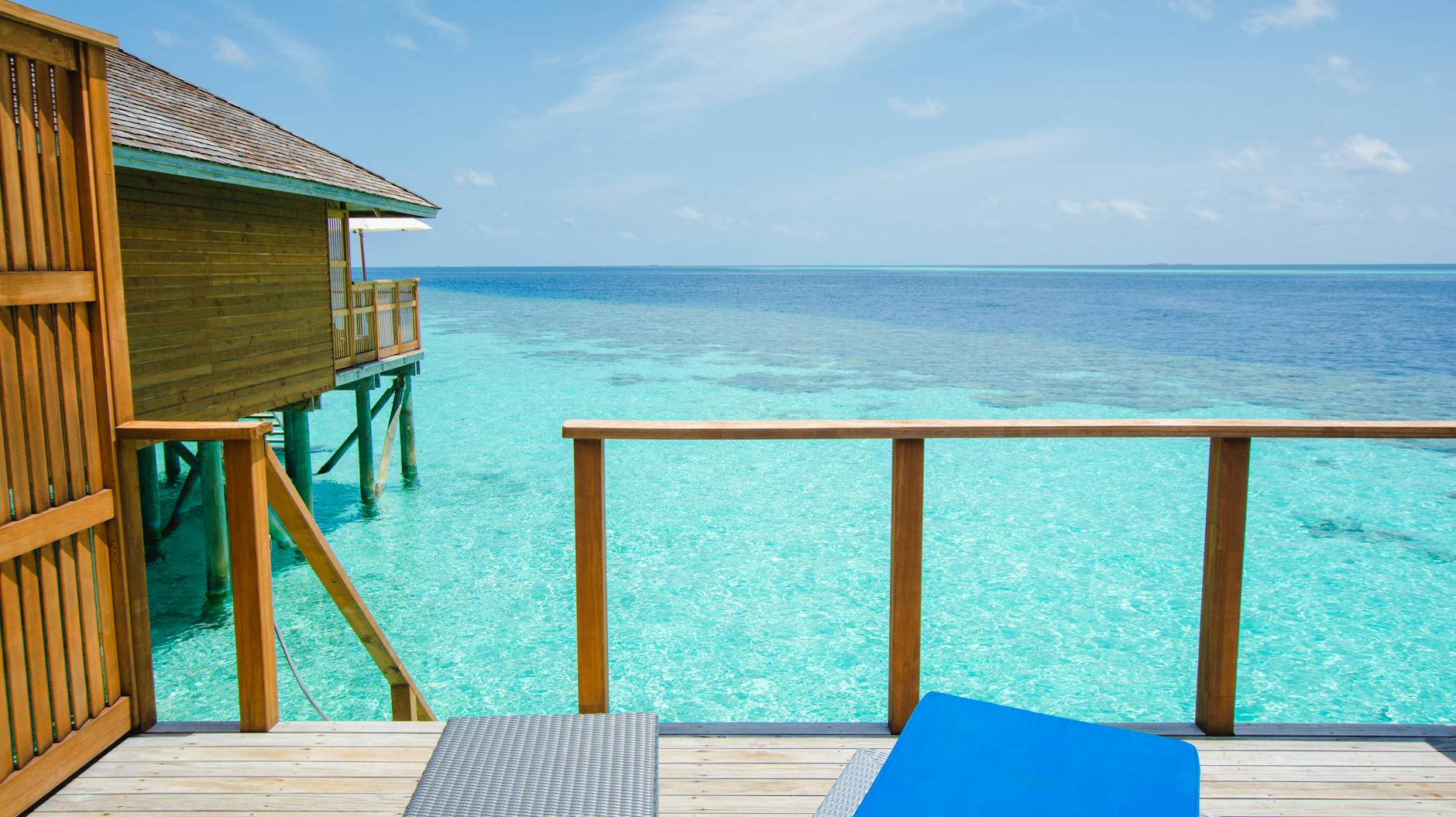
Quick Answer: Maldives vs Bali for Families
- The Maldives costs 3-5 times more than Bali for families in 2026 — expect $8,000-$15,000+ USD for a 7-night Maldives trip versus $2,500-$4,500 for Bali — and kids may get restless after day 3 due to limited activity variety.
- Maldives nightly rates: $300-$600 mid-range, $800-$1,500+ luxury. Plus seaplane transfers at $290-$700/person roundtrip
- Bali nightly rates: $60-$100 mid-range, $150-$200 luxury villas. Airport transfer under $50
- Choose Maldives if: your family loves water, your kids are content with beach/snorkel days, and budget isn't the primary concern
- Choose Bali if: your family wants daily adventures, cultural experiences, and more value per dollar
- The boredom factor: Maldives resorts are beautiful but activity-limited — honest parents report kids getting restless after 3-4 days
- 💡 The seaplane transfer with toddlers is either magical or terrifying — noisy small aircraft, strict weight limits, daylight-only operation. See the full transfer guide
- 🧮 Use our budget calculator to compare the real total for your family
The honest question isn't which destination is "better" — it's whether $3,000+ in savings would buy your family more happiness in Bali. See our verdict.
Side-by-Side Comparison
| Category | Maldives | Bali | Edge |
|---|---|---|---|
| Accommodation/night | $300-$1,500+ USD | $60-$200 USD | Edge: Bali |
| 7-night total (family of 4) | $8,000-$15,000+ | $2,500-$4,500 | Edge: Bali |
| Transfer from airport | Seaplane $290-$700/pp or speedboat | Car/taxi under $50 total | Edge: Bali |
| Snorkeling quality | House reefs, crystal clear | Requires boat trips to best spots | Edge: Maldives |
| Activity variety | Beach, snorkel, kids club | Temples, cooking, surfing, arts, nature | Edge: Bali |
| Cultural experiences | Limited | Rich — temples, dance, art, ceremonies | Edge: Bali |
| Parent relaxation | Exceptional — resort handles everything | Requires daily planning/driving | Edge: Maldives |
| Days before kids get restless | 3-5 days | 7-14 days | Edge: Bali |
| Flight from Sydney | ~10 hours (via Singapore/SL) | ~6.5 hours direct | Edge: Bali |
| Flight from Singapore | ~4.5 hours direct | ~2.5 hours direct | Edge: Bali |
The Price Gap Nobody Talks About Honestly
Let's put real numbers on this. A mid-range Maldives family resort — something with a kids club, decent house reef, and family bungalow — runs $300-$600 per night. That's the starting point. Luxury properties with overwater villas start at $800 and climb past $1,500/night. On top of that, add seaplane or speedboat transfers ($290-$700 per person roundtrip), plus meals (many resorts charge $50-$100+ per person per day for meal plans since there are no restaurants outside the resort).
A realistic 7-night Maldives budget for a family of four: $8,000-$15,000 USD. That's roughly AUD $12,200-$22,800 or S$10,700-$20,000. For some families, that's fine. For most, it's their entire annual holiday budget.
The same money in Bali buys 7 nights in a private pool villa ($150-$200/night = $1,050-$1,400), a private driver for every day ($35-$55/day = $245-$385), meals at restaurants and warungs ($40-$80/day = $280-$560), activities and entrance fees ($150-$400 total), and flights from Sydney (AUD $283+ return). Total: $2,500-$4,500 USD with change left over for shopping at Ubud Market.
The price difference — $5,000-$10,000+ — is real money. And it's the kind of money that could fund a second family holiday elsewhere. So is the Maldives worth it? Only if the specific experience it offers (world-class snorkeling, total luxury, zero planning) matters more to your family than variety and value.
Bali family pool villas on Expedia — filter by Seminyak, Ubud, or Nusa Dua to see which area lands closest to that $150-$200 nightly band.
The Boredom Question
Here's what many Maldives articles won't say: kids can get bored. Truly bored. After three days of swimming, snorkeling, building sand castles, and visiting the kids club, some children start asking "what are we doing today?" and there isn't a good new answer.
The Maldives experience is fundamentally repetitive. Wake up. Beach. Snorkel. Pool. Kids club. Dinner. Repeat. For adults, this is paradise. For kids aged 8-12 who are used to stimulation and variety, it can feel like being trapped on a very beautiful sandbank with nothing to discover.
Premium resorts try to counter this with marine biology programs, cooking classes, dolphin sunset cruises, and paddleboarding. Some even offer excursions to local fishing villages. But the activity menu is inherently smaller than what Bali offers, because you're on a tiny island surrounded by ocean.
Bali never has this problem. Tuesday is temples. Wednesday is a cooking class. Thursday is the Monkey Forest and a waterfall hike. Friday is water sports at Tanjung Benoa. Saturday is rice terrace walking in Ubud. Your kids will be tired, not bored — and there's a meaningful difference between those two states.
Bali family tours on Viator — the temple visits, cooking classes, and Ubud rice-terrace walks are the days kids actually remember.

Snorkeling: Where Maldives Truly Wins
If snorkeling is your family's main objective, the Maldives delivers something Bali can't match. Many resorts sit on house reefs where kids can wade in from the beach and see coral, reef fish, and sea turtles within metres. The water clarity is extraordinary — visibility of 20-30 metres is normal. Some resorts offer guided snorkeling sessions where marine biologists identify species with your kids.
Bali's snorkeling is good but requires logistics. The best spots (Amed, Menjangan Island, Nusa Penida) need drives or boat trips. The water around Bali's main tourist beaches is murkier than the Maldives. For easy, safe, resort-accessible snorkeling with children, the Maldives is superior.
But snorkeling only fills part of each day. The question is what your family does during the other 10 waking hours — and that's where Bali's variety advantage matters. For families who also want reef experiences in Bali, our Bali vs Phuket comparison covers the best snorkeling spots in Southeast Asia.
Browse Maldives house-reef family resorts on Expedia — confirm the reef is wadeable from the beach before you commit, since house-reef quality varies sharply by property.
Kids Club and Family Programs
Premium Maldives resorts invest heavily in kids clubs, partly because there's really nothing else for children to do. The better ones — Soneva Fushi, Niyama, Club Med Kani — run structured programs with marine biology lessons, turtle conservation activities, sandcastle competitions, and water sports instruction. Some resorts even have outdoor cinemas and teen zones.
At mid-range resorts, kids clubs tend to be simpler — supervised play areas with basic activities. They'll keep your 4-year-old occupied for a couple of hours, but they're not the all-day programs that premium properties offer. If kids club quality matters to your family, check the specific resort before booking.
Bali's kids club scene varies enormously. Large resorts in Nusa Dua (like Grand Hyatt and Hilton) offer proper programs. But many Bali villas and mid-range hotels provide babysitting rather than structured clubs. The trade-off is that Bali itself is the activity — you don't need a kids club when you're out exploring temples, riding bikes through rice paddies, or watching a traditional dance performance.
Best Time to Visit
The Maldives has a dry season from December to April and a wet season from May to November. The driest months (January-March) coincide with peak pricing. For Australian families, the December-January summer holidays hit the Maldives' best weather but also its most expensive period.
Bali's dry season runs April to October, covering both Australian July holidays and Singaporean June breaks. December-January (Bali's wet season) brings afternoon storms but is still workable — many families visit during Australian summer with no issues. Bali is less season-dependent than the Maldives for family trips.
Seaplane Transfers with Kids
This is the elephant in the room for Maldives family trips. Resorts beyond speedboat range from Male airport require a seaplane transfer, and with young children, this is either a magical adventure or a stressful ordeal.
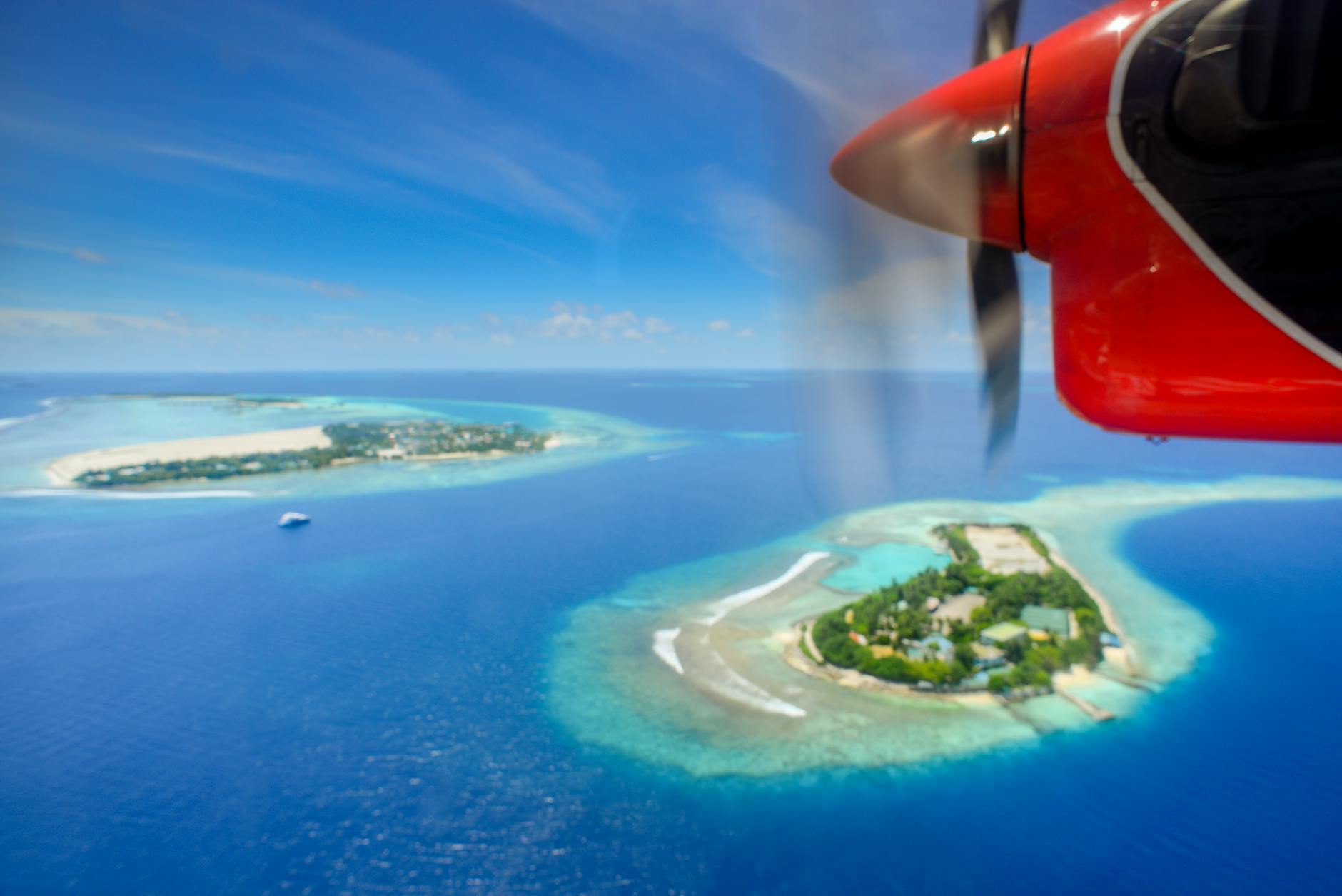
The positives: aerial views of the atolls are spectacular, and older kids (6+) tend to find the experience thrilling. The flight itself is usually 20-45 minutes.
The challenges: the aircraft are small, noisy Twin Otters — noise-cancelling headphones are essential for children (and adults). Seaplanes only operate during daylight hours, so late-arriving international flights may require an overnight in Male. Luggage limits are strict (usually 20-25kg per person). And there's no air conditioning on the ground — boarding in tropical heat with a crying toddler and overweight luggage is not the holiday start anyone imagines.
For families with children under 3, speedboat-access resorts (within 45-90 minutes of Male) are often the smarter choice. The speedboat ride is faster, runs at any hour, and doesn't have the same luggage restrictions. Many excellent family resorts (including Bandos, Kurumba, and Sun Island) are speedboat-accessible.
See Bali Ubud day trips on Viator — the no-transfer-stress alternative — most pickups are a 30-60 minute drive, not a daylight-only seaplane.
Getting There
Bali is closer and easier from both Australia and Singapore. From Sydney, Bali is 6.5 hours direct. The Maldives requires a connection (usually through Singapore or Colombo), totaling about 10-12 hours. From Singapore, Bali is 2.5 hours direct; the Maldives is about 4.5 hours direct.
The Maldives adds travel complexity beyond the flight. After landing in Male, families need a seaplane or speedboat to reach their resort — sometimes with overnight stays required if flights arrive after dark. Bali's airport-to-hotel transfer is a simple taxi ride, typically 30-60 minutes depending on your resort area. For Australian families during July school holidays, Bali's convenience advantage is significant.
Flight costs from Australia to the Maldives typically run AUD $1,200-$2,000 per person return, compared to AUD $283-$700 for Bali. For a family of four, that's potentially $2,000-$5,000 AUD saved on flights alone before you even consider accommodation. From Singapore, the gap narrows — Singapore to Male runs about S$600-$1,000 return, while Bali is S$155-$400.
Which Destination Fits Your Family?
- Water-obsessed families: Maldives. If your kids would snorkel for 6 hours straight and never ask for a theme park, the Maldives rewards that passion.
- Active, curious families: Bali. Temples, cooking classes, monkey forests, and rice terraces keep everyone engaged daily.
- Parents who need luxury rest: Maldives. The resort handles everything. Zero planning, zero driving, zero decisions.
- Budget-conscious families: Bali. Not even close. The $5,000-$10,000 savings buys a better holiday experience for most families.
- Kids under 5: Bali (easier logistics, more to see). Or Maldives with a speedboat-access resort if budget allows.
- Kids 6-12: Bali offers more daily variety. Maldives works if your kids are genuine water enthusiasts.
- Short trip (5 nights or less): Maldives works well at this length — the boredom factor hasn't kicked in yet.
The Verdict
Bali is the better family holiday for the vast majority of families in 2026 — it costs 3-5 times less, offers dramatically more activity variety, and keeps kids engaged for 7-14 days without boredom setting in. The Maldives is the better choice only for families who specifically prioritise world-class snorkeling, total luxury, and zero planning — and can absorb the $8,000-$15,000 price tag.
That's blunt, but it's honest. The Maldives is one of the most beautiful places on Earth. The snorkeling truly is that good. The feeling of waking up in an overwater villa while your kids spot reef sharks from the deck — it's unforgettable. But "unforgettable" needs to last more than three days, and many families find the experience has diminishing returns by mid-week.
Bali gives you stories, not just views. Your kids will remember the monkey that stole their banana. The cooking class where they made nasi goreng. The temple ceremony they watched at sunset. The rice terraces they walked through before breakfast. These are active memories — things your family did together, not just things you looked at.
For families who can truly afford both options, here's our strongest recommendation: do 4 nights in the Maldives (enough for the magic, before boredom hits) followed by 7 nights in Bali (for the adventure). You get the best of both worlds. But if it's one or the other? Bali. Almost every time.
For families exploring other luxury-versus-adventure comparisons, our Fiji vs Bali comparison offers a similar trade-off at a more accessible price point.
Frequently Asked Questions
Data Sources and Methodology
This comparison uses verified data from authoritative sources:
Official Sources
- Visit Maldives — Official tourism board
- Indonesia Tourism — Official tourism board
- Maldives Magazine — Resort and transfer pricing
Pricing Data
- Resort rates: TripAdvisor, Booking.com, resort websites (March 2026)
- Seaplane costs: Atoll Transfer, Maldives Magazine guide
- Bali costs: Kala.surf, BaliExploring cost guides
Parent Experiences
- TripAdvisor Maldives and Bali family forums
- DMC Quote family beach holiday comparison
- The Resorts Collection — Maldives family resort reviews