Best Caribbean Islands by Age: Toddlers to Teens (2026)
The right island depends on who's in the car seat. Here's a breakdown of the best Caribbean destinations for toddlers (0-3), kids (4-12), and teens (13-17) — so every kid gets the vacation that actually fits their age.
Quick Answer
The best Caribbean island depends on your kids' ages in 2026: Turks & Caicos (Grace Bay) for toddlers, Grand Cayman for ages 4-12, and St. Lucia for teens. For grandparents and multigenerational groups, Grand Cayman's flat Seven Mile Beach and gentle, shallow water make it the easiest pick for mixed generations.
- 👶 Toddlers (0-3): Turks & Caicos (Grace Bay) has the calmest, shallowest beach water in the Caribbean — it's the safest pick for babies and early walkers.
- 💡 Where most Caribbean family budgets slip: It isn't the flights or the resort brand. It's the island itself, because the same all-inclusive night runs $300-$600 for a family of four, so a value pick like Jamaica's FDR near $350-$500 versus the Bahamas' Atlantis past $450-$600 can swing one week by more than a thousand dollars. The age-by-age breakdown below shows which islands land where.
- 🧒 Kids (4-12): Grand Cayman offers Stingray City, turtle encounters, and submarine rides that keep school-age kids engaged all week.
- 🏄 Teens (13-17): St. Lucia delivers ziplining, Gros Piton hiking, and waterfall swims — the kind of stuff teens actually post about.
- 👨👩👧👦 Mixed ages: Turks & Caicos works across all age groups. Jamaica's FDR resort handles toddler-plus-older-sibling combos with included nannies.
- 👵 Best for grandparents: Grand Cayman, Turks & Caicos, and Aruba win on flat, calm beaches, short direct flights, and walkable resort strips — the mix that suits three generations at once.
- 🚫 Skip if: Your crew is all toddlers and you're eyeing Dominica or the Bahamas' Atlantis — Dominica has almost no sandy beaches, and Atlantis's resort fees push a family week past $450-$600 a night.
- 🛂 No passport needed: Puerto Rico and the US Virgin Islands don't require passports for US families.
- 💵 Budget range: All-inclusive resorts run $300-$600/night for a family of four in 2026.
- 🌀 Timing: December-April is peak season. Hurricane season runs June-November — travel insurance recommended.
Picking a Caribbean island for a family trip sounds simple until you realize a two-year-old's idea of paradise (zero waves, warm sand, a pool close by) looks nothing like what a fifteen-year-old wants (surfing, ziplines, anything Instagram-worthy). The wrong match means a frustrated kid and a stressed parent. The right one? A vacation everyone actually remembers.
This guide breaks down the best Caribbean islands by three age brackets — toddlers, kids, and teens — with specific resorts, activities, and costs for each. Whether you've got a crawler or a driver's-permit holder (or both), there's an island here that fits. Check our full Caribbean family vacation planning guide for logistics like flights, packing, and travel insurance once you've picked your island.
Best Caribbean Islands for Toddlers (Ages 0-3)
Toddler trips aren't about excursions — they're about survival with a view. The priorities are dead simple: calm water, short flights, easy food, and a resort that won't punish you for nap schedules. These five islands check every box.
Turks & Caicos (Grace Bay)
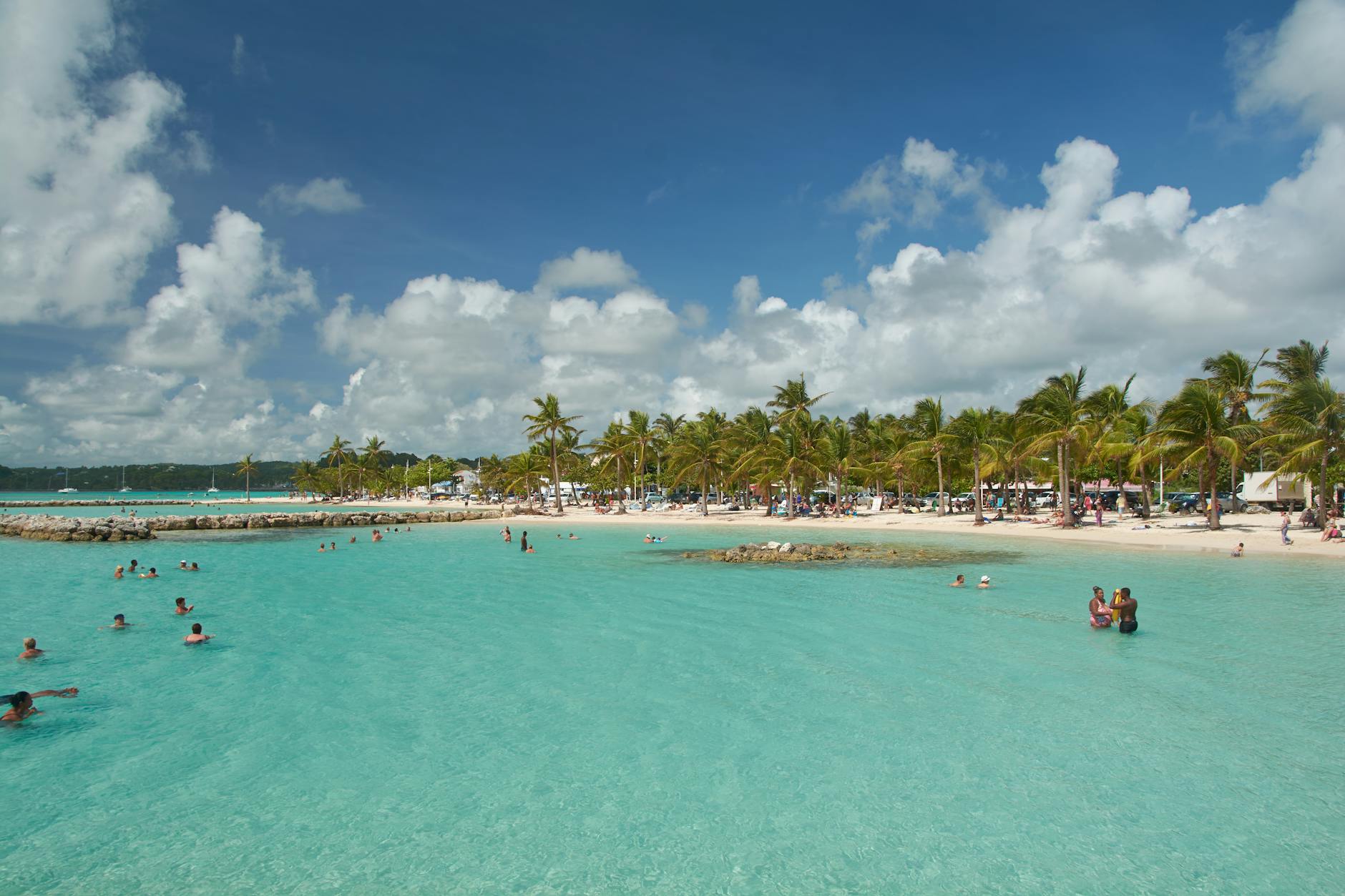
Grace Bay is consistently ranked the best beach in the world, and for toddlers it's practically purpose-built. The water stays shallow and calm for dozens of yards out from shore — no sudden drop-offs, no rough waves. Little ones can sit in ankle-deep warm water and dig in powdery sand without parents white-knuckling it the entire time.
Luxury resorts along Grace Bay offer baby-friendly amenities like cribs, high chairs, baby monitors, and shaded pool areas. The island itself is compact enough that you won't spend the trip in a car. Direct flights from major US cities (Miami, New York, Charlotte, Atlanta) keep travel time manageable — usually under four hours.
💡 Toddler Tip
Book a suite or one-bedroom condo rather than a standard hotel room. Toddlers crash early, and parents need somewhere to exist after 7 PM that isn't pitch-dark silence.
Grace Bay family resorts on Expedia — filter for a suite or one-bedroom with a crib so the kids crash by 7 PM and you still have a room to sit in.
Saint Martin
Saint Martin packs 37 beaches into 34 square miles. That's a lot of options for finding a calm, uncrowded stretch that works for a toddler's attention span (and meltdown radius). The French side offers affordable villa rentals with kitchens — a serious advantage when you're dealing with picky eaters and formula prep.
Mullet Bay and Friar's Bay on the Dutch and French sides respectively are popular toddler picks. The dual-nationality feel of the island means good food options on both sides, from French bakeries to beachside burger spots.
Browse Saint Martin family villas on Expedia — villa rentals on the French side run $300-$500 a night with kitchens, useful for formula prep and picky eaters, near Mullet Bay and Friar's Bay.
Grand Cayman
Seven Mile Beach runs along Grand Cayman's western coast with gentle, predictable water. Beachfront condos are plentiful and often cheaper than resort rooms — plus they come with kitchens and laundry (a.k.a. the two most important amenities for toddler parents, honestly). The water at the public beach areas stays shallow enough for wading, and the sand is soft enough to avoid the "grain in every crevice" problem that plagues rockier islands.
Jamaica (Franklyn D. Resort)
Here's the thing about Jamaica's FDR: every family gets a personal vacation nanny. Not a kids' club drop-off. An actual dedicated person who's assigned to your family for the duration of the stay. They'll watch your toddler during meals, take them to the beach while you nap, or entertain them poolside while you eat dinner at a normal pace for once. Kids under six stay free.
The resort sits on Runaway Bay — calmer water than Montego Bay's busier beaches. It's all-inclusive, so there's no stress about meal costs adding up. For parents of toddlers who just want a few hours of actual relaxation, FDR is hard to beat.
See Franklyn D Resort availability on Expedia — all-inclusive nights here run roughly $350-$500, and kids under six stay free with the vacation nanny included.
Bonaire
Bonaire flies under the radar for family travel, which is part of its appeal. It's a compact island with calm, shallow water at Sorobon Beach and Lac Bay — both protected by reefs that keep waves almost nonexistent. Flamingos wander the salt flats (toddlers love this, predictably). Direct flights run from Miami, Atlanta, Newark, and Houston, making access easier than you'd expect for a lesser-known island.

Best Caribbean Islands for Kids (Ages 4-12)
Once kids can swim, follow instructions, and actually remember the trip, the destination options open up. This age group wants stuff to do — animals to touch, reefs to snorkel, water parks to conquer. Beaches alone won't cut it anymore. These four islands deliver genuine activities, not just "sit on the sand" dressed up as a kids' program.
Turks & Caicos
Turks & Caicos earns a second appearance here because it works for multiple ages. For the 4-12 crowd, the draw shifts from "calm water for wading" to snorkeling along the reef just off Grace Bay. Most resort-based kids' clubs run programs for this age group, including guided snorkel trips, nature walks, and beach games. The reef system is close to shore, which means even beginner snorkelers don't need a boat trip to see tropical fish and sea turtles.
Grand Cayman
Grand Cayman is basically a theme park disguised as an island for this age bracket. Stingray City is the headliner — kids wade into waist-deep water in a natural sandbar and interact with southern stingrays. It's a controlled environment, not a scuba excursion, so even cautious kids tend to warm up fast.
The Cayman Turtle Centre lets kids hold baby sea turtles (there's a reason it's one of the most-reviewed family attractions in the Caribbean). Atlantis Submarine tours take passengers 100 feet underwater in an actual submarine — no scuba certification needed, no swimming required. It's the kind of thing a seven-year-old will talk about for months.
Grand Cayman family excursions on Viator — Stingray City sandbar trips and the Atlantis submarine sell out on cruise-ship days, so book a morning slot ahead.
Bahamas (Atlantis Resort, Nassau)
Atlantis on Paradise Island is its own category. The 141-acre Aquaventure water park includes river rapids rides, water slides, and a mile-long lazy river. The marine habitat houses over 50,000 sea animals in open-air lagoons and walk-through tunnels. Is it a "Caribbean island experience" in the traditional sense? Not really. Is it exactly what a lot of 6-to-10-year-olds want? Absolutely.
The downside: Atlantis is expensive, and the resort fee structure means costs stack up fast. But for a family trip built around keeping kids occupied, it delivers more activities per square foot than anywhere else in the region.
Compare Atlantis Paradise Island room tiers on Expedia — compare the room tiers before you commit, since the resort-fee structure pushes the all-in nightly cost past $450-$600.
Aruba
Aruba's main selling point for families is consistency. It sits outside the hurricane belt, which means trip-cancellation anxiety drops significantly. Eagle Beach has calm, clear water with a gentle slope — strong enough swimmers can snorkel while younger ones wade safely. Family-focused resorts along the beach strip offer kids' programs and are walkable to restaurants and shops.
The weather stays dry and sunny almost year-round. That matters when you're booking six months out and don't want to play the "will our vacation get rained out?" game. For families who value predictability (and honestly, who doesn't when kids are involved), Aruba is a solid bet.
Eagle Beach family resorts on Expedia — the beach-strip properties sit walkable to restaurants and run about $350-$500 a night, outside the hurricane belt.
Best Caribbean Islands for Teens (Ages 13-17)
Teenagers don't want to be "entertained." They want to do things that feel real — physical challenges, cultural experiences, stuff they can brag about to friends. A pool and a kids' club won't hold their attention. These five islands give teens actual adventure, not watered-down versions of adult activities.
St. Lucia
St. Lucia is the standout for teens who want adrenaline. Ziplining through the rainforest canopy, hiking Gros Piton (a steep 2,600-foot volcanic peak with serious bragging rights), deep-sea fishing for marlin and tuna, and swimming beneath jungle waterfalls — it's a greatest-hits list of activities that teens particularly enjoy.
The Piton hike takes 3-5 hours round trip and requires decent fitness, which makes it feel like an accomplishment rather than a tourist checklist item. Sulphur Springs — the world's only drive-in volcano — adds a weirdness factor that even the most jaded teenager can appreciate. And the snorkeling around Anse Chastanet is some of the best in the Caribbean, right off the beach.
St. Lucia family adventure tours on Viator — the canopy ziplines, Gros Piton guided climb, and Sulphur Springs drive-in volcano all run as half-day guided trips teens actually rate.
Dominican Republic
The DR packs more action sports per dollar than almost any other Caribbean destination. Cabarete on the north coast is a legitimate surfing and kiteboarding hub — not a "learn to surf in a pool" resort experience, but actual ocean waves and real instruction. Windsurfing, ATV off-roading through sugar cane fields, and river rafting on the Yaque del Norte fill out the activity menu.
For families splitting time between beach relaxation and teen activities, Punta Cana's all-inclusive resorts make a good base. Parents can lounge while teens hit the water sports center.
Puerto Rico
Puerto Rico combines adventure with culture in a way that other islands don't quite match. Kayaking through bioluminescent bays at night (Mosquito Bay in Vieques and Laguna Grande in Fajardo both glow blue from dinoflagellate organisms), exploring Old San Juan's colonial architecture, surfing in Rincon, and hiking in El Yunque National Forest — there's enough variety here to keep a teen engaged for a week without repeating an activity.
The no-passport requirement is a real advantage for US families. No waiting for passport renewals, no panicking about lost documents at the airport. Just book and go. Cell service works normally too (it's a US territory), which matters to teens more than most parents want to admit.
Check bioluminescent bay kayak tours on Viator — Mosquito Bay in Vieques and Laguna Grande in Fajardo are the two glowing bays worth booking ahead for, and Puerto Rico needs no passport for US families.
US Virgin Islands (St. John)
Two-thirds of St. John is national park land, which means the beaches are uncrowded and the snorkeling is protected. Trunk Bay has an underwater snorkeling trail marked with explanatory signs on the ocean floor — it's like a museum exhibit, but you're floating over it. For teens who are strong swimmers, the reef systems here are among the best walk-in snorkeling spots in the entire Caribbean.
Like Puerto Rico, no passport is needed. The island has a laid-back, rugged feel that appeals to teens who'd roll their eyes at a manicured resort beach. Hiking trails through tropical forest to secluded bays adds an exploration element that structured resort programs can't replicate.
Dominica
Dominica is the "Nature Island" — and it earns the name. This isn't a beach-resort destination. It's waterfalls, volcanic hot springs, canyoning through river gorges, and hiking through some of the most untouched rainforest in the Caribbean. The Boiling Lake hike (6+ hours round trip) is a genuine physical challenge that rewards with an otherworldly view of a volcanic lake.
Fair warning: Dominica has almost no sandy beaches and limited resort infrastructure. It's best for teens who'd pick a National Geographic experience over a pool day. Families who want both beach time and adventure should consider pairing a few days in Dominica with time on a neighboring island.
Caribbean Islands at a Glance: Age Comparison
| Island | Best Age | Top Activity | Passport? | Budget/Night |
|---|---|---|---|---|
| Turks & Caicos | All ages | Grace Bay Beach, snorkeling | Yes | $400-$600 |
| Saint Martin | 0-3 | 37 beaches, French side villas | Yes | $300-$500 |
| Grand Cayman | 0-12 | Stingray City, turtle farm | Yes | $350-$550 |
| Jamaica (FDR) | 0-6 | Personal vacation nanny | Yes | $350-$500 |
| Bonaire | 0-3 | Flamingos, calm shallows | Yes | $300-$450 |
| Bahamas (Atlantis) | 4-12 | Aquaventure water park | Yes | $450-$600+ |
| Aruba | 4-12 | Eagle Beach, no hurricanes | Yes | $350-$500 |
| St. Lucia | 13-17 | Ziplining, Piton hike | Yes | $350-$550 |
| Dominican Republic | 13-17 | Surfing, kiteboarding | Yes | $300-$450 |
| Puerto Rico | 13-17 | Bioluminescent bays | No (US) | $300-$500 |
| USVI (St. John) | 13-17 | Underwater snorkel trail | No (US) | $300-$500 |
| Dominica | 13-17 | Canyoning, hot springs | Yes | $250-$400 |
Best Islands for Mixed-Age Families
Got a toddler and a teenager? A kindergartner and a tween? Mixed-age families face the hardest Caribbean decision because no single island is perfect for everyone at the same time. But some come close.
Turks & Caicos: The All-Ages Default
Turks & Caicos appears in all three age sections above for a reason. Grace Bay's calm shallows keep toddlers safe while the reef offshore gives older kids and teens quality snorkeling. Resort kids' clubs handle the 4-12 gap, and teens can paddleboard, kayak, or try kiteboarding without leaving the beach strip. It's the closest thing to a one-size-fits-all Caribbean destination — with the caveat that it sits at the higher end of the budget spectrum.
Jamaica FDR: The Nanny Advantage
When you have a toddler and an older child, the vacation math gets brutal. Someone always has to stay behind with the little one while the other parent does the "fun" activity with the older kid. Jamaica's FDR solves this by assigning a personal vacation nanny to each family. Parents can take their eight-year-old snorkeling or on an excursion while the nanny watches the toddler. It's the only resort model in the Caribbean that addresses the mixed-age logistics problem.
🎯 Mixed-Age Strategy
For families with kids more than 5 years apart, consider splitting the trip: two beach/pool days for the little ones, two excursion days where older kids do activities while younger siblings stay with resort childcare or a nanny. Our itinerary builder can help plan day-by-day schedules that balance both age groups.
Best Caribbean Islands for Grandparents and Multigenerational Trips
When three generations travel together, the island has to work for a toddler and a grandparent on the same stretch of sand. The calmest, flattest, easiest-to-reach islands in this guide are the ones that manage it.
Grand Cayman is the top pick. Seven Mile Beach is flat with gentle, predictable water and a slow slope, so grandparents can wade in alongside the little ones without fighting waves or drop-offs. Beachfront condos sit right on the sand, which cuts the long walks and stairs that wear people out by mid-afternoon.
Turks & Caicos is the multigenerational default, for the same reason it works across every age bracket above: Grace Bay's shallow, calm water suits toddlers and grandparents at the same time, the island is compact enough to skip long drives, and direct flights from Miami, New York, Charlotte, and Atlanta keep travel under four hours.
Aruba rounds out the list. It sits outside the hurricane belt with dry, dependable weather, Eagle Beach has a gentle slope, and the beach strip is walkable to restaurants and shops — so grandparents who'd rather stroll to dinner than rent a car can do exactly that.
Traveling with a toddler and grandparents who want a real break? Jamaica's Franklyn D. Resort assigns a personal vacation nanny to every family, which lifts the childcare load off grandparents who came to relax, not babysit.
Safest and Prettiest Caribbean Islands
"Safe" for a family beach trip usually comes down to calm, shallow water and low storm risk — not crime stats. Here's how the standouts in this guide stack up on water conditions and the beach they're known for.
| Island | Safety notes (water & weather) | Signature beach |
|---|---|---|
| Turks & Caicos | Shallow, calm water for dozens of yards out; no sudden drop-offs or rough waves | Grace Bay (ranked the best beach in the world) |
| Grand Cayman | Gentle, predictable water; Stingray City is a controlled, waist-deep sandbar | Seven Mile Beach |
| Aruba | Outside the hurricane belt, so far fewer weather cancellations | Eagle Beach |
| Bonaire | Reef-protected shallows keep waves almost nonexistent | Sorobon Beach / Lac Bay |
| St. Lucia | Most dramatic scenery; calm snorkeling right off the beach | Anse Chastanet |
Caribbean Islands to Skip With Young Kids (and Why)
None of these are bad islands. They're just a poor match for a trip with toddlers or early-elementary kids — it's a fit problem, not a safety one.
Dominica. The "Nature Island" is built around canyoning, volcanic hot springs, and the six-hour Boiling Lake hike, with almost no sandy beaches and limited resort infrastructure. It's a standout teen adventure and a hard sell for a five-year-old.
Nightlife-focused islands and party strips. Places known mainly for late-night bars and clubs give young kids little to do during the day. A calm-beach resort island is the easier call.
Remote islands that need two flights and a transfer. Multi-leg routing plus a long ground or ferry transfer turns travel day into a meltdown with toddlers in tow. Save the harder-to-reach islands for when the kids are older.
Practical Tips for Caribbean Family Travel
Passport & Documentation
US families don't need passports for Puerto Rico or the US Virgin Islands — they're US territories. Every other Caribbean island requires valid passports for all travelers, including infants and toddlers. Passport processing times fluctuate, so apply at least 3-4 months before your trip. Expedited processing is available but costs extra and isn't guaranteed during peak seasons.
Hurricane Season & Weather
Hurricane season runs June through November. The peak risk months are August through October. Travel insurance that covers weather-related cancellations is strongly recommended for any Caribbean trip booked during these months. Islands like Aruba, Bonaire, and Curacao (the "ABC islands") sit below the hurricane belt and see significantly fewer storms.
Budget Planning
All-inclusive resorts in the Caribbean range from $300-$600 per night for a family of four in 2026. That price typically includes meals, drinks, basic water sports, and kids' club access. It doesn't include airfare, excursions, tips, or premium activities. A realistic one-week budget for a family of four runs $4,000-$8,000 total depending on the island and resort tier. The Dominican Republic and Jamaica tend toward the lower end; Turks & Caicos and the Bahamas sit higher.
Compare resort pricing against villa rentals before booking — for longer stays or larger groups, a villa with a kitchen can cut food costs significantly. See our Cancun all-inclusive guide for comparison pricing at Mexican Caribbean resorts, which often undercut island destinations by 20-30%.
Flight Tips
Direct flights from Miami, Fort Lauderdale, New York (JFK), Atlanta, and Charlotte reach most Caribbean islands in 2-4 hours. Book morning flights when traveling with young kids — delays compound throughout the day, and afternoon flights are more likely to push bedtime into meltdown territory. Most major airlines fly to the bigger islands; smaller destinations like Bonaire and Dominica may require a connection through San Juan or Miami.
Reef-Safe Sunscreen Required
Several Caribbean islands (including Bonaire, Aruba, and the USVI) have banned sunscreens containing oxybenzone and octinoxate to protect coral reefs. Pack mineral-based (zinc oxide) sunscreen to avoid fines and help preserve the reefs your kids will snorkel over.
Frequently Asked Questions
Turks and Caicos is the best Caribbean island for toddlers in 2026, thanks to Grace Bay Beach. The water stays shallow and calm for dozens of yards out from shore, with no sudden drop-offs or rough waves, so crawlers and early walkers can splash safely in ankle-deep water. Luxury resorts along Grace Bay add toddler-friendly extras like cribs, high chairs, baby monitors, and shaded pool areas, and direct flights from Miami, New York, Charlotte, and Atlanta keep travel time under four hours.
Grand Cayman has the best activities for kids ages 4-12 of any Caribbean island in 2026, led by Stingray City, the Cayman Turtle Centre, and Atlantis submarine tours that go 100 feet underwater with no scuba certification needed. At Stingray City, kids wade into a waist-deep natural sandbar to meet southern stingrays in a controlled setting. For a water-park-style trip, the Bahamas' Atlantis resort on Paradise Island has a 141-acre Aquaventure park and marine habitats holding over 50,000 sea animals.
St. Lucia is the top Caribbean destination for teenagers, with ziplining through rainforest canopy, hiking Gros Piton (2,600 feet), deep-sea fishing, and swimming beneath waterfalls. The Dominican Republic adds surfing and kiteboarding in Cabarete, while Puerto Rico has bioluminescent bay kayaking and El Yunque rainforest hikes with no passport required for US families.
Turks and Caicos is widely considered the prettiest and safest Caribbean island for families in 2026, anchored by Grace Bay, which is consistently ranked the best beach in the world. Its water stays shallow and calm for dozens of yards from shore with no sudden drop-offs, which makes it as safe for young swimmers as it is scenic. Families who want more dramatic scenery can look to St. Lucia, where Gros Piton (2,600 feet) and rainforest waterfalls give the islands their most striking backdrop.
Turks and Caicos is the best Caribbean island for mixed-age families in 2026, with calm Grace Bay beaches for toddlers and reef snorkeling and water sports for older kids and teens. Jamaica's Franklyn D. Resort is built specifically for mixed ages, assigning a personal vacation nanny to each family so parents can take older kids on excursions while toddlers are cared for, and kids under six stay free.
Grand Cayman is the best Caribbean island for grandparents and seniors in 2026, thanks to the flat, gentle water of Seven Mile Beach and beachfront resorts that avoid long walks and rough terrain. Turks and Caicos works well for multigenerational groups because calm Grace Bay suits toddlers and grandparents at the same time, and Aruba adds dry, hurricane-free weather with a walkable beach strip of restaurants and shops.
US travelers do not need a passport for Puerto Rico or the US Virgin Islands, because both are US territories. Every other Caribbean island requires a valid passport for every family member, including infants. Families should apply at least 3-4 months before the trip to avoid processing delays.
December through April is the best time to visit the Caribbean with kids, offering the driest weather and calmest seas across most islands. Hurricane season runs June through November, with peak risk in August through October, so travel insurance that covers weather cancellations is strongly recommended for summer trips. Shoulder months like May and early June bring lower prices with still-decent weather.
A Caribbean family vacation costs $4,000-$8,000 total for a one-week trip for a family of four in 2026, depending on the island and resort level. All-inclusive resorts run $300-$600 per night across the region, not including airfare. The Dominican Republic and Jamaica offer the lowest price points, while Turks and Caicos and the Bahamas' Atlantis sit at the higher end.
Yes, $5,000 is enough for a one-week Caribbean family vacation for a family of four in 2026, as long as families choose a lower-priced island like Jamaica or the Dominican Republic. A typical week runs $4,000-$8,000 total; a value all-inclusive such as Jamaica's Franklyn D. Resort costs roughly $350-$500 a night with kids under six free, which can keep lodging, meals, and airfare within a $5,000 budget. Higher-end islands like Turks and Caicos and the Bahamas' Atlantis run $450-$600 a night and push the same week past $5,000.
📊 Sources & Methodology
Island recommendations are based on verified resort data, family travel research from Mango Tree Travel, US News 2026 Caribbean family vacation rankings, and Ciao Bambino's age-specific guides. Pricing reflects March 2026 rates for a family of four at mid-range to upper-tier resorts. All activity descriptions reference current 2026 offerings confirmed by resort and tourism board websites.