Boston Neighborhoods: Best Areas for Families (2026)
All 23 neighborhoods explained, ranked for families on rent, safety, and walkability, plus the areas to skip
Quick Answer
- Boston has 23 official neighborhoods, and for families the three strongest bases are Back Bay, Beacon Hill, and the North End, all safe, walkable areas within a mile of Boston Common. Beacon Hill is the nicest and priciest, while Jamaica Plain is the best-value family neighborhood at roughly half the rent.
- 🏠 Nicest overall: Beacon Hill, with gas-lit streets and Federal-era brick row houses beside the Public Garden
- 💰 Best value for families: Jamaica Plain, with rent near $2,400 to $2,700 for a one-bedroom (Zumper, 2026), the Arnold Arboretum, and Orange Line access
- 🛡️ Safest picks: Beacon Hill, Back Bay, West Roxbury, and Charlestown all report low crime
- 🚇 Getting around: kids 11 and under ride the MBTA subway free ($2.40 per adult ride), so a car is optional
- ⚠️ Areas to skip as a home base: Mattapan, North Dorchester, and the Mass and Cass stretch near Newmarket
- 🧮 Run your own numbers with our family budget calculator to price a Boston stay by neighborhood
Here's the thing most Boston guides get wrong. They hand you a list of 23 names and a color-coded map, then leave you to figure out which ones actually work with a stroller, a school-age kid, or a $70,000 salary. The neighborhood you pick moves your rent by more than $1,000 a month and your daily transit time by 40 minutes. So which areas earn the hype, and which reputation is a decade out of date? The rankings below sort it out, and the budget tool lets you price your own pick.
How Many Neighborhoods Boston Has, and All 23 Mapped
Boston is commonly divided into 23 official neighborhoods, a count the City of Boston recognizes even though a few sources split or merge one or two. For a city of just 49 square miles, that's a lot of distinct character packed close together. The fastest way to read the map is by region, since neighborhoods that sit near each other tend to share transit lines, rent levels, and vibe.
| Area of the city | Neighborhoods |
|---|---|
| Downtown core | Beacon Hill, Back Bay, Bay Village, Chinatown, Downtown, North End, West End, South End |
| Waterfront and harbor | Seaport (South Boston Waterfront), South Boston, Charlestown, East Boston |
| Fenway and Longwood | Fenway-Kenmore, Mission Hill |
| Southwest corridor | Jamaica Plain, Roslindale, West Roxbury, Hyde Park |
| Dorchester and Roxbury belt | Dorchester, Roxbury, Mattapan |
| Allston-Brighton | Allston, Brighton |
That grid is the whole city in one glance. The official City of Boston neighborhood map (linked in the sources below) shows the exact borders, which matter because a single street can separate a $3,500 block from a $2,200 one. If you're visiting rather than moving, you'll spend nearly all your time in the Downtown core and Waterfront rows.
Best Boston Neighborhoods for Families, Ranked
Every AI answer and glossy travel list names the same three or four neighborhoods without telling you what they cost or how they differ for a family. So here's the ranking with real 2026 rent, walkability, and the one thing each place is genuinely best at. Rents reflect median one-bedroom asking prices reported by Zumper and Apartments.com for 2026, and Walk Scores come from Walk Score's Boston index.
| Neighborhood | Median 1BR rent | Walk Score | Best for |
|---|---|---|---|
| Back Bay | $3,200-$3,700 | 97 | Overall family pick, parks and shopping |
| Beacon Hill | $3,000-$3,500 | 98 | Nicest and safest, history on the doorstep |
| North End | $2,800-$3,300 | 99 | Food and the Freedom Trail |
| Jamaica Plain | $2,400-$2,700 | 85 | Best value, green space, community feel |
| South End | $3,000-$3,400 | 96 | Playgrounds, brownstones, dining |
| Seaport | $3,400-$3,900 | 90 | Kids under 8, Children's Museum |
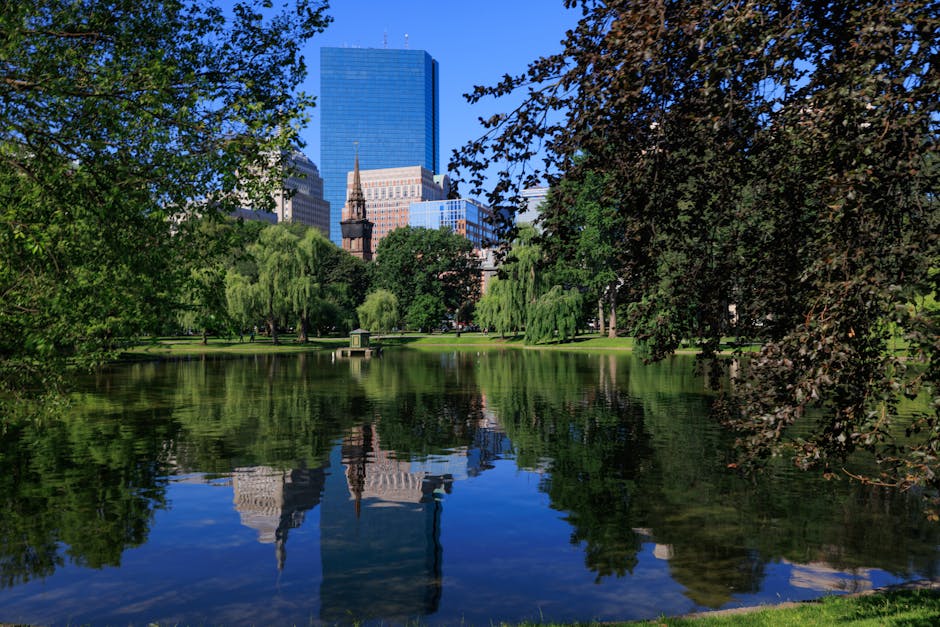
Winner for most families: Back Bay. It's walkable to nearly everything kids care about, it feels safe after dark, and the Boston Public Garden with its Swan Boats and Make Way for Ducklings statues sits right at the edge. Newbury Street handles the ice-cream-and-bookshop breaks, and the Freedom Trail starts a 15-minute walk away.
Jamaica Plain, the family-value pick nobody markets
This is where our take splits from the glossy lists. Jamaica Plain (locals just say JP) gives a family more for its money than anywhere on the peninsula. Rent runs close to $2,400 to $2,700 for a one-bedroom, roughly a third less than Back Bay, and you get Jamaica Pond for stroller loops, the free Arnold Arboretum for weekend runs, and a genuinely diverse, kid-friendly main street. The trade is a longer Orange Line ride into the historic core. Worth it? For a longer stay or an actual move, absolutely.
Seaport for the under-8 crowd
The Seaport is Boston's newest district, and for families with young kids it has one killer feature: the Boston Children's Museum at 308 Congress Street, one of the oldest and best in the country. Being steps away means you can pop in for two hours, head back for a nap, and return. That flexibility is gold with toddlers, even if the rent tops the chart.
Traveling rather than moving? Our Boston family travel guide covers attractions and day trips in detail once you've picked a base.
Best Boston Neighborhoods for Young Professionals
Different life stage, different map. If you're in your twenties and choosing where to live, the family ranking flips almost upside down. The winners here trade playgrounds for nightlife, gyms, and a shorter commute to the Financial District or the Seaport office towers.
- Seaport and Fort Point: newest apartments, waterfront bars, walk to the tech and finance offices. Priciest option, but no commute.
- South End: brownstone charm, the city's best restaurant row, and a strong LGBTQ community. A long-running favorite for young couples.
- South Boston (Southie): the classic first-apartment zone. Triple-deckers, a young crowd, Red Line and bus access, and rents a notch below Back Bay.
- Allston and Brighton: the budget end. Student-heavy, loud on weekends, but the cheapest one-bedrooms inside the city (often $2,000 to $2,500) with quick Green Line access.
- Jamaica Plain: for the twenty-something who wants bars and green space over a downtown address, at a rent that leaves money for the weekend.
Southie deserves the callout it gets on Reddit and every young-professional thread. It's changed fast, the waterfront is walkable, and you can still find a roommate situation that keeps rent reasonable. Just know the parking is brutal and the summer weekends are loud.
Safest Boston Neighborhoods and the Areas to Avoid
Let's answer the question everyone types but few guides handle honestly. Boston ranks among the safer large US cities for visitors, and the neighborhoods tourists and families use are very safe. The safest bets, by reported crime and by feel, are Beacon Hill, Back Bay, West Roxbury, Charlestown, and much of Jamaica Plain.
Now the harder half. The areas with the highest reported crime, per Boston Police District data, are parts of Roxbury, Mattapan, and North Dorchester. These are large, mostly residential neighborhoods with safe, tight-knit streets right next to blocks that struggle, so a whole-neighborhood label misses the reality. The one spot even locals steer clear of is the Massachusetts Avenue and Melnea Cass Boulevard corridor near Newmarket, widely called Mass and Cass, where the city's opioid crisis is concentrated.
Areas to skip as a home base
For a visit, don't book a stay in Mattapan, deep Dorchester, or near Mass and Cass. Not because a walk-through is dangerous, but because they're far from the sights, thin on hotels, and short on the subway access that makes a Boston trip easy. Base yourself in the Downtown core instead.
What's genuinely dated is the old reputation of Jamaica Plain and the South End as rough. Both gentrified years ago and now sit among the priciest zip codes in the city. If a relative warns you off them based on a memory from the 1990s, that memory is stale.
Where Boston's Wealth Lives, the Richest Neighborhoods
Curious where the millionaires are? They're concentrated in three places. Beacon Hill leads, and its Louisburg Square, a private cobblestone oval, holds some of the most expensive addresses in the country, with row houses that trade well past $10 million. Back Bay's brownstones along Commonwealth Avenue run a close second. The Seaport rounds out the trio, where glass condo towers list penthouses from $3 million to $5 million and up.
Push outside the city line and old money spreads into the suburbs, where families with the budget for space and schools land in Weston, Brookline, and Wellesley. Inside Boston proper, though, historic Beacon Hill remains the address that signals you've arrived.
Cost of Living: Is $70,000 Enough to Live in Boston?
Short answer: on your own, it's a squeeze. A $70,000 salary lands around $4,500 a month after taxes, and the median Boston one-bedroom runs about $3,000 (Zumper, 2026). That leaves roughly $1,500 for everything else in one of the pricier metros in the country. Here's how the math shakes out by neighborhood tier.
| Tier | Sample neighborhoods | Median 1BR rent | Feasible on $70k solo? |
|---|---|---|---|
| Premium | Back Bay, Beacon Hill, Seaport | $3,200-$3,900 | No, roommate needed |
| Mid | South End, Jamaica Plain, Charlestown | $2,600-$3,000 | Very tight |
| Value | Hyde Park, Roslindale, Mattapan | $1,800-$2,400 | Yes, doable |
Sources: Zumper and Apartments.com median one-bedroom asking rents, 2026.
So $70,000 works comfortably with a roommate anywhere, or solo in a value neighborhood like Hyde Park, Roslindale, or Mattapan. For a family of four, that same salary stretches thin without a second income, which is why so many Boston families end up in the outer neighborhoods or the commuter-rail suburbs. Want to sanity-check a trip or a move against your own numbers? The budget calculator handles it.
Historic Boston Neighborhoods Worth Walking
For visitors, three neighborhoods carry most of the history. The North End is Boston's oldest residential area, home to Paul Revere's house and the Old North Church, with the Freedom Trail running straight through and cannoli at Mike's Pastry as the reward. Beacon Hill delivers the postcard: gas lamps, brick sidewalks, and Acorn Street, the most photographed lane in the city. Charlestown adds Bunker Hill and the USS Constitution, the oldest commissioned warship afloat.
These are also the neighborhoods to visit rather than base a young family in, since the cobblestones and narrow curbs fight strollers. Charming to walk, less charming to push a double-wide over. Our Boston 3-day family itinerary threads all three into a walkable plan.
Getting Around Boston Without a Car
Do you actually need a car? For almost every Boston trip, no. The MBTA subway (locals call it the T) links every neighborhood a family would use, and the walking distances between big sights are shorter than newcomers expect.
- Single subway ride: $2.40 per adult
- Day pass: $11 for unlimited 24-hour travel
- Weekly pass: $22.50
- Kids 11 and under: free
For two adults and two kids under 12, a 3-day visit runs about $66 in transit on day passes, less than a single night of hotel parking. That's the whole case against renting a car right there.
A Neighborhood-by-Neighborhood Day Plan
If you've got a long weekend and a family, this rhythm hits the best of Boston without a single car ride. Adjust to your kids' ages and nap schedule.
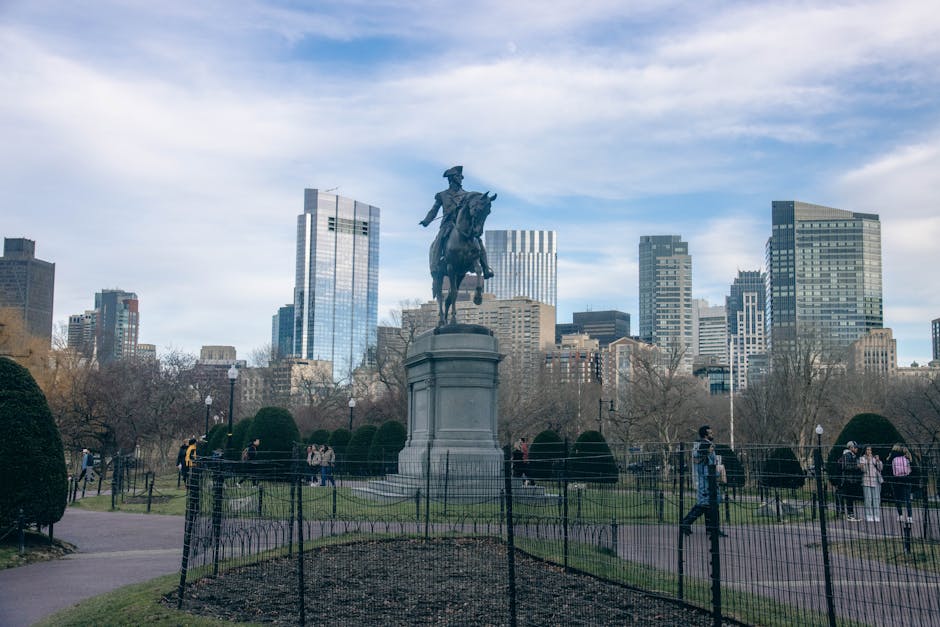
- Day 1, the historic core: start in the North End for the Freedom Trail and pastries, walk to Charlestown for the USS Constitution, end at Faneuil Hall for an easy dinner.
- Day 2, parks and Back Bay: morning Swan Boats in the Public Garden, Newbury Street and the Boston Public Library, then a Green Line hop to a Fenway game or the Museum of Fine Arts.
- Day 3, waterfront and young kids: the New England Aquarium downtown, then the Seaport and the Boston Children's Museum, with harbor views to close the trip.
That's a plan, not a full itinerary. For a minute-by-minute version with travel times built in, the itinerary builder above does the routing for you.
When to Go and What to Pack
Timing changes the price and the experience. September and October are the sweet spot: mild weather, fall color, and hotel rates that ease off after summer. Rates spike in April for marathon and graduation season and again in July and August, while November through February brings the deepest discounts and the coldest streets.
Packing follows the season. Boston weather turns on a dime, so layers win year-round. Summer wants light clothes plus a rain shell for afternoon storms, and winter demands real coats, hats, and waterproof boots for the slush. Comfortable walking shoes are non-negotiable in any month, because you'll cover more ground on foot than you plan to.
The Verdict on Boston's Neighborhoods
Of Boston's 23 neighborhoods, Back Bay is the best all-round base for a visiting family, Beacon Hill is the nicest and safest, and Jamaica Plain is the smartest value for anyone staying longer or moving in.
Best doesn't mean only. Choose the North End if you want the Freedom Trail and Italian food out your front door, or the Seaport if your kids are under 8 and the Children's Museum will anchor the trip. Skip Mattapan, deep Dorchester, and the Mass and Cass area as a home base, not out of fear, but because they're far from the sights and thin on transit.
And whatever you pick, don't rent a car. Boston's T plus these walkable neighborhoods make driving more hassle than it's worth, kids ride free, and a family day pass costs less than an hour of downtown parking. Price your own version with the budget calculator before you book.
Frequently Asked Questions
Beacon Hill is widely considered the nicest neighborhood in Boston, with gas-lit streets, Federal-style brick row houses, and a location steps from Boston Common and the Public Garden. Back Bay runs a close second for its Newbury Street shopping and Victorian brownstones. Both rank among the safest, most walkable, and most expensive parts of the city.
Boston's 23 official neighborhoods are Allston, Back Bay, Bay Village, Beacon Hill, Brighton, Charlestown, Chinatown, Dorchester, Downtown, East Boston, Fenway-Kenmore, Hyde Park, Jamaica Plain, Mattapan, Mission Hill, North End, Roslindale, Roxbury, South Boston, the South Boston Waterfront (Seaport), South End, West End, and West Roxbury. The City of Boston recognizes this set, though a few sources split or merge a couple of them.
Boston is broadly safe for visitors, and the areas locals call sketchy are usually specific blocks rather than whole neighborhoods. The stretch around Massachusetts Avenue and Melnea Cass Boulevard (locals call it Mass and Cass) has visible issues, and parts of Roxbury, Mattapan, and North Dorchester report higher crime per Boston Police data. Tourist districts like Back Bay and the North End stay very safe.
A $70,000 salary is tight for living alone in Boston, where the median one-bedroom rents for roughly $3,000 a month (Zumper, 2026), about $36,000 a year before utilities. It works comfortably with a roommate or in lower-cost neighborhoods like Hyde Park, Mattapan, or Roslindale, where rents run $1,800 to $2,400. For a family of four, $70,000 stretches thin without a second income.
Visitors should avoid basing themselves far from a subway line or in areas with few hotels, such as Mattapan, parts of Dorchester, and the Mass and Cass stretch near Newmarket. These spots aren't tourist zones and add long daily commutes. Skip the car-dependent suburbs too, since the transit time into the city erases any hotel savings you thought you were getting.
Boston's millionaires cluster in Beacon Hill, Back Bay, and the Seaport's luxury condo towers, where single-family homes and penthouses routinely top $3 million to $5 million. Beacon Hill's Louisburg Square holds some of the city's priciest addresses. Outside the city, wealthy families favor the suburbs of Weston, Brookline, and Wellesley for larger homes and top-rated schools.
No single neighborhood defines rough Boston, but the areas with the highest reported crime are parts of Roxbury, Mattapan, and North Dorchester, per Boston Police District data. Many of these areas are changing fast and have safe, tight-knit pockets. The rough reputation is dated for much of Jamaica Plain and the South End, both now among the priciest zip codes in the city.
Data Sources and Methodology
This guide uses verified data from official and public sources, checked July 2026:
- City of Boston : official neighborhood list and map
- Zumper : median one-bedroom rent by neighborhood
- Walk Score : neighborhood walkability ratings
- MBTA.com : subway fare pricing
- Boston Police Department : district crime reporting
Rent figures reflect median one-bedroom asking prices and vary by building, lease term, and season. Safety notes summarize reported-crime patterns, not the character of any resident.
Last verified: July 2026